
Lieferung heute & morgen

Qualitätsgarantie

Willkommens-Angebote freischalten: KOSTENLOSE Lieferung | Bis zu 80 % RABATT | Kostenlose 30-Tage-JoyPlus-Testphase
App herunterladen
Toys should suit a child’s age, abilities and everyday routine. However, when choosing toys for children, many shoppers initially focus on colours, familiar characters or a particularly large number of features. Important points such as small parts, battery consumption, cleaning and storage space can easily be overlooked as a result.
Three common purchasing misconceptions occur particularly often:
The manufacturer’s age recommendation is a key point to check. Toys for babies and toddlers should not contain individual parts that could be swallowed. By contrast, a children’s game for ages 3 and over may contain play figures, balls, dice or building blocks that pose a choking risk to younger children.
You should also look out for:
The CE marking indicates that the manufacturer has taken the relevant EU requirements into account. However, it does not replace checking the specific product warnings and age suitability.
With baby toys and motor-skills toys, rounded edges, sturdy connections and straightforward cleaning are practical features. Wooden toys should be free from splinters, while plastic parts should not have any sharp moulding lines. Plush products cannot always be cleaned in a washing machine. Some models may only be wiped with a damp cloth.
A soft toy should therefore be checked for the following before purchase:
Battery-free toys are practical for travelling, waiting times or households looking to minimise battery consumption. Mechanical products work without a charger and do not create additional running costs. With electronic educational toys, shoppers should instead check the battery type, volume control and whether the power can be switched off easily.
Size also matters: a large construction set requires a clear play area and safe storage. Compact logic games or small board games are easier to take with you.
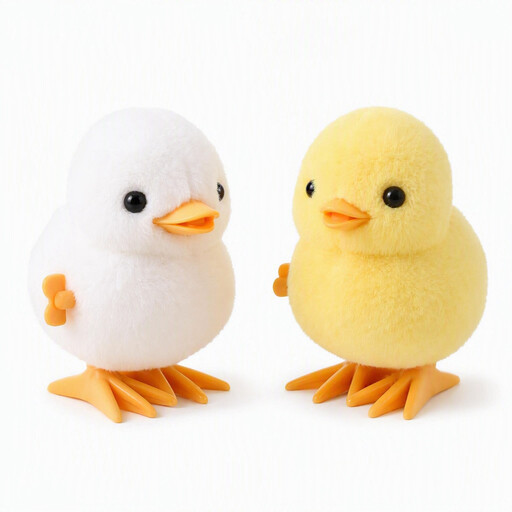
Why this product suits the profile: The two-pack uses a mechanical wind-up mechanism and requires no batteries. Measuring 8 × 6 × 9 cm, it is easy to store and suitable for short indoor play sessions. It is recommended for children aged 3 and over.
The product description clearly states the power supply, dimensions and age limit. Nevertheless, because it contains small parts, the toy should be kept out of reach of younger children.
Two figures, mechanical operation and compact dimensions. According to the instructions, it should be cleaned with a damp cloth.
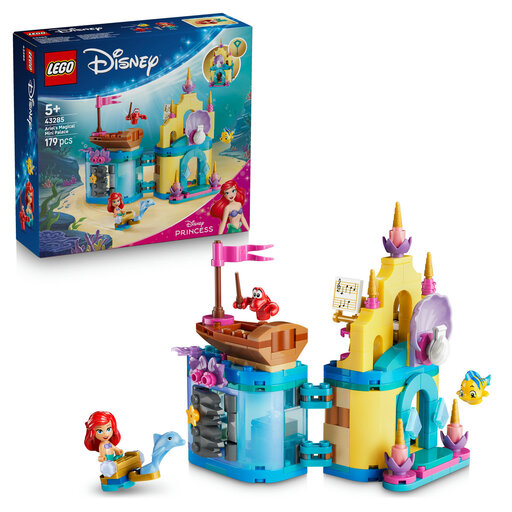
Why this product suits the profile: According to the product information, this construction set is suitable for children aged 5 and over and contains 179 building blocks, figures and an opening castle. It is ideal for children who enjoy building and then creating their own play scenes.
The age limit and warning about small parts are clearly stated. This makes it easier to distinguish the set from baby toys or products for toddlers.
179 building blocks, three play figures and a compact castle with accessories. A digital building guide can assist with assembly.
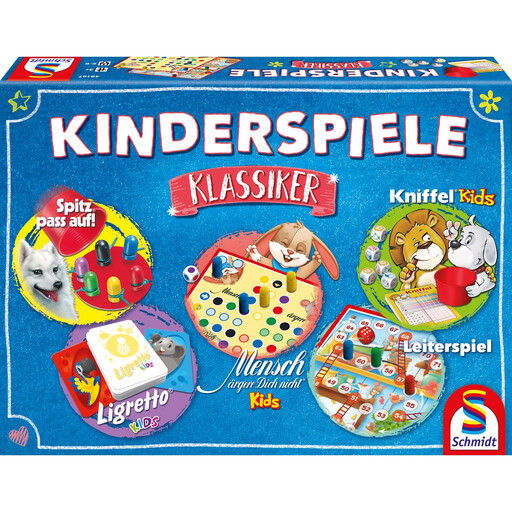
Why this product suits the profile: The collection includes five classic games for 2 or more players and is suitable for children aged 3 and over. It is ideal for families who want to enjoy board games for children together and use them repeatedly.
The collection requires no batteries. However, shoppers should take note of the warning about small parts and long cords.
Five game variations, an age rating of 3 and over, and a game board measuring 37,5 × 27,5 × 5,7 cm.
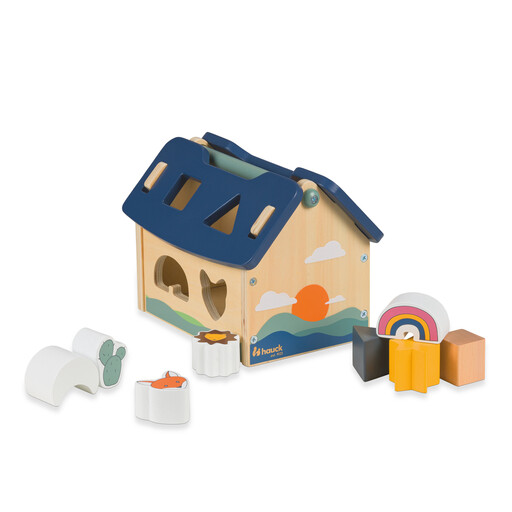
Why this product suits the profile: According to the product description, this shape sorter made from FSC-certified wood is suitable for children aged 12 months and over. Eight blocks are placed into the matching openings and then stored inside the house.
The recommendation for children aged 12 months and over prevents it from being confused with suitable newborn toys. Before every use, the blocks and wooden surfaces should be checked for damage.
FSC-certified wood according to the product information, eight shaped pieces and a carry handle. The toy requires no batteries.
We have put together a complete, regularly updated list of products that fully meet these strict selection criteria and the safety regulations applicable in the EU.
The term educational toy is not a separate safety standard. What matters is the specific activity the product enables. For example, a shape sorter encourages children to match shapes, while a logic game for ages 6 and over requires spatial thinking and the ability to follow multi-step tasks.
This classification can help you make an objective choice:
With electronic products, shoppers should also check whether the volume can be adjusted, which batteries are required and whether the toy remains useful without a constant backdrop of sound. Educational toys for children do not have to be electronic: mechanical games, building blocks and sorting activities can also provide structured play.
Suitable products have a clear age rating of 3 and over, straightforward rules and can be used safely under supervision. These include simple board games for children, soft toys without loose parts, mechanical wind-up toys and construction sets with age-appropriate blocks. Small parts should be kept away from younger siblings.
Mechanical toys and traditional board games do not require batteries. This eliminates the need to buy batteries or replace depleted power sources. Electronic products, on the other hand, can offer additional features such as lights, music or sounds. Before buying, consider whether these features will genuinely be used regularly.
How long a toy remains engaging depends on the child’s developmental stage, the play options and the quality of the workmanship. Products with several game variations or increasing difficulty levels can remain interesting for longer. With a construction set, shape sorter or logic game, you should also check whether extensions, additional tasks or shared play are possible.