
Lieferung heute & morgen

Qualitätsgarantie

Willkommens-Angebote freischalten: KOSTENLOSE Lieferung | Bis zu 80 % RABATT | Kostenlose 30-Tage-JoyPlus-Testphase
App herunterladen
Toys for children should be fun, suitable for their age and practical for everyday family life. However, with so much choice, many products appear more similar at first glance than they really are. A low price can be offset by missing batteries, complicated assembly or unsuitable small parts. Conversely, a well-known brand does not automatically mean that a toy suits your family’s routines and available space.
That is why our selection follows clear, easy-to-understand criteria: age recommendation, safety information, material, dimensions, power supply and intended use.
The indication “from 3 years” is not merely a suggestion. It is often linked to small parts, components that could be swallowed or specific movements. Even a child who already handles toys skilfully should not use products carrying the relevant warning without supervision.
For children’s toys from 3 years, the recommended age and warning notice should therefore be among the first details you check. Products with small balls, play money, accessories or mechanical components are generally unsuitable for younger children.
Electronic toys with lights and sounds can be appealing, but they involve ongoing costs and require regular checks of the battery compartment. Check the battery type, the number of batteries required and whether they are included.
Mechanical toys, such as wind-up toys, do not need batteries. However, the spring must be wound correctly and the mechanism must not be overwound. The right choice therefore depends on the type of play you want and the level of supervision required.
A toy can be too large for a child’s bedroom or a small flat, even if it is suitable for the child’s age. So check more than just the product dimensions. Also consider the footprint, weight, folding functions and storage space. A children’s clothes airer measuring 65 cm in length requires different storage arrangements from a compact bowling set.
Check the age recommendation, warnings and manufacturer information. The CE marking is a legally required declaration of conformity made by the manufacturer or the responsible economic operator; it is not an independent quality seal. You should also be able to verify the name and address of the manufacturer or the EU-based responsible person.
Pay particular attention to products with:
With plush toys, it is important to know whether the surface can be damaged and how it should be cleaned. According to the product information, the Dreamora wind-up toy must not be washed in water and should only be cleaned with a damp cloth. Plastic toys can often also be cleaned with a soft, damp cloth.
Before every use, check for cracks, loose stitching or damaged protective covers. Children’s active toys should also be used on a level surface with plenty of clear space around them.
Battery-free children’s role-play toys are practical for families looking to reduce ongoing costs. Theo Klein Bosch toys, for example, require either three AA or C batteries, depending on the model, and these are not included. The Theo Klein 9356 electronic till requires three AA batteries. When buying, you should therefore consider more than just the purchase price. Take battery consumption, charging time and the need for replacement parts into account as well.
The following products cover a range of play areas: active play, role play and shared indoor play. The details are based on the respective product information.
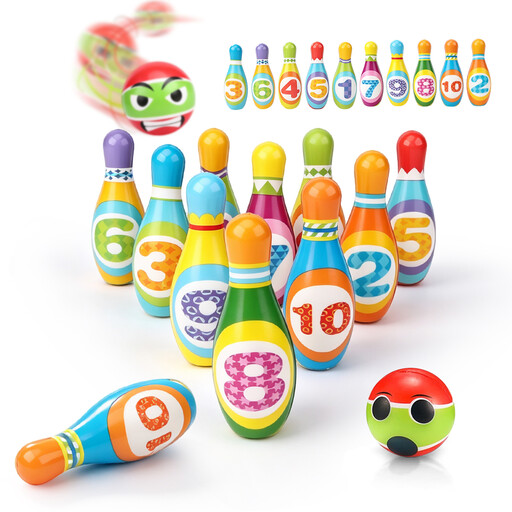
Why this product suits the profile: This set is suitable for children aged 1 to 6, requires no batteries and can be used indoors or outdoors. With 10 foam pins and two foam balls, it is ideal for simple family games.
Manual operation avoids battery costs. The low weight of 320 g makes it easy to transport. However, the guidance on small parts and supervision must still be followed.
10 numbered pins, two foam balls, manual operation and suitability for indoor and outdoor use according to the product information.
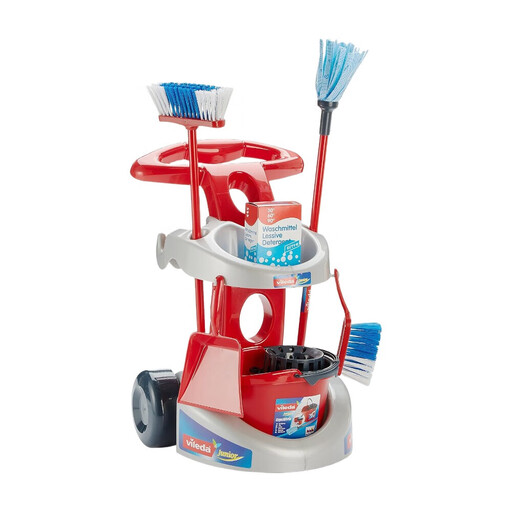
Why this product suits the profile: This sturdy household trolley includes a mop, bucket, broom, hand brush and dustpan. It is ideal for families where role play based on household tasks has a regular place in everyday life.
The product dimensions of 36 × 46 × 53 cm make it easy to assess the space required in advance. The set is intended for children aged 3 and over and requires no batteries.
Several accessories in one set, plastic construction, no batteries required and a play experience involving pushing, gripping and sorting.
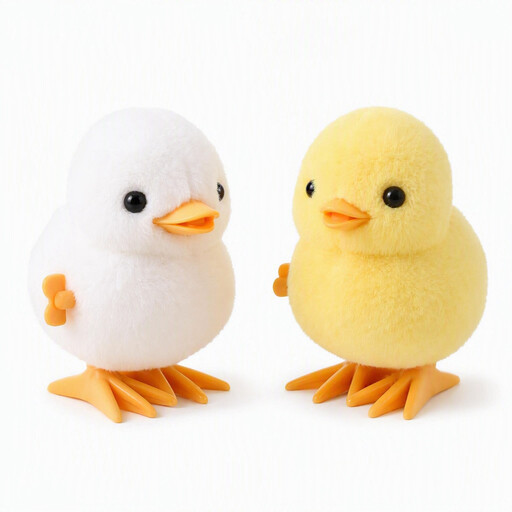
Why this product suits the profile: According to the product information, this two-piece wind-up set is intended for children aged 3 and over. It is designed for calm indoor play on the floor, a play mat or a bed.
The mechanical drive requires no batteries. The compact dimensions of 8 × 6 × 9 cm and the two-piece set are clearly stated before purchase. The age recommendation must be followed because of the small parts.
Two plush toys, a battery-free wind-up mechanism and a compact format for playing together at home or on the go.
We have put together a complete, regularly updated list of products that fully meet these strict selection criteria and the safety regulations applicable in the EU.
Suitable products are those whose manufacturer expressly states “from 3 years” and whose warnings are appropriate for the child’s stage of development. Sets containing small parts must be used under supervision. Such products should not be used by children under 3.
Their lifespan depends on the material, mechanism, storage conditions and intensity of use. Regularly check plush surfaces, plastic parts, cables, battery compartments and moving components. Damaged toys should no longer be used. Mechanical products must not be overwound, and electronic devices must not be used while charging if the instructions prohibit this.
In addition to the purchase price, you may need to pay for batteries or electricity. Check how many batteries are required and whether they are included. For frequent use, rechargeable batteries may be a practical option, provided they are compatible with the device and used in accordance with the manufacturer’s instructions.