
Lieferung heute & morgen

Qualitätsgarantie

Willkommens-Angebote freischalten: KOSTENLOSE Lieferung | Bis zu 80 % RABATT | Kostenlose 30-Tage-JoyPlus-Testphase
App herunterladen
Toys for children should be entertaining, support their development and work reliably in everyday life. The choice ranges from educational toys and children's puzzles to musical toys, soft toys and creative toys. However, the sheer variety of products can make buying confusing. Parents, grandparents and other family members should therefore look beyond colours, characters and advertising claims, and pay attention to specific details about age, materials, contents and intended use.
The label “for ages 3 to 8” covers a wide target group, but says little about the actual level of difficulty. A three-year-old will generally have different needs from an eight-year-old. Important factors include the size of movable parts, the length of concentration required and whether the child can play independently.
“Educationally valuable toy” and “supports development” are frequently used marketing phrases. They do not replace a detailed product description. More meaningful are verifiable features such as an age recommendation, the number of puzzle pieces, an adjustable volume control, the stated material or information on whether batteries are required.
Puzzles, playing pieces, buttons, battery compartments and accessories can pose a risk to younger children. A soft toy with button eyes is not automatically suitable for babies either. Before buying, read the warnings, recommended age range and actual contents of the package.
For toys for ages 2 and over, larger, easy-to-grip pieces and simple matching activities are suitable, for example. According to the product information, the Ravensburger “My First Puzzle – Cute Pets” is intended for children aged 2 and over and contains several puzzles with increasing levels of difficulty. For toys for ages 3 and over, first frame puzzles, drawing boards or LCD writing tablets and simple role-play toys may be suitable.
With toys for ages 4 and over, 24 to 40 puzzle pieces or more challenging search activities may be appropriate. A logic game for ages 6 and over, on the other hand, should already require a higher level of spatial awareness and problem-solving ability. The recommended age is therefore a starting point, but it is not a substitute for assessing your child’s individual abilities.
Look for:
A CE marking is a legally required declaration of conformity by the manufacturer or importer, not an independent quality seal. A volume control is useful on musical toys, particularly when they are used indoors.
One toy may be suitable for taking on trips, while another may require plenty of open floor space. Check the dimensions, weight and storage requirements. Puzzles should be stored somewhere dry and flat. Electronic products should generally not come into contact with water. With bath toys, it is sensible to let the material dry completely after use and regularly check for cracks or hard-to-reach build-up.
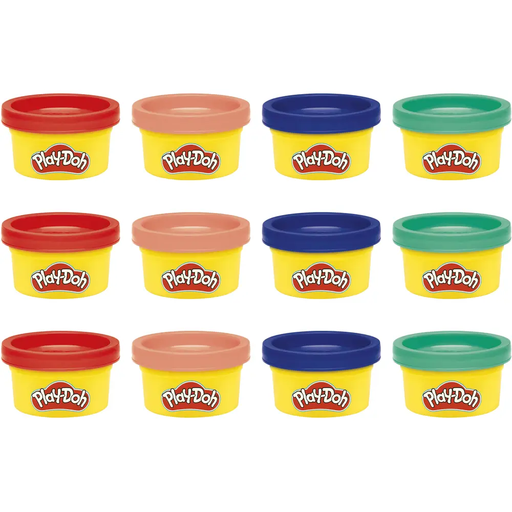
Why this product suits the profile: The twelve small tubs in four colours are suitable as party bag gifts, for children's birthday parties or for sharing among a group. According to the product information, the recommended age starts at 24 months.
The contents are clearly listed as twelve tubs and stickers. This makes it easy to judge in advance whether there is enough for a party or several children.
Four colours, twelve units and a weight of 472 g according to the product data.
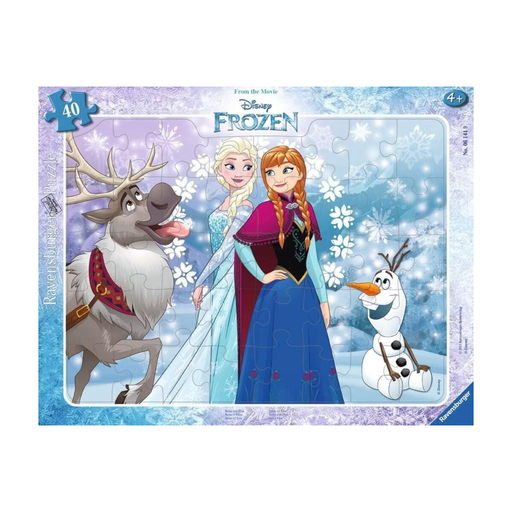
Why this product suits the profile: The frame puzzle is recommended for children aged 4 and over and includes a base with outlines to help with orientation. This can make it easier to get started with a puzzle containing more pieces.
The number of pieces, format and recommended age are clearly stated. The warning about small parts for children under 3 should nevertheless be observed.
40 pieces, frame with outlines, no batteries required, manufacturer information from Germany.

Why this product suits the profile: According to the product details, the LCD writing tablet is intended for children aged 3 to 8 and can be used at home, while travelling or when waiting. Erasing at the touch of a button allows children to draw repeatedly without using paper.
The possible uses and dimensions of 26,5 × 20,3 × 1 cm are stated. Before buying, check whether the tablet is suitable for the type of writing or drawing you have in mind.
Low weight of 0,178 kg, rounded edges according to the product information and reusable LCD surface.
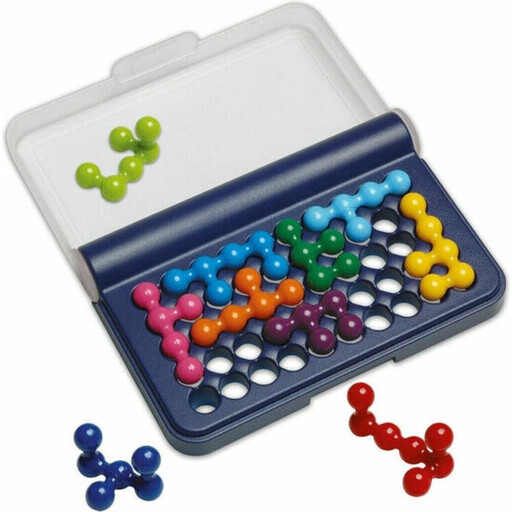
Why this product suits the profile: The compact logic game is designed for one player aged 6 and over and, according to the description, is also suitable for taking on trips. The challenge booklet and solution section provide structure for independent play.
The way it is used is not described only with general educational terms; it is clearly defined through individual play, a challenge booklet, solution checking and an age recommendation.
Compact dimensions of 9,8 × 3,2 × 14,4 cm, no batteries required, for one player.
We have put together a complete, regularly updated list of products that fully meet these strict selection criteria and the safety regulations applicable in the EU.
For a birthday present for children, link the occasion to the child’s age and interests:
Larger, easy-to-handle play materials, first puzzles with just a few pieces or age-labelled modelling clay may be suitable. Small parts and detachable accessories should be avoided. The manufacturer’s specific information and the warnings on the packaging are decisive.
The lifespan depends on the material, use and care. Cardboard puzzles should be stored somewhere dry, plastic toys should be checked regularly for cracks and electronic products should be protected from moisture. With battery-operated devices, batteries should be removed after a prolonged period of non-use unless the manufacturer states otherwise.
There may be costs for batteries or separately available accessories. Before buying, check whether batteries are included. According to the product information, batteries are not included with the children’s drum kit described above; IQ Fit does not require batteries.