
Lieferung heute & morgen

Qualitätsgarantie

Willkommens-Angebote freischalten: KOSTENLOSE Lieferung | Bis zu 80 % RABATT | Kostenlose 30-Tage-JoyPlus-Testphase
App herunterladen
Toys for children should be fun, encourage independent play and suit the child’s age. In practice, unclear age guidance, missing accessories or the hassle of changing batteries can quickly lead to disappointment. It’s worth checking the product details carefully, especially for educational toys, role-play sets and trending products.
A toy with lights, music, buttons and several play modes may seem versatile at first glance. What matters, though, is whether its features suit the child’s stage of development. A baby needs different stimulation and controls from a pre-schooler. A baby activity cube should therefore have buttons, sliders and rotating parts that are easy to reach.
A toy cash register for children may need batteries, while play money, a scanner or a shopping basket may already be included. A bubble machine for children, on the other hand, means ongoing costs for bubble solution and batteries. Before buying, parents should check what’s included and whether batteries are supplied.
Blind box figures, collectible figures, play money and accessories may contain small parts that could be swallowed. An age recommendation of 3+ isn’t just for decoration: it should be taken into account when choosing and using a toy. Products containing such parts should be kept out of the hands of children under 3.
The age recommendation is the first thing to check. For children aged 1 to 3, for example, look for simple cause-and-effect features, rounded shapes and larger controls. A gift for children aged 3+ may include more complex role-play or smaller accessories, but should still be used under supervision if the safety information says so.
The setting matters too:
Check the information about the materials used, rounded edges and any small parts. For plastic toys, clear details about the manufacturer and responsible person for the EU market are helpful. The CE marking indicates that the manufacturer declares the product meets the relevant EU requirements. However, it doesn’t replace the buyer’s checks of the age recommendation, quality of construction and warnings.
For battery-powered products, check the battery compartment, battery type and replacement instructions. Batteries should be kept out of the reach of young children. A notice such as ‘Batteries not included’ also affects the actual cost of buying the toy.
The size determines whether a toy will fit in a child’s bedroom, a rucksack or on a table. Smooth surfaces are generally easier to clean with a dry or slightly damp cloth. With bubble products, it’s also important not to leave liquid in the device for long periods and to store it somewhere dry after use.
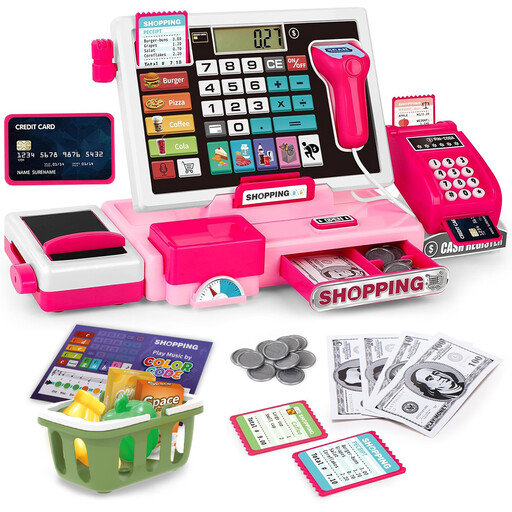
Why this product suits this buyer: The set combines shopping role-play with a calculator function and includes a scanner, shopping basket, play money, credit card and pretend food. It’s designed for children aged 3 and over.
The included accessories are listed clearly, making it easier to work out whether you’ll need any extra play items before buying. Batteries are not included.
Calculator function, piano mode, LED light and sound effects; dimensions: 37,49 × 8,99 × 19 cm.

Why this product suits this buyer: Designed for children aged 1 to 3, this cube combines eight activities, including a piano, guitar, toy phone, gears and a pinwheel.
The age range, dimensions of 23 × 23 × 24 cm and ABS material are all specified. Rounded edges and information confirming there are no loose parts make it easier to check the product before buying.
Compact design with a carry handle; several tactile and sound-based controls for indoor play.

Why this product suits this buyer: This automatic bubble wand is designed for outdoor use and children aged 3 and over. It has one-button operation, an LED light, music and two bottles of bubble solution.
The battery type and quantity are specified: three AA batteries, which the product information says are included. Remove the liquid after use and store the device somewhere dry.
Removable wings, smooth edges, built-in lighting and music; two bottles of bubble solution included.
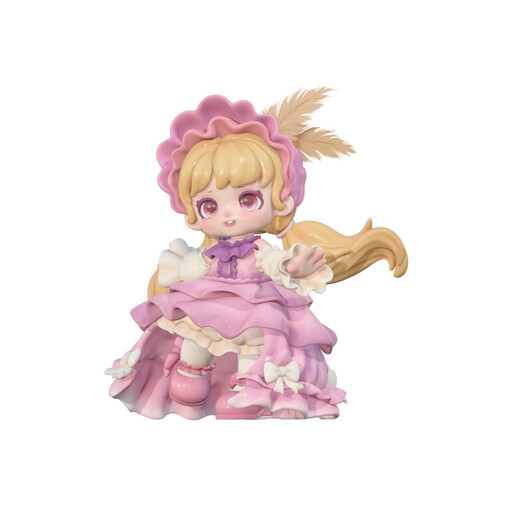
Why this product suits this buyer: This PVC figure is around 14 cm tall and comes in a random design. It’s aimed at fans of blind box figures, collectibles and decorative desk ornaments.
The random selection is clearly stated, so buyers know they won’t know which figure they’ll get until they open the box. The product isn’t suitable for children under 3.
Made from PVC, requires no extensive assembly and can be displayed on a desk, shelf, in a car or on a bag.
For a small gift, randomly selected figures such as the 52TOYS POUKAPOUKA Celestial Spirit Vinyl Plush Blind Box are a good option. According to the product name, one random figure is supplied with each order. Before buying, check that the decorative charm is suitable for the child’s age and whether it contains small parts. You can find it on the 52TOYS Blind Box product page.
For outdoor birthday parties, a bubble machine or bubble wand could be just the thing. For quieter play in a child’s bedroom, consider an educational toy, an activity cube or a shopping game. Age, what’s included and where the toy will be used remain the key things to consider.
We’ve put together a complete, regularly updated list of products that fully meet these strict selection criteria and the safety regulations in force in the EU.
For toddlers aged 1 to 3, look for straightforward products with larger controls, rounded edges and a clear age recommendation. An activity cube with rotating, pressing and sliding features can bring together different ways to play. Avoid small removable parts, or only allow children to use them under direct supervision.
Battery life depends on the battery type, volume, lighting features and how long the toy is used. It wouldn’t be accurate to give a specific duration without information from the manufacturer. Check whether batteries are included, what size is needed and whether only an adult should open the battery compartment.
It depends on the specific figure and its age rating. Blind box figures often contain small parts, so only buy one if the product is explicitly intended for the child’s age. For younger children, larger, simpler toys with clear safety information are usually a better choice.