
Lieferung heute & morgen

Qualitätsgarantie

Willkommens-Angebote freischalten: KOSTENLOSE Lieferung | Bis zu 80 % RABATT | Kostenlose 30-Tage-JoyPlus-Testphase
App herunterladen
Toys should suit a child's age, interests and the family's daily life. Yet eye-catching packaging, large numbers of pieces or supposedly educational promises don't automatically lead to a good buying decision. If you're looking for toys for children, you should check a few product details before a building set, board game or gift ends up in your basket.
A set with several hundred pieces looks extensive at first glance. What really matters, however, is whether the pieces suit the child's age and patience. A complex building set for children can be interesting for experienced builders, but may overwhelm younger children. Conversely, simple wooden blocks offer plenty of free play, even though they contain fewer individual pieces.
The label "from 3 years", "toys from 6 years" or "toys from 8 years" is not just marketing information. It takes into account small parts, understanding of rules and the fine motor skills required. Even with age-appropriate products, adult supervision can be helpful at first – especially with complex instructions or games that have many rules.
Electronic role-play toys may need batteries that aren't included. With collectible toys and small building sets, a suitable storage box may also be missing. Before buying, it's worth checking the scope of delivery, dimensions, material, care instructions and the possibility of storing lost parts in an organised way.
First, check the age recommendation and the warning notices. Products with small parts are generally not suitable for children under three years old if there is a risk of choking or suffocation. This applies, for example, to many LEGO bricks, model kits, puzzles and collectible toys. For children under six, an adult can help with sorting, building or explaining the rules.
The CE marking indicates that the manufacturer declares the product meets the relevant EU requirements. However, it is not a general quality seal and does not replace checking specific warnings, material details and manufacturer information.
For plastic toys, details such as ABS or plastic material are relevant; for wooden toys, for example, the type of wood and the surface treatment. Rounded edges, cleanly closing connections and easy-to-read instructions make use easier. With a children's puzzle, the piece size and cardboard thickness should match the recommended age group.
Dimensions are also practically important: a large educational toy needs more storage space, while a compact travel game fits in a rucksack. For vehicles, figures and role-play toys, moving parts should be checked regularly for looseness or damage.
Ask yourself whether the child prefers to build, solve puzzles, collect, invent stories or play together. Creative building games encourage free design, while board games for the family require fixed rules and several players. Compact games are suitable for short play sessions; extensive sets are better suited to families who regularly build or play together.
The following selection does not rank products by a general score, but rather by typical user profiles.
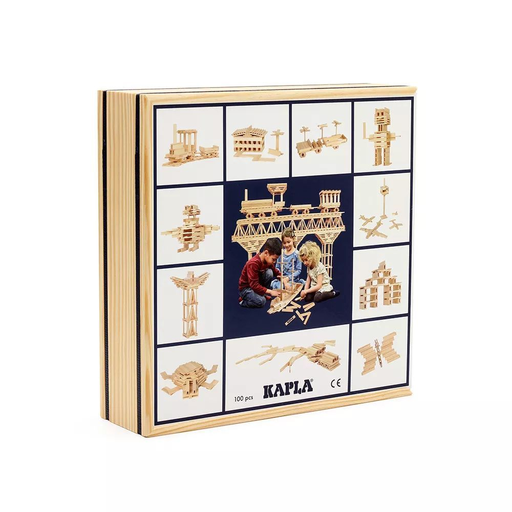
Why this product fits the profile: The 100 untreated pinewood blocks offer a simple introduction to free building and require no batteries.
The number of pieces is manageable, the play concept requires no complicated electronics and the box supports storage.
100 uniform wooden blocks, stackable concept, suitable from 3 years according to the product information.
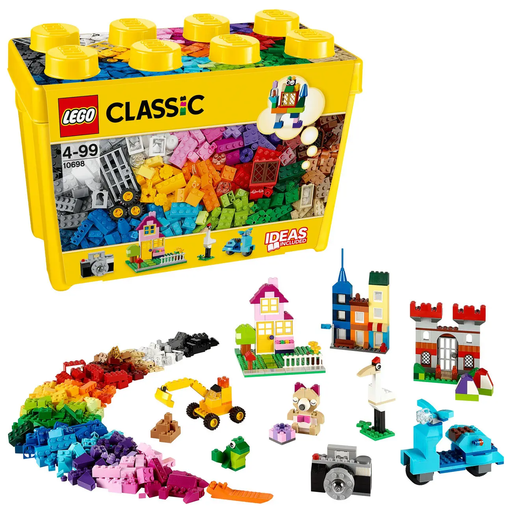
Why this product fits the profile: The box contains 790 elements in 33 colours as well as windows, doors, wheels and base plates for different building ideas.
The product description names specific components and a storage box, rather than just advertising the scope in general terms.
Large colour selection, 790 pieces, first building instructions and recommended use from 4 years.
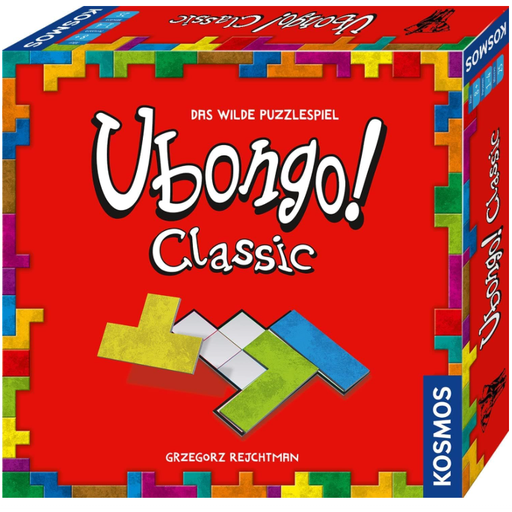
Why this product fits the profile: The game is designed for 1 to 4 players aged 8 and up and offers 648 tasks with two difficulty levels.
The number of players, age, number of tasks and the fact that no batteries are required are clearly stated.
Simultaneous play, optionally usable explanation app, 1–4 players and two difficulty levels.
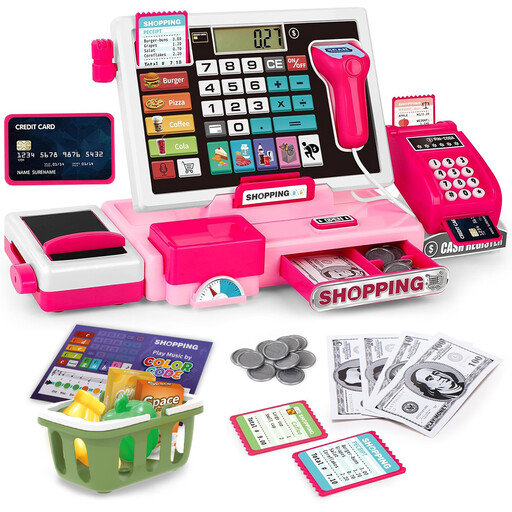
Why this product fits the profile: The set includes, among other things, a scanner, shopping basket, play money and credit card for shopping scenarios from 3 years.
The product data states battery requirements, dimensions and the need for direct adult supervision.
Calculator function, light and sound effects, play money and accessories; batteries are not included.
For toys from 3 years, simple wooden blocks, larger puzzle pieces, vehicles or supervised role play are suitable. The KAPLA set is intended from 3 years according to the product information; due to the small blocks, special attention is required with younger children.
For toys from 6 years, more challenging constructions and short rule-based games can be interesting. The WANGE Type 003 Aircraft Carrier Set contains 392 ABS parts and is, according to the information, suitable for children from 6 years under full supervision. The product page explicitly points out small parts.
Toys from 8 years often include more complex board games for children, children's puzzles with a higher difficulty level and 3-in-1 construction sets. Ubongo, Rummikub or Hasbro's "The Game of Life" are examples of games with multiple players. A children's puzzle like the Ravensburger set with 3 × 49 pieces is aimed at children from 5 years according to the product information.
For LEGO fans, the LEGO Creator Exotic Parrot Set with 253 pieces and the LEGO Creator Cute Hamster with a Flower Set with 166 pieces each offer several building variations. Before buying, you should check whether the child prefers to build following instructions or prefers free LEGO bricks.
We have put together a complete, regularly updated list of products that fully meet these strict selection criteria and the safety regulations in force in the EU.
A meaningful gift for children is based on age, interests and existing toys. Construction sets suit children who enjoy building; board games are suitable for families with regular shared play times. If you're unsure, sets with a clear age recommendation and a manageable scope of delivery are easier to assess.
The lifespan depends on material, wear and tear, storage and use. Plastic and wooden blocks should be stored dry and checked regularly for damaged parts. For card games and puzzles, flat, dry storage extends their useful life. Missing small parts can make a game incomplete and unsuitable for younger children.
Yes. With electronic role-play toys, you should check the battery type, number and what is included in the delivery. The cash register set requires batteries, which according to the product information are not included. Games like KAPLA, Ubongo or classic LEGO building sets, on the other hand, require no batteries.