
Lieferung heute & morgen

Qualitätsgarantie

Willkommens-Angebote freischalten: KOSTENLOSE Lieferung | Bis zu 80 % RABATT | Kostenlose 30-Tage-JoyPlus-Testphase
App herunterladen
The range of toys for children is vast: educational toys, construction toys, motor skills toys, interactive toys and gift ideas for birthdays or Christmas all sit side by side. On packaging, many features sound convincing. However, for a good purchasing decision, it is less about marketing promises and more about age recommendations, materials, usability and everyday practicality.
“Ages 3+” does not automatically describe whether a toy matches a child’s developmental stage. A complex construction toy can be too demanding for a younger child, while a simple stacking toy can quickly become boring for an older one. What also matters are fine motor skills, concentration span and interests.
For baby toys, the age indication should be followed particularly closely. Small parts, detachable elements or hard-to-reach battery compartments can be unsuitable for babies and toddlers. The label “not suitable for children under 3 years” is a safety warning, not just a rough guide.
Lights, music, sounds and remote controls can make interactive toys interesting. However, if they are constantly needed, there is often little room for a child’s own ideas. So check whether the child can play without electronic effects, and whether volume, power supply and cleaning are handled practically.
For battery-operated toys, details about the batteries required, what’s included in the box and volume control are important buying criteria. If this information is missing, the gift could be unusable straight after unwrapping.
A CE mark is a mandatory conformity marking, but not an independent quality seal. Also pay attention to manufacturer details, warnings, material information and a clear instruction manual. For plastic toys, secure connections, rounded edges and low-odour materials are practical things to check.
Don’t just categorise a product by “toys for ages 3+” or “toys for ages 6+”. Ask yourself:
For children aged 1 to 3, robust motor skills toys with large controls are often suitable. From around age 6, logic games, more challenging construction toys and creative building sets can be interesting. The manufacturer’s recommendation remains key.
For toys for young children, smooth surfaces, rounded edges and a sturdy construction are important. Plastic parts should have no sharp burrs. For soft toys, play mats and textiles, check the care instructions. Electronic products must not be cleaned with water unless this is explicitly stated.
Details such as ABS plastic, PVC, “BPA-free” or “EN71” should be considered in relation to the specific product. A material description does not replace checking warnings and moving parts.
Large play sets, activity tables and remote-controlled vehicles in particular need more storage space. Check the dimensions, weight and any accessories required. For electronic toys, batteries or charging times can affect ongoing use. A compact travel game can therefore be more practical for everyday life than a large set.
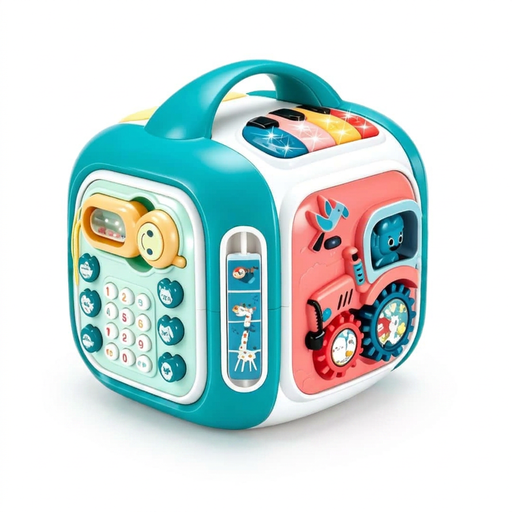
Why this product fits the profile: The compact activity cube combines several play options for children aged 1 to 3 and takes up less floor space than a large play table.
The age group, ABS material and rounded edges are stated. However, the warnings should still be checked before purchase.
Eight play modes, a carry handle and compact dimensions of 23 × 23 × 24 cm.
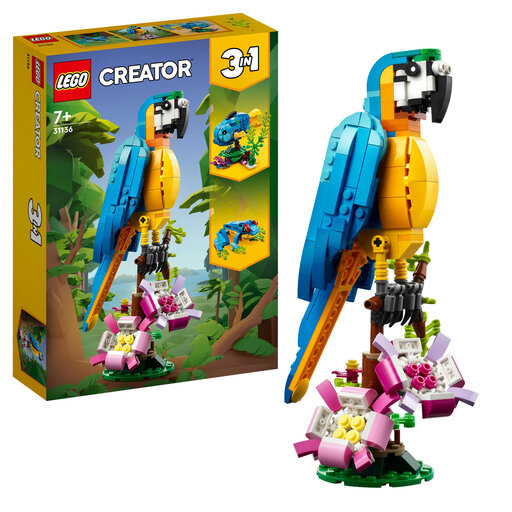
Why this product fits the profile: According to the product details, this 3-in-1 construction toy is aimed at children aged 7 and over, combining building, rebuilding and free storytelling.
The product data lists 253 pieces, a clear age recommendation and building instructions. This makes it easier to assess the challenge level in advance.
Three possible animal models, movable parts and digital 3D instructions via the LEGO Builder app.
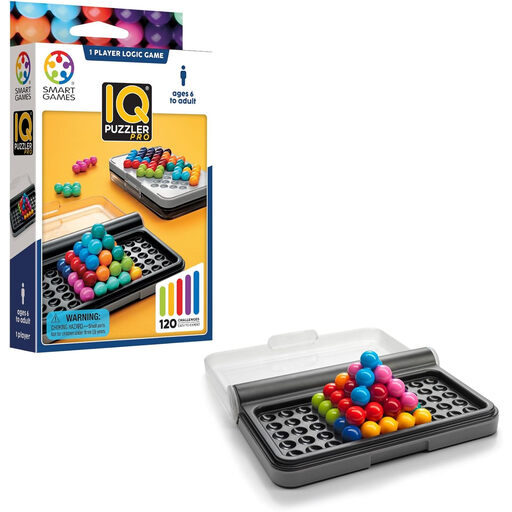
Why this product fits the profile: According to the product data, this solo game is suitable for children aged 6 and over and, thanks to its compact dimensions, can be used on the go or at home.
According to the details, it requires neither batteries nor assembly. The warning about small parts should still be noted before giving it to a child.
120 challenges, three game modes and 2D and 3D puzzles in a portable format.
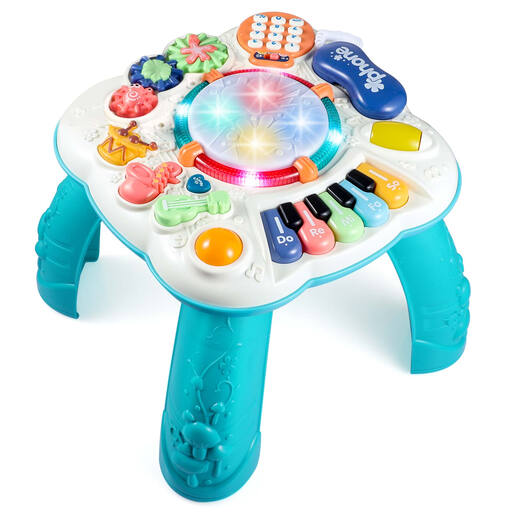
Why this product fits the profile: The activity table offers various controls for toddlers and, according to the description, can be used with or without legs.
Volume control is specified. Since batteries are not included, they should be bought separately if giving as a gift.
Six play areas, ABS plastic and a usage range of 6 to 36 months according to the product description.
We have put together a full, regularly updated list of products that fully meet these strict selection criteria and the safety regulations in force in the EU.
For a birthday gift for children, the age recommendation should match the child’s developmental stage. Creative toys and construction toys are a good choice if the child enjoys making things themselves. A puzzle or logic game is more suited to children who like to concentrate on playing alone.
As a Christmas toy, sets with multiple play options work well, provided there is enough storage space. For babies and toddlers, easy-to-clean motor skills toys with large, easy-to-reach elements are often more practical than fiddly models.
Toys for ages 3+ should not contain any loose small parts and should be appropriate for the child’s hand size and ability. Vehicles, simple building sets, role-play sets and robust stacking toys are often suitable. The manufacturer’s warning is key.
Check the battery type, volume control, ease of use and cleaning options. A device with lots of features is not automatically more useful. For younger children, the operation should be as straightforward and intuitive as possible. Battery compartments must be securely fastened.
How long a toy holds a child’s interest depends on their age, interests and the difficulty level. Products with changeable tasks, multiple building variations or different game modes can be used for longer. However, still check whether the age rating actually allows for later use.