
Lieferung heute & morgen

Qualitätsgarantie

Willkommens-Angebote freischalten: KOSTENLOSE Lieferung | Bis zu 80 % RABATT | Kostenlose 30-Tage-JoyPlus-Testphase
App herunterladen
There’s a wide choice of toys for children: toys with lights and sounds, educational toys, role-play toys, vehicles and family board games. But with so much variety, it’s easy to buy something that isn’t right for a child’s age, your home or their actual interests.
Three common buying pitfalls are worth looking out for:
The age guidance is a safety and suitability recommendation. Toys for children aged 1 and over should not contain small parts that could be swallowed, and should be easy to grasp. For toys for children aged 3 and over, manufacturers often warn about small parts. These warnings are particularly important when older and younger siblings play together.
Also look out for:
The CE mark indicates that the manufacturer declares the product to meet the applicable EU requirements. However, it doesn’t replace checking whether the toy is right for the child’s individual development and surroundings.
For plastic toys, smooth edges, sturdy joints and securely closing battery compartments are important features. For dolls, doll accessories and soft toys, check the care instructions. Machine-washable fabrics are handy for regular use, while electronic components can usually only be cleaned with a dry or slightly damp cloth.
Storage matters, too: a folding dolls’ pram can save space, while a large vehicle or play kitchen needs a permanent spot. So check the stated dimensions and weight before buying.
A good starting point is to ask: How and where will the toy actually be used?
For electronic toys, also check the battery type, number of batteries required, battery life and how the toy is operated. Not every product needs batteries; for some, they are not included.

Why this product suits this profile: This 36 cm doll is designed for children aged 12 months and over and comes with a bottle, romper suit and hat. So there’s no need to buy a large selection of accessories to get started.
The age guidance of 12 months and over and the manageable number of accessories make it easier to assess before buying. However, small parts and warnings should still be checked.
Soft body, sleeping eyes, 36 cm size, plus accessories for caring for and feeding the doll.
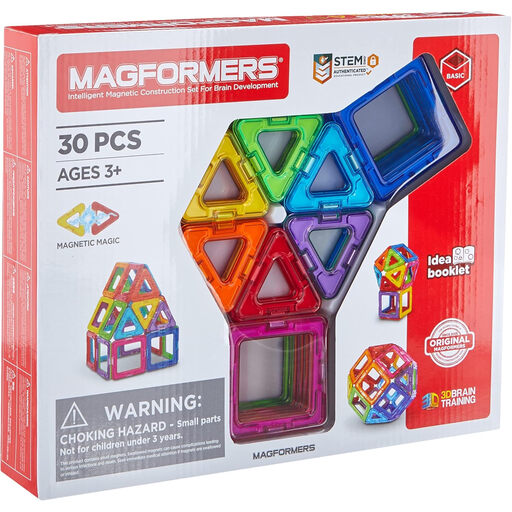
Why this product suits this profile: This set contains 30 plastic pieces with integrated neodymium magnets and is designed for children aged 3 and over. It encourages free building, with no batteries or assembly required.
The number of pieces, material and age guidance are clearly stated. Adult supervision is required because of the strong magnets; swallowed magnets can be dangerous.
30 building pieces, no batteries needed, and endless ways to create two- and three-dimensional shapes.
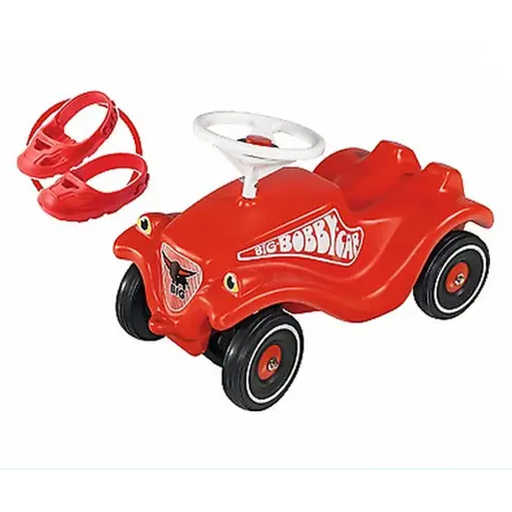
Why this product suits this profile: This ride-on car is designed for children aged 1 and over and can be used indoors or outdoors on flat surfaces.
A low centre of gravity, four wheels and a non-slip steering wheel are practical design features. It should not be used on slopes or uneven ground.
Whisper wheels, front and rear couplings, shoe protection and a seat position designed for young children.

Why this product suits this profile: This music card game is designed for 2 to 10 players aged 16 and over, making it a great choice for a game night together.
The player count and age guidance are clearly stated. The Hitster app and Spotify are required for the music feature, so check that you have access to them before buying.
More than 300 music cards, simple rules and play for up to 10 people.
We’ve put together a complete, regularly updated list of products that meet these strict selection criteria and fully comply with the safety regulations in force in the EU.
For children aged 1 and over, choose sturdy toys that are easy to grasp, such as simple dolls, soft toys or a ride-on car with a stable base. Check the specific age guidance, make sure there are no dangerous small parts, and ensure the toy is used under supervision.
Lifespan depends on the material, how the toy is used and how well it is cared for. Check plastic parts regularly for cracks. For ride-on toys, it’s a good idea to inspect the wheels, steering and couplings. Clean textiles according to the care instructions. Damaged toys should no longer be used.
As well as the purchase price, you may need to budget for batteries and accessories. Check whether batteries are included, which type is needed and whether the product can be used fully without its electronic features. If it’s used often, suitable rechargeable batteries can be a practical alternative, as long as the manufacturer allows them.