
Lieferung heute & morgen

Qualitätsgarantie

Willkommens-Angebote freischalten: KOSTENLOSE Lieferung | Bis zu 80 % RABATT | Kostenlose 30-Tage-JoyPlus-Testphase
App herunterladen
Toys for children should suit their age, interests and the space available for play. In practice, however, unclear age recommendations, overblown product descriptions and underestimated ongoing costs often lead to buying mistakes. Especially when choosing gifts for children aged 3 to 12, it pays to take a sensible look at safety, the play concept and everyday practicality.
“Ages 3+” does not automatically mean that a toy is suitable for every three-year-old child. Small parts, complex rules or a high assembly effort can overwhelm younger children. With toys for ages 3 and up, parents should therefore also check whether small parts are included and whether adult supervision is required.
With toys for ages 6 and up, the requirements also differ significantly: a simple dice game is structured very differently from a construction set with many building steps or a strategy game.
Lights, music and electronic effects look appealing at first glance. What really matters, however, is whether the toy can be used meaningfully without these features. A battery-powered vehicle, for example, can quickly lose its appeal if replacement batteries are needed or the controls are too difficult for the child.
With children's games, board games and construction sets, clear rules, robust materials and an appropriate level of difficulty are often more important than a long list of extra features.
A marble run, a large vehicle set or an extensive LEGO set needs more floor space than a compact card game. Before buying, you should therefore check the product's dimensions and the storage options available. Small individual parts should be collected up completely after play and stored out of reach of younger siblings.
The manufacturer's age recommendation is the first filter, but it does not replace your own assessment of the child's individual abilities. For younger children, short rounds and simple actions are usually best. For family games that span several age groups, rules that can be explained quickly are helpful.
Look out for:
A game for 2 to 6 people, for example, is a better fit for a family than a product that can only be used alone.
With plastic toys, smooth edges, sturdy connections and a clear material description are important. With wooden toys, surfaces should be free of visible splinters. Cardboard components need to be stored in a dry place, while washable plastic parts can usually be cleaned with a damp cloth or by hand.
Special care is needed with magnetic construction toys: damaged parts with exposed magnets must not be used any further. Strong magnets can pose a serious danger if swallowed.
Check whether batteries are required, whether a rechargeable battery is built in and how the product is charged. A manual board game or a classic construction toy usually incurs no ongoing energy costs after purchase. With a remote control car for children, on the other hand, you should consider charging times, charging accessories and the necessary supervision.
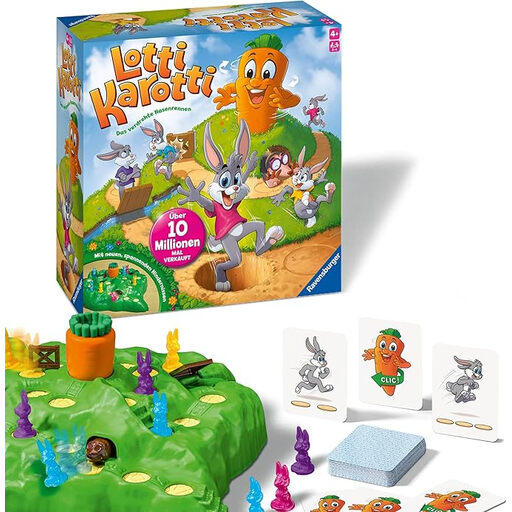
Why this product fits the profile: This board game is designed for children aged 4 and up, requires no batteries and accommodates 2 to 4 players. The playing time is around 20 minutes.
The clearly described game concept and short playing time reduce the risk of the rules being too complicated or the rounds being too long.
No batteries, no assembly and a game framework suitable for families with younger children.
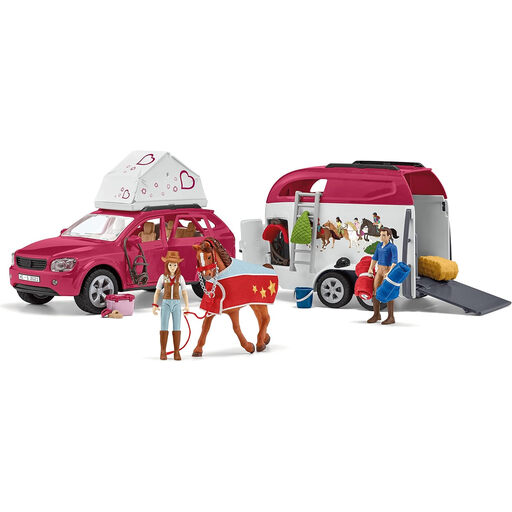
Why this product fits the profile: According to the product information, this set is aimed at children aged 5 to 12 and includes a car, horse trailer, tent, figures and accessories for role play.
The 18 included parts and the assembly instructions make the scope of delivery clear. The toy works without batteries.
Combination of vehicles, figures and accessories; plastic parts can be cleaned by hand according to the product information.
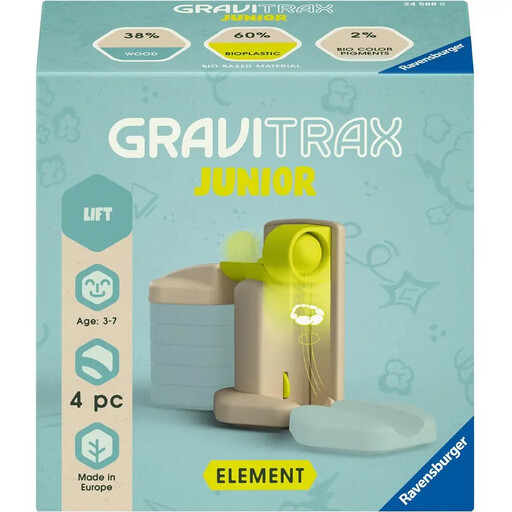
Why this product fits the profile: This expansion is designed for children aged 3 and up and is compatible with GraviTrax Junior starter sets. It adds to existing marble runs for children.
Before buying, you can check the compatibility with your existing starter set. This avoids the problem of an expansion being unusable without a base set.
No batteries required; the lift enables tracks over multiple levels.

Why this product fits the profile: This cooperative family game is designed for 1 to 4 players aged 6 and up and combines dice, event cards and a rotating game board.
The cooperative gameplay avoids a purely competitive situation. Players make decisions together and can go through the rules as a group before the first round.
Suitable for up to four players; no batteries and a game concept based on team decisions.
We have put together a complete, regularly updated list of products that fully meet these strict selection criteria and the safety regulations in force in the EU.
Before ordering, you should:
For children under 3, products with small parts that could be swallowed are fundamentally unsuitable. Even with older children, supervision is recommended for marble runs, magnetic toys and small figures, especially if there are younger siblings in the household.
Products with a clear age rating, easy-to-grip parts and a manageable game sequence are suitable. A marble run for children or a simple construction toy can work, provided the safety instructions are followed. Small balls and magnets should not be in the hands of children under 3.
From age 6 onwards, more challenging board games for children, LEGO sets, Playmobil playsets and cooperative family games are good options. What matters most is the actual complexity of the rules, the number of parts and the child's willingness to engage with a task for a longer period.
The lifespan depends on the material, how intensively it is played with, storage and care. Regular checks for cracks, loose parts or damaged wheels help to identify risks early. With construction sets and board games, all parts should be stored dry and kept complete.