
Lieferung heute & morgen

Qualitätsgarantie

Willkommens-Angebote freischalten: KOSTENLOSE Lieferung | Bis zu 80 % RABATT | Kostenlose 30-Tage-JoyPlus-Testphase
App herunterladen
Toys should suit a child’s age, interests and everyday life. When searching for toys for children, product images, lots of features and a large amount of accessories can often seem more appealing than the details that really matter. That’s why it’s worth taking a closer look at the recommended age, materials, dimensions and play concept, whether you’re a parent, grandparent or buying a gift.
Lots of individual pieces can open up a wider range of play scenarios. For younger children, however, small accessories mean more supervision is needed and there’s a greater risk of pieces going missing. So it’s not just the number of pieces that matters, but whether they’re suited to the child’s stage of development and fine motor skills.
Lights, sounds and melodies can make a toy grab a child’s attention at first. But they don’t automatically make for a varied play experience. When buying interactive toys, check whether your child can operate the buttons, wheels or moving parts themselves, and how easy it is to change the batteries.
A toy recommended for ages 4 and over isn’t suitable for a younger child, even if it looks simple at first glance. Small parts, projectiles, moving mechanisms or assembly requirements may mean an adult needs to supervise closely. The manufacturer’s age recommendation is therefore an important selection criterion, not just a marketing message.
For toys for children aged 1 and over, the shape, size and operation should be straightforward. According to the product information, the PLAYMOBIL JUNIOR Travel Bus and PLAYMOBIL JUNIOR Fire Engine Ladder Truck are designed for children aged 12 months and over. Both sets contain just a few larger components and work without batteries.
For toys for children aged 4 and over, more complex role-play worlds with figures and accessories may be suitable. Most of the PLAYMOBIL sets in this selection are recommended for ages 4 and over. According to the manufacturer, the PLAYMOBIL Asterix: Roman Chariot is designed for children aged 5 and over. Even for older children, small parts are a reason to provide appropriate supervision.
Also look for the CE marking, the manufacturer’s age recommendation and any warnings. The EN 71 series of standards covers toy safety requirements, including mechanical and physical properties. A safety marking doesn’t replace checking whether a particular product is suitable for your family’s circumstances.
Smooth, accessible surfaces on plastic toys are easier to clean. Some product descriptions specify BPA-free materials or a proportion of recycled and bio-based materials. For example, the PLAYMOBIL Brachiosaurus with Air Cushion Boat is listed as containing over 80% recycled and bio-based materials, while the PLAYMOBIL JUNIOR Travel Bus is described as being made with 90% plant-based materials.
Care instructions are important, too: some products can be cleaned with a damp cloth, while others can be rinsed under running water. Electronic components and educational cards shouldn’t be submerged in water. Regularly check wheels, connections, battery compartments and small accessories for damage.
Before buying, compare the dimensions of the set with the storage space available. A large race track or bulky playset needs a flat surface and will need to be put away after playtime. For battery-powered toys, the battery type, what’s included and whether the toy switches off automatically are all practical things to consider.
The VTech Tut Tut Baby Flitzer Fire Engine requires two AAA batteries, which are included according to the product information. The VTech RC Race Track Set requires four AA batteries. PLAYMOBIL sets such as the Offroad Buggy, pirate ship and Mars Exploration Rover, on the other hand, are operated manually. The light-up function on the electronic campfire in the PLAYMOBIL Camping Trip with Campfire is battery-powered; according to the description, the batteries aren’t included.
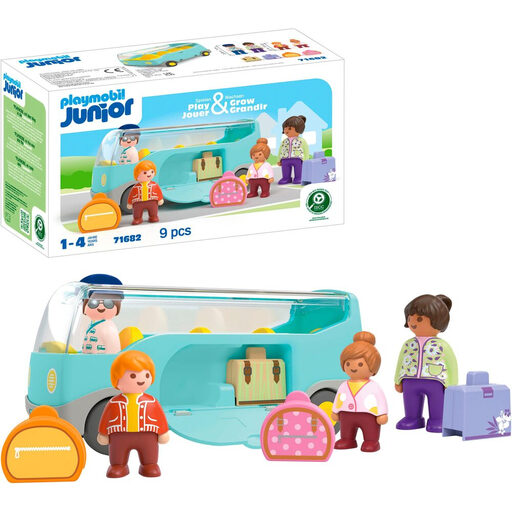
Why this product suits this profile: The bus is designed for children aged 12 months and over, includes nine pieces and doesn’t need batteries. You can easily encourage your child to sort shapes and colours as part of everyday play.
The manageable number of pieces and manual play help avoid unnecessary battery costs and an overstuffed collection of accessories.
Four figures, colour-matched luggage, sorting compartments and, according to the product description, 90% plant-based materials.
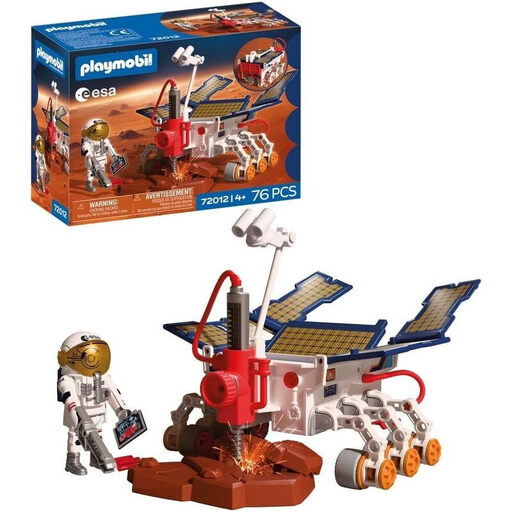
Why this product suits this profile: This set combines a space theme with practical moving features and, according to the product information, is intended for children aged 4 and over.
The fun isn’t all about sound effects: the camera, drill, solar panels and laboratory area are all operated manually.
76 pieces, seven fold-out solar panels, a movable camera and a working drill; no batteries required.
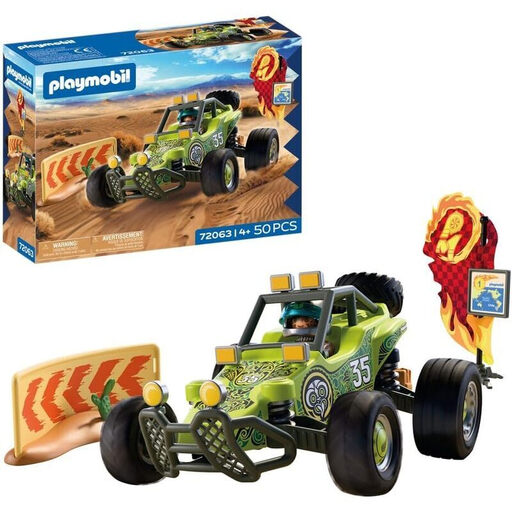
Why this product suits this profile: This vehicle is designed for children aged 4 and over who want to use vehicles in repair, racing and desert adventures.
The set offers hands-on play rather than relying solely on sound effects. The small accessories mean children will need some supervision while they play.
Removable spare wheel, moving rear suspension, tools, rope and walkie-talkie; no batteries required.
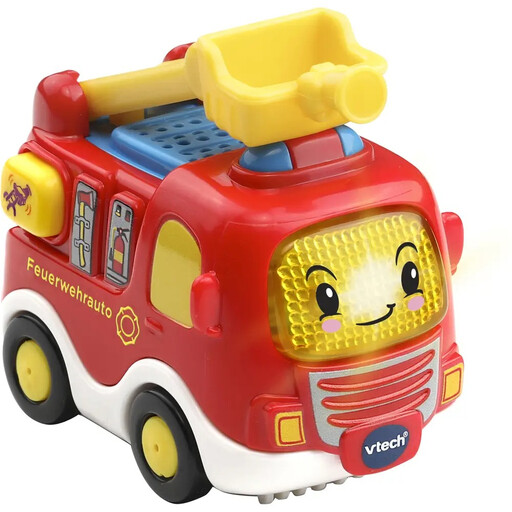
Why this product suits this profile: For a first birthday gift, this vehicle combines moving parts with lights, sounds, three songs and six melodies.
The product information clearly states the battery type, what’s included and the recommended age. This makes it easier to assess suitability and ongoing costs before you buy.
Movable fire engine ladder, Magic Sensors, two AAA batteries included and compatibility with other Tut Tut Baby Flitzer playsets.
We’ve put together a complete, regularly updated list of products that meet these strict selection criteria and fully comply with the safety regulations in force in the EU.
Look for products clearly marked as suitable from 12 months, with larger components and simple manual operation. Before buying, check the warnings, the size of the pieces and whether the toy can be cleaned. Battery-powered vehicles may be appealing, but they need a secure battery compartment cover and adult supervision.
Lifespan depends on the materials, how intensively the toy is played with, how it’s stored and how well it’s cared for. Durable plastic parts can last a long time when used properly. Regularly check the wheels, connections, battery compartments and accessories. Don’t continue using damaged parts.
As well as the purchase price, you may need to pay for batteries and expansion sets. Check whether batteries are included, which type is needed and whether the toy has an automatic shut-off function. Manual sets don’t have any battery running costs, while electronic features use additional power.