
Lieferung heute & morgen

Qualitätsgarantie

Willkommens-Angebote freischalten: KOSTENLOSE Lieferung | Bis zu 80 % RABATT | Kostenlose 30-Tage-JoyPlus-Testphase
App herunterladen
Children’s toys should keep them engaged, encourage them to explore their own ideas and suit their age. In practice, though, the sheer amount of choice can quickly lead to disappointing purchases. It’s worth taking a closer look at the details, materials and intended use, particularly when choosing educational toys, creative kits and construction toys.
“Age 3+” doesn’t automatically mean that every child of that age can play with the product independently. Fine motor skills, patience, instructions and the size of the individual pieces all matter too. A complex construction toy may not yet be suitable for a three-year-old, while a creative craft kit with clear, simple steps could be a good fit.
A set with lots of components may seem like good value at first. But without clear instructions, somewhere to store everything or a variety of ways to play, many of the pieces may go unused. Check whether the product offers different ways to play, such as building, creating, storytelling or playing together.
Small parts, magnets, batteries and sharp edges all call for extra care. Markings such as CE, EN71 or REACH can provide useful information, but they don’t replace checking the specific warnings. With magnetic toys, a damaged casing is a reason not to use the product. Swallowing magnets can cause serious injuries. Use this type of toy only as directed by the manufacturer, and supervise play where necessary.
For toys for children aged 3 and over, larger building pieces, simple connectors and sturdy materials are often a good choice. Toys for children aged 6 and over can involve more complex rules, finer movements or longer periods of concentration. For family board games, also check how many people can play and how long a game takes.
For trips, compact, quiet products such as an LCD writing tablet for children or a children’s craft kit can be handy. At home, larger magnetic building blocks, a dinosaur building set or a 3D puzzle may take up more space.
Check the information about the main material, look for rounded edges and make sure the parts fit together securely. For example, the DIY Dinosaur Toy Building Set is described as being made from ABS plastic, with rounded edges and BPA-free material. Check such claims against the safety information and age recommendation.
With magnetic building blocks, it’s particularly important that the magnets are securely enclosed. Parents should also check the pieces regularly and remove any that are damaged. Wooden models with lots of small parts may be suitable for teenagers and adults, but that doesn’t automatically make them suitable toys for younger children.
A toy that doesn’t need batteries will usually mean fewer ongoing costs. For products with lights, music or electronic features, check the battery type and how easy it is to replace them. Cleaning and storage matter too: a bag or box included with the product helps prevent pieces from going missing and makes it easier to take the toy out and about.

Why this product suits this profile: The writing tablet is suitable for children aged 3 to 8. According to the product description, it doesn’t need ongoing battery power for writing and weighs just 0,178 kg, making it easy to carry. It can be used at home or on the go for drawing and writing notes.
Using it doesn’t depend on lots of individual pieces or complicated instructions. Even so, check the age guidance, material information and how the erase button works before buying.
Compact size of 26,5 × 20,3 × 1 cm; described as being made from ABS plastic with rounded edges.
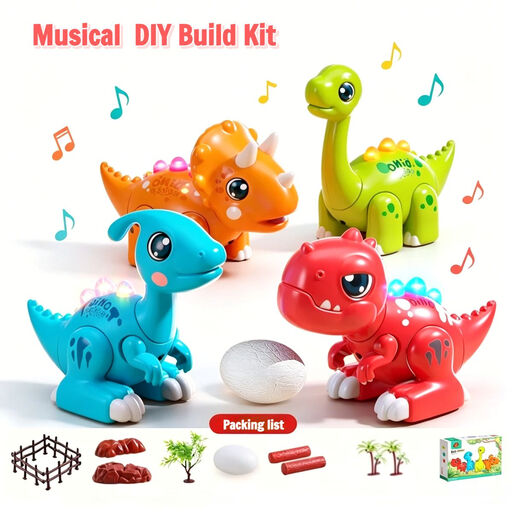
Why this product suits this profile: This building set combines pieces that slot together with imaginative play afterwards. According to the product description, it includes four dinosaurs, scenery accessories, and light and sound effects.
The four figures and scene accessories offer several ways to play. Before use, check the battery compartment, volume and that all the pieces are included.
Recommended for ages 3 to 6; described as being made from ABS, BPA-free and with rounded edges, with references to CE and EN71 compliance.
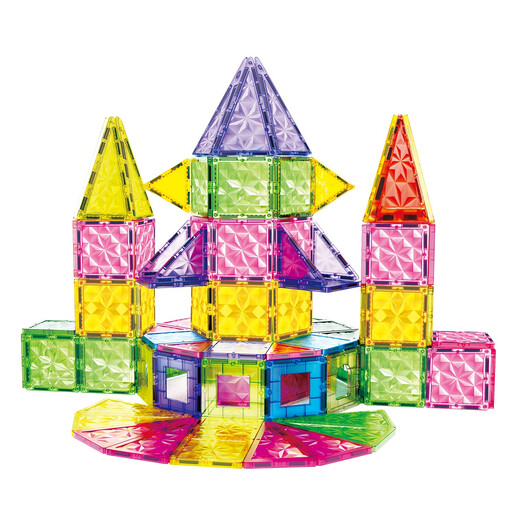
Why this product suits this profile: According to the product description, the set is intended for children aged 3 and over, and can be enjoyed alone or with others. Its 117 pieces can be used to build all sorts of creations, including houses, animals and castles.
The product description says that the magnets are fully enclosed. However, the set contains small parts and strong magnets, so any damaged pieces must be removed straight away.
117 pieces, a storage solution and no batteries required; suitable for building a variety of creations.
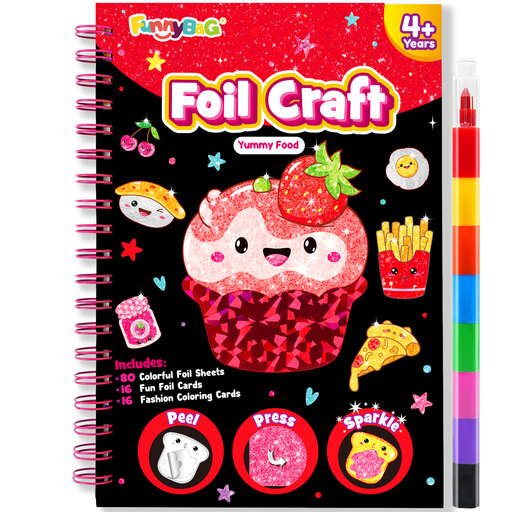
Why this product suits this profile: According to the product description, this craft kit for children aged 4 to 10 includes 80 foil sheets, 16 design cards, 16 colouring pictures and a twist-up pen with eight colours. It’s designed for creative fun at home or on the go.
According to the description, you simply peel, place and press. No glue or scissors are needed. Children should still follow the age recommendation and keep the foil out of their mouths.
Compact size of approximately 18,5 × 26 × 1,8 cm; according to the product description, it can be used without glue, scissors or extensive cleaning.
We’ve put together a complete, regularly updated list of products that meet these strict selection criteria and fully comply with the safety regulations in force in the EU.
Look for products with a clear age recommendation, larger pieces and simple steps for play. Magnetic building blocks and straightforward construction sets may be suitable, but small parts and magnets need to be checked regularly. Always follow the manufacturer’s specific age recommendation.
Lifespan depends on the material, mechanisms, storage and how often the toy is played with. Sturdy ABS pieces or well-made wooden parts can last a long time when used properly. Damaged pieces, loose magnets and faulty battery compartments should be replaced or disposed of, whatever the product’s age.
Toys with lights or music may need batteries. Before buying, check whether batteries are included, which type is needed and whether the feature can be switched off. Battery-free options such as a craft kit, a traditional board game or an LCD writing tablet can make regular use easier to budget for.