
Lieferung heute & morgen

Qualitätsgarantie

Willkommens-Angebote freischalten: KOSTENLOSE Lieferung | Bis zu 80 % RABATT | Kostenlose 30-Tage-JoyPlus-Testphase
App herunterladen
The range of toys for children includes everything from baby activity toys and educational toys to LEGO sets, soft toys and board games for children. With so much choice, shopping isn’t always straightforward. Packaging can often have more influence than how practical a toy is for everyday use.
Three common buying mistakes are particularly easy to make:
The age recommendation should match the child’s development. Toys for children aged 1 and over are designed differently from toys for children aged 3 and over, or construction toys for school-age children. For products with small parts, consider the risk of choking.
Magnetic toys require extra precautions. If magnets are swallowed, they can attract each other inside the body and cause serious injuries. Check magnetic building blocks regularly for cracks, loose parts and damaged magnet casings. If a toy is damaged, stop using it.
Age recommendations are also important for board games for children that include marbles, playing pieces or small tokens. Adult supervision does not make a toy suitable for a child below the recommended age.
Look for clear information about the materials, manufacturer and responsible person in the EU. The CE mark indicates that the manufacturer has taken the relevant EU requirements into account. However, it is not an independent quality mark and, on its own, says nothing about durability or educational value.
Product descriptions for plastic toys may include terms such as ABS, BPA-free or phthalate-free. Consider these alongside the warnings and care instructions. For soft toys, check the seams, attached accessories and removable plastic parts. Do not continue using a soft toy with loose seams.
Electronic baby activity toys need batteries. Check whether batteries are included, what size is required and whether the battery compartment can be closed securely. A volume control can be useful on musical toys, but it should not be treated as medical protection.
For inflatable toys, check whether a pump is included, the maximum load and whether the toy needs regular checks for cracks. For construction and collectible toys, the number of pieces, dimensions and storage options are important. A storage bag or box can help prevent pieces from getting lost.
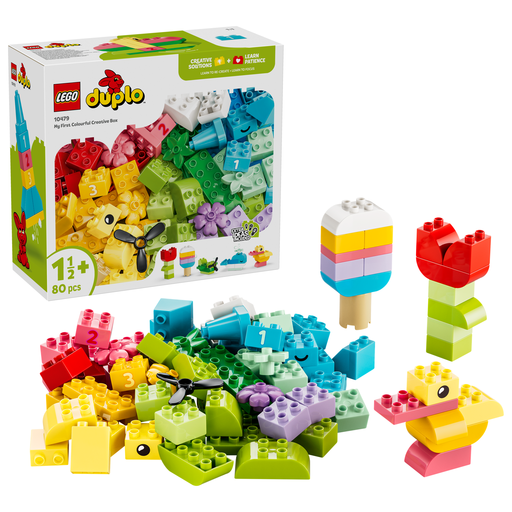
Why this product suits this shopper: The set contains 80 pieces and, according to the product information, is intended for children aged 18 months and over. The large bricks are ideal for first, simple builds and can be used again and again.
The number of pieces and the recommended age group are clearly stated. This isn’t a set with lots of small parts intended for older children.
80 building bricks, suitable from 18 months and additional building ideas in the product description.
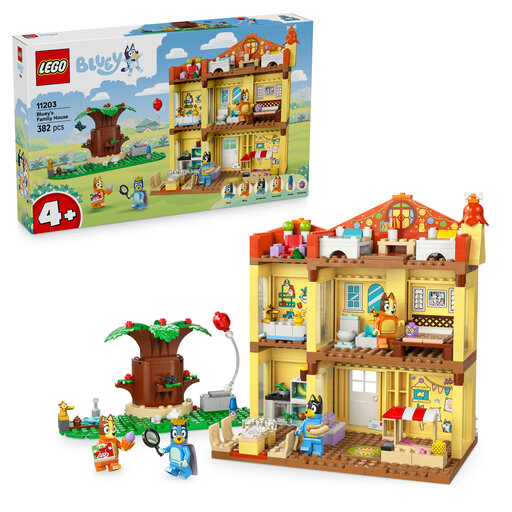
Why this product suits this shopper: This set combines building with imaginative play. It contains 382 pieces, four figures and several removable rooms for different play scenarios.
The product details give the piece count, model dimensions and recommended age of 4 and over. This makes it easier to work out how much space you’ll need before buying.
382 pieces, four play figures, several rooms and a recommended age of 4 and over.
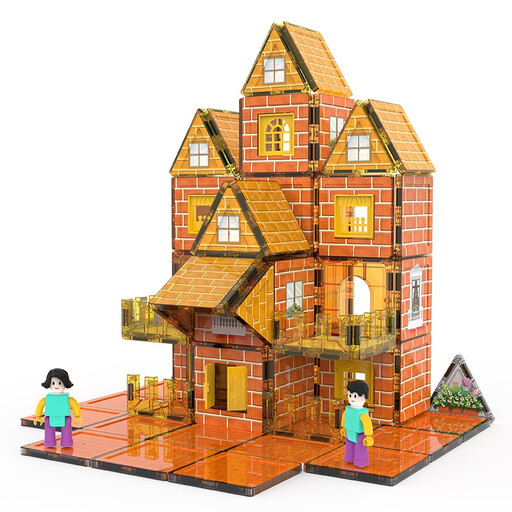
Why this product suits this shopper: The 81 magnetic building blocks are intended for children aged 3 and over and come with a storage bag. The set is a good choice for families who build regularly and want to keep the pieces organised.
The description specifically highlights the small parts and magnets. Regular checks for damaged casings and adult supervision are still essential.
81 pieces, sealed magnets according to the product information and a storage bag included.
We’ve put together a complete, regularly updated list of products that meet these strict selection criteria and fully comply with the safety regulations in force in the EU.
For babies and toddlers, simple grasping, touch and movement features are worth considering. With baby activity toys, check the volume, batteries, edges and any parts that could be swallowed.
For children aged 3 and over, animal figures, simple role-play sets and magnetic building blocks can be suitable, provided you follow the warnings. Educational toys shouldn’t be chosen on the basis of educational claims alone; specific information about how they work, what’s included and the recommended age range is more useful.
From around age 4, LEGO sets, board games for children and themed playsets may be appealing. For older children up to around age 12, consider more complex construction sets, strategy games or collectible figures. Soft toys remain popular with children of all ages, but check them regularly for loose seams and parts that could come away.
Choose products with age-appropriate, easy-to-grasp parts and no small parts that are easily accessible. Check the specific age recommendation, make sure the toy is robustly made and ensure children can’t access the battery compartment.
Lifespan depends on the materials, how often the toy is used and how well it is cared for. Plastic building blocks can last a long time when used properly. Electronic toys need their battery compartments, cables and controls checked. Stop using a product if you notice cracks, loose parts or damaged magnets.
Check the age recommendation and warnings, and inspect the magnet casings before each use. Magnetic toys should not be given to children who still put objects in their mouths. If a magnet is swallowed or inhaled, seek medical help immediately.