
Lieferung heute & morgen

Qualitätsgarantie

Willkommens-Angebote freischalten: KOSTENLOSE Lieferung | Bis zu 80 % RABATT | Kostenlose 30-Tage-JoyPlus-Testphase
App herunterladen
The choice of toys for children is vast: baby toys, educational toys, soft toys, dolls and musical products differ not only in design, but also in age suitability, materials, features and care requirements. An eye-catching product is therefore not automatically suitable for your child.
Three typical buying and marketing traps are particularly common:
With toys from 1 year, large, easy-to-grip elements, simple shapes and manageable sequences are usually helpful. A wooden puzzle from 12 months, for example, should have easy-to-reach grip knobs. For children aged 3 and over, more complex role play, dolls or soft toys with smaller details may be suitable.
The age recommendation is only one part of the assessment. You should also read:
For example, the Little Dutch Miffy Lucky Leaves Soft Activity Book is described as suitable from birth, while the product information also mentions small parts and a restriction for children under 3. In such cases, parents should follow the stricter warning and only allow the product to be used under supervision.
With baby toys and sensory toys, rounded edges, sturdy stitching and clear material information are important. Wooden puzzles should have a smooth finish; with soft toys, securely stitched details and a suitable cleaning method matter.
The CE marking indicates that the manufacturer declares compliance with the relevant EU requirements. However, it is not an independent quality seal and does not replace your own checks of the product description and warnings. Statements such as “BPA-free” or “no SVHC above 0.1 per cent” should be understood as manufacturer or product declarations, rather than blanket statements covering every use situation.
Before buying, consider where and how the toy will be used:
An activity table for babies with detachable legs can, depending on the model, initially be used as a floor play board and later as a table. Volume control is useful for musical toys. It does not automatically make loud play harmless, but it does allow the sound level to be adjusted to the surroundings.
The following recommendations are organised by everyday situation and product features. This makes it easier to assess whether a product suits the child’s age, available space and interests.
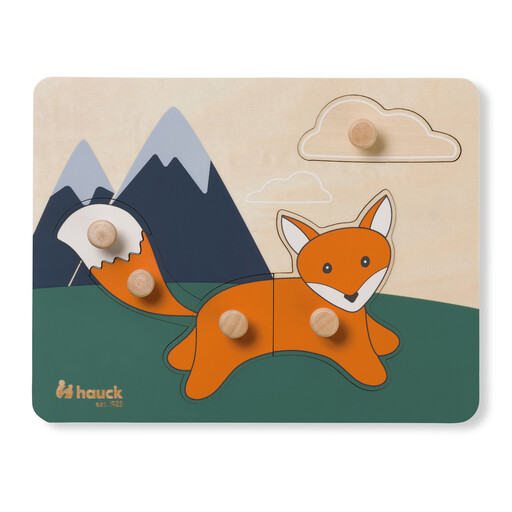
Why this product suits the profile: This wooden puzzle focuses on one clearly defined activity and requires neither batteries nor complicated set-up. It is suitable for children from 12 months, provided that they are directly supervised by an adult.
The product description gives a specific age recommendation and lists wood as the main material, along with rounded edges and easy-to-grip knobs. Its manageable range of features avoids unnecessary extras.
FSC-certified wood according to the product information, dimensions of approximately 22 × 17 × 2 cm and a single puzzle board.
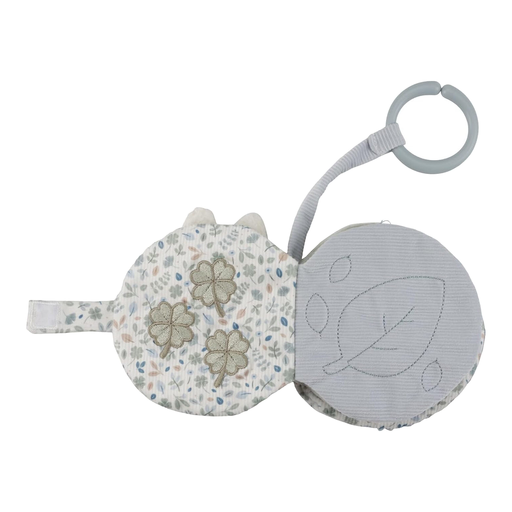
Why this product suits the profile: This soft activity book combines crinkle paper, sounds, a mirror and an attachment ring for a pushchair. It is designed for short, supervised periods of entertainment while out and about.
The product details specify the materials, dimensions, attachment and cleaning instructions. At the same time, the conflicting warning about small parts should be taken into account before buying.
100 per cent polyester according to the product information, dimensions of approximately 13.5 × 13.5 × 6 cm and a ring for attaching it to a pushchair.
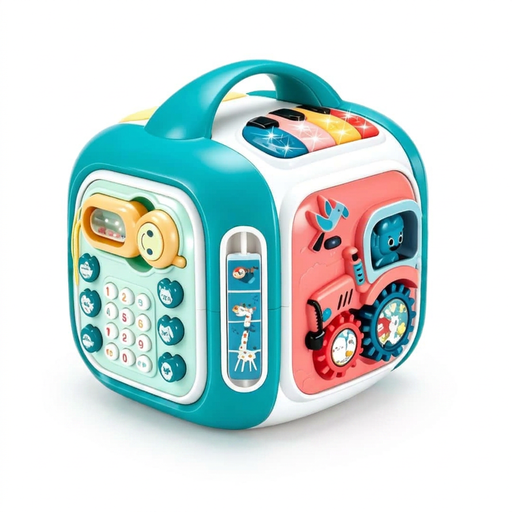
Why this product suits the profile: This cube is designed for toddlers aged 1 to 3 and combines eight play areas, including a piano, guitar, telephone, gears and music functions. Measuring approximately 23 × 23 × 24 cm, it is designed for floor play and easy transport.
The functions are clearly listed in the product description. Before buying, parents should still check whether the sound level, space required and batteries are suitable for their household.
ABS plastic, rounded edges, BPA-free material according to the product information, plus several hands-on play options in one compact product.
We have put together a complete, regularly updated list of products that fully meet these strict selection criteria and the safety regulations applicable in the EU.
When choosing a gift for children, the child’s everyday situation should matter more than a short-lived trend. A soft toy for children, such as a plush toy from Schmidt Spiele or Princess Mimi, is suitable for children aged 3 and over, provided that sewn-on or attached small parts are checked regularly. For role play, dolls for children such as Disney Cinderella or the L.O.L. Surprise Tweens Mermaid Cleo Cove may be suitable. According to the product information, the latter is intended for children aged 4 and over and contains small parts.
A musical toy can be suitable as a birthday present or Christmas gift for children. For drums, microphones and activity tables, check the batteries, volume control, stability and available play area in advance. For babies under 12 months, the selection should be particularly focused on easy gripping, warnings and supervised use.
Simple posting, sorting and motor skills toys with large parts may be suitable. A wooden puzzle from 12 months should have easy-to-grip elements and rounded edges. The specific manufacturer’s information and all warnings are decisive.
That depends on the child’s stage of development, interests and way of playing. Products with a clear core function can be used for longer if they allow different ways to find a solution. When choosing electronic toys, consider the volume, battery consumption and the number of functions that are actually needed.
Look for adjustable volume, a sturdy construction, easy-to-reach controls and clear age guidance. The toy should not be left running unattended for long periods. If batteries are not included, their size and the security of the battery compartment should also be checked in practice.