
Lieferung heute & morgen

Qualitätsgarantie

Willkommens-Angebote freischalten: KOSTENLOSE Lieferung | Bis zu 80 % RABATT | Kostenlose 30-Tage-JoyPlus-Testphase
App herunterladen
Finding the right toys for children may seem straightforward at first, but the choice can quickly become confusing. Many products promote numerous features, flashing effects or educational benefits. What really matters, however, is whether the toy suits the child’s age, surroundings and habits.
A toy with a remote control, music, lights and sensors may sound impressive. However, if it is complicated to operate or needs frequent charging, it may end up going unused. Before buying, consider whether the child is more interested in building, experimenting, being active or playing make-believe.
Children’s toys for ages 3 and over are not automatically suitable for every three-year-old. Small parts, moving mechanisms and chemical components may require supervision. The manufacturer’s age recommendation, warnings and intended place of use are therefore among the most important points to check.
When buying remote-controlled vehicles or robot toys, check whether a rechargeable battery, charging cable or additional batteries are included. Charging time, where the toy can be charged and the recommended surfaces for use can also affect everyday convenience. A toy that only works on smooth floors is not automatically suitable for the garden.
Pay attention to the specific age rating and any warnings about small parts. A children’s science kit for ages 8 and over needs to be assessed differently from a wind-up toy for ages 3 and over. With chemistry toys, read the instructions in full. According to the product information, the Clementoni sets “How to Make Flummis”, “Science Below 0°” and “Grow Your Own Crystals” are intended for children aged 8 and over and require adult supervision.
For toys with rechargeable batteries or moving parts, we recommend carrying out a quick visual check before every use:
For indoor and outdoor toys, the surface should be suitable for the construction. According to the product description, a remote-controlled car with 2.4-GHz control and four-wheel drive can be used on indoor floors, carpets and flat concrete surfaces. This does not mean that it is designed for water, stairs or uneven obstacles.
Flying toys should only be used in sufficiently large, clear indoor spaces. According to the product information, the Dreamora UFO must not be operated in strong winds, near power lines or next to sharp-edged objects. Check the protective cover before every play session.
Educational toys do not have to consist solely of worksheets or factual content. A marble run, for example, encourages children to build, sort and observe how things move. A science kit, on the other hand, offers a clearly defined process with materials and instructions.
This guide can help you choose:
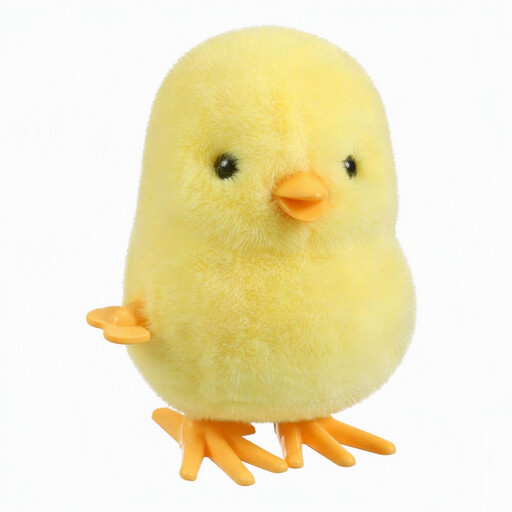
Why this product suits the profile: According to the product information, this compact wind-up toy is mechanically operated and requires no batteries. It is suitable for short indoor play sessions and makes a small birthday gift for children aged 3 and over.
There are no ongoing battery costs and no complicated setup. However, the spring should not be overwound, and the plush material should be checked regularly.
Mechanical operation without batteries; supplied as a single piece with a stated size of approximately 8 × 6 × 9 cm.
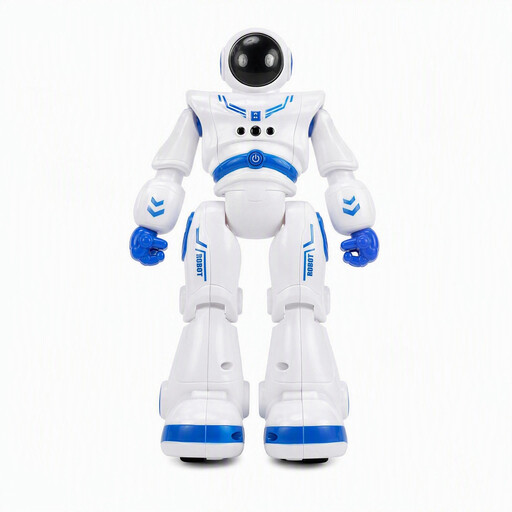
Why this product suits the profile: According to the product information, this model is designed for children aged 6 and over and offers both remote and gesture control. It is intended for use on flat, hard indoor floors.
The power requirements are clearly stated: the remote control uses a battery, while the robot has an integrated rechargeable lithium battery. Check that you have enough available space before buying.
Two control methods, LED display, plus light and sound functions; robot dimensions of approximately 14 × 8.5 × 27 cm.
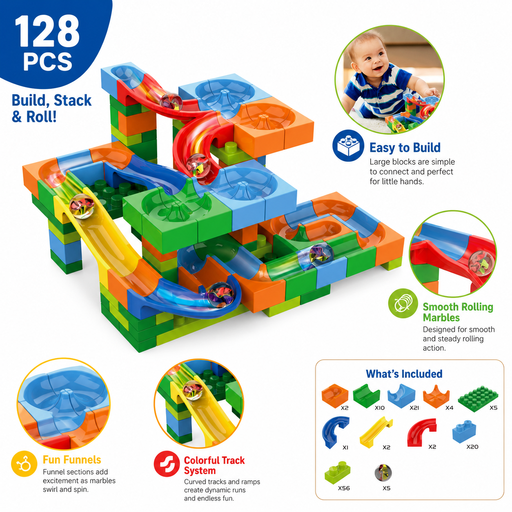
Why this product suits the profile: This kit is aimed at children who want to plan their own tracks and modify them repeatedly. Its 128 pieces offer a different type of play from a ready-made vehicle or electronic toy.
The play value does not depend on battery life or electronic functions. Because it includes marbles and small components, follow the age recommendation and provide supervision where appropriate.
128 individual pieces for changing constructions; combines building and role play without batteries.
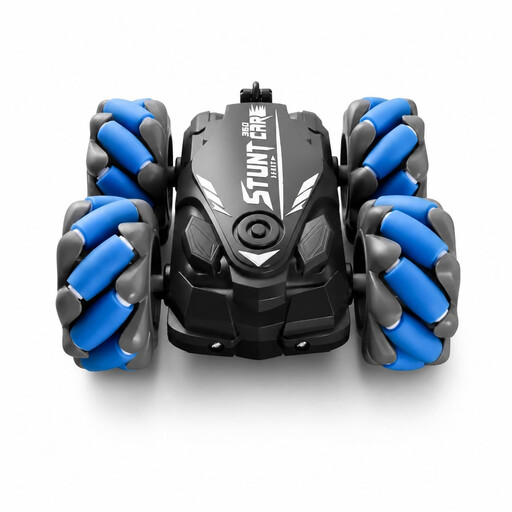
Why this product suits the profile: According to the product description, this remote-controlled car is intended for children aged 8 and over, indoor use and flat outdoor surfaces. Two control methods allow for different ways of operating it.
Observe the usage limits: do not use it in water or at high temperatures, and supervise it while charging. Check the wheels for damage before every drive.
2.4-GHz remote control, gesture control, four-wheel drive and rechargeable lithium battery with USB cable.
We have put together a complete, regularly updated list of products that fully meet these strict selection criteria and the safety regulations applicable in the EU.
As a birthday gift for children, products that can be tried out without lengthy preparation are a good choice. A wind-up toy or a basketball game with a return net is ready to use quickly. For Christmas gifts for children, a building kit or science kit may be a good option if you can allow enough time for setting it up and using it together.
You should also check the following before buying:
For children aged 3 and over, simple mechanical products such as wind-up toys may be suitable, provided you follow the age recommendation and guidance on small parts. Damaged plush surfaces or loose components are reasons to stop using the toy.
The actual runtime depends on how the toy is used, its charge level and the age of the battery. Once fully charged, disconnect the charger in accordance with the instructions. Lithium batteries must not be opened, crushed or exposed to excessive heat.
Educational toys include a range of products with a learning element, such as sorting, building or observation activities. STEM toys typically focus on science, technology, engineering and mathematics. A marble run kit or science kit can therefore include STEM elements without being an electronic product.