
Lieferung heute & morgen

Qualitätsgarantie

Willkommens-Angebote freischalten: KOSTENLOSE Lieferung | Bis zu 80 % RABATT | Kostenlose 30-Tage-JoyPlus-Testphase
App herunterladen
Toys should suit a child’s age, interests and everyday life. Even so, eye-catching packaging, long lists of features and unclear age recommendations often lead to poor purchases. This is particularly true of toys for children, where three common selling points can seem more convincing than they actually are in everyday use.
A toy with lights, music, buttons and several play modes may sound versatile. For babies and toddlers, however, an overloaded design can be confusing. So check whether the features match the child’s stage of development and whether they can operate them independently.
“For children” is not sufficient information. A baby toy for 6 to 18 months has different requirements from a construction toy for children aged 6 or 7 and over. Small parts, moving elements or accessories that could be swallowed may be unsuitable for younger children.
Electronic learning toys and musical instruments for children can be clearly audible throughout the home. A volume control or quiet mode is therefore a practical selection criterion. You should also check whether batteries are included, how large the product is and whether you have enough storage space.
The age recommendation on the packaging is an important starting point, but it does not replace an individual assessment. For example, babies benefit from sturdy, easy-to-grip shapes that are simple to clean. For toys from 1 year, simple turning, pressing and fitting elements are useful because they make cause and effect clear.
For older children, learning toys, role-play toys, collectible figures, board games or construction sets may be appealing. Consider whether the child prefers creating freely, inventing stories, following rules or collecting things. A LEGO set with a manageable number of pieces may be more suitable for beginners than a complex model with several hundred pieces.
For plastic toys, the material information, rounded edges and sturdy construction should be easy to verify. According to the product information, several of the products mentioned here are made from ABS plastic and are BPA-free. Buyers should cross-check these details against the information on the packaging and product page.
The CE mark indicates the manufacturer’s declaration that the relevant EU requirements have been met. It is not an independent quality seal. Information relating to EN 71, the toy safety standard, may also be provided. The specific age recommendation, safety warnings and proper use remain the decisive factors.
An activity cube with a carry handle may be suitable for travel, while a play table requires more space. For musical toys, check the battery type, what is included and whether the volume can be adjusted. Battery compartments should be securely closed. For water toys, dolls and sensory toys, it is also important to consider whether the surfaces are easy to clean and whether all small parts can be put away safely after play.

Why this product suits this profile: The cube combines eight play areas in a compact format and, according to the product information, is designed for children aged 1 to 3.
The features are combined in one device instead of requiring several separate toys. The age recommendation and information about rounded edges make it easier to narrow down your options.
Piano, guitar, toy telephone, gears and musical surfaces; dimensions according to the product information: 23 × 23 × 24 cm.
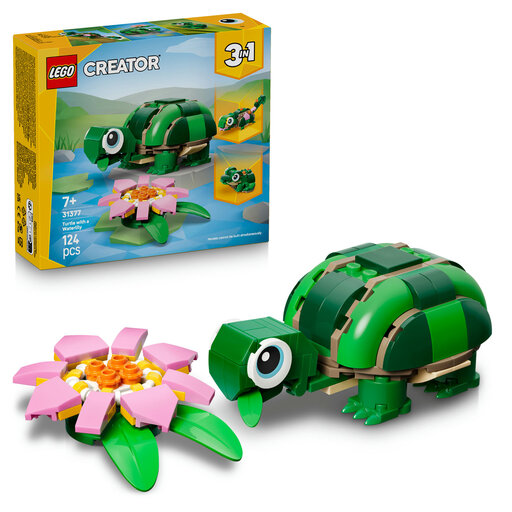
Why this product suits this profile: According to the product information, this 3-in-1 construction toy offers a clearly defined building task and can be rebuilt into three animal models for children aged 7 and over.
The 124-piece count and age recommendation make the scope easier to assess. Small parts are explicitly listed as a safety warning.
Three building options, moving elements and digital 3D building instructions via the LEGO Builder app.
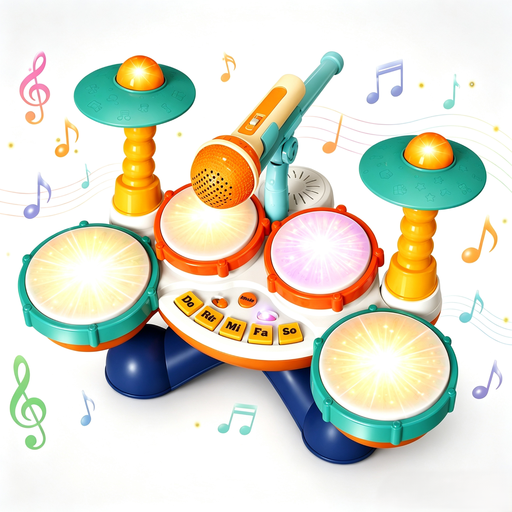
Why this product suits this profile: For families looking for musical instruments for children, this set combines drum pads, cymbals, a microphone and built-in melodies.
An adjustable volume addresses the noise level that is often underestimated. According to the product information, the set is designed for ages 1 to 4; batteries are not included.
Four illuminated drum pads, two cymbals, ten melodies and three play modes according to the product description.
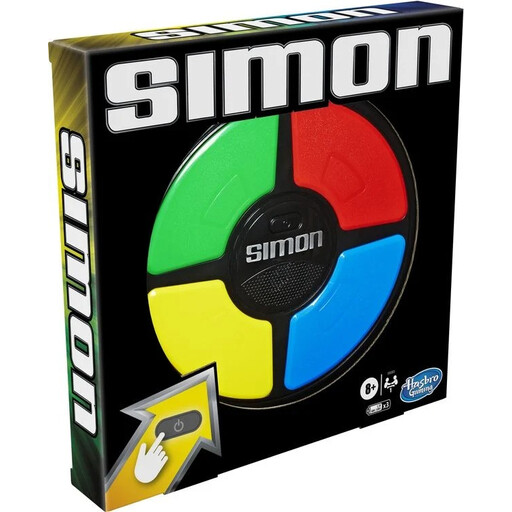
Why this product suits this profile: According to the product information, this electronic game is designed for individual players aged 8 and over and is ideal for short games at home.
The age limit, dimensions of 26,7 × 26,7 × 4,1 cm and battery type requiring three AAA batteries are all clearly specified.
Light and sound signals, an increasing sequence length, high-score storage and included test batteries according to the product description.
We have put together a complete, regularly updated list of products that fully meet these strict selection criteria and the safety regulations applicable in the EU.
For creative children, LEGO sets, collectible figures and role-play toys are also worth considering alongside the products mentioned above. The LEGO Classic “Creative Food Friends” set contains 150 pieces and, according to the product information, is designed for children aged 4 and over. For fans of Disney, animals or fantasy worlds, models such as LEGO Disney sets, Schleich figures or collectible series may be a good choice. When buying collectible figures, parents should pay particular attention to small parts and the age limit.
Board games are an option for family evenings. The number of players, playing time and required accessories matter more here than a long list of features. Whether you are choosing birthday gifts for children or Christmas gifts for children, the product should also complement the games already available rather than simply matching the theme shown on the packaging.
Sturdy toys with large, easy-to-grip elements and simple cause-and-effect functions are suitable. Activity cubes, musical panels or stackable shapes may be good options. Small parts and unclear age recommendations should be avoided. Direct supervision remains advisable for toddlers.
There is no fixed duration that applies to every child and every product. Make sure they take breaks, keep the volume at a suitable level and remain actively engaged with the toy. Volume controls and quiet modes are useful for musical toys. The manufacturer’s instructions for use should also be followed.
Price alone says little about suitability. Compare the material information, number of pieces, age recommendation, battery costs, expansion options and likely usage. A simple toy that is used regularly may be more suitable for everyday life than a large set with features the child hardly uses.