
Lieferung heute & morgen

Qualitätsgarantie

Willkommens-Angebote freischalten: KOSTENLOSE Lieferung | Bis zu 80 % RABATT | Kostenlose 30-Tage-JoyPlus-Testphase
App herunterladen
The choice of toys for children is extensive, from educational toys and role-play toys to remote-controlled vehicles, construction sets and active play toys. For parents, grandparents and other gift buyers, however, first impressions are not the only consideration. Age suitability, materials, operation, space requirements and the toy’s actual everyday play value are all important.
A toy for children aged 3 and over is not automatically suitable for every three-year-old. Small parts, magnets, battery compartments or moving wheels may require particular care. With remote-controlled models, operation is another factor to consider. Before buying, check:
The recommended age is not a substitute for an individual assessment. A product intended for older children may be unsuitable for younger children because of its speed, noise or complex controls.
Lights, music, sensors and remote controls can be appealing, but they often increase maintenance requirements. Check whether batteries are included, which battery types are needed and whether a USB charging cable is supplied. With toys containing lithium batteries, charging and storage instructions are particularly important.
Products marketed as “educational” should not be chosen solely because of this label either. Instead, ask yourself: What specific activity does the child carry out? Do they build, sort, move around or create their own stories?
Large indoor and outdoor toys can quickly become impractical in the home. Check the dimensions, weight and amount of play space required. With soft toys, seams and the surface should be checked regularly. With magnetic toys, it is important to ensure that magnets cannot become accessible. Damaged products should no longer be used.
Look out for the marking “Not suitable for children under 36 months” and for warnings about small parts. With magnetic building blocks, it is essential to bear in mind that swallowed magnets can pose a serious danger. The CE marking indicates that the manufacturer states the product complies with relevant EU requirements; however, it is not a substitute for checking the product description, warnings and build quality.
With battery-powered toys, the cost of batteries forms part of the actual purchase expense. For example, the bubble wand toy requires three AA batteries, which are stated as included in the product information. The Theo Klein children’s kitchen requires two AA batteries, which are not included. A mechanical wind-up toy, on the other hand, requires no batteries.
For rechargeable products, you should consider charging time, charging accessories and safe use. During charging, the toy should only be used as specified in the instructions.
Compact products such as a wind-up figure or a portable doctor’s case are suitable for smaller homes. Remote-controlled toys need clear space and should not be used near stairs, water, fragile objects or power cables. Surfaces are generally cleaned with a dry or slightly damp cloth. Electronic components and soft-toy mechanisms must not be immersed in water.
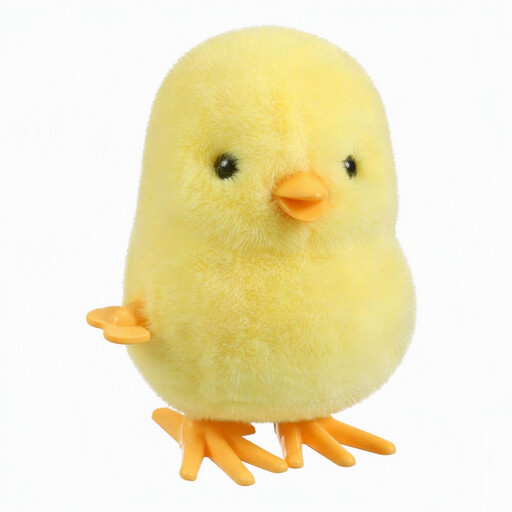
Why this product suits the profile: This compact wind-up toy is intended for children aged 3 and over and requires no batteries. It is ideal for short play sessions on the living-room floor or a play mat.
The mechanical function eliminates the need for additional batteries and electronic settings. Check the soft-toy surface for tears before each use.
Battery-free wind-up mechanism; measuring approximately 8 × 6 × 9 cm, it is easy to store.
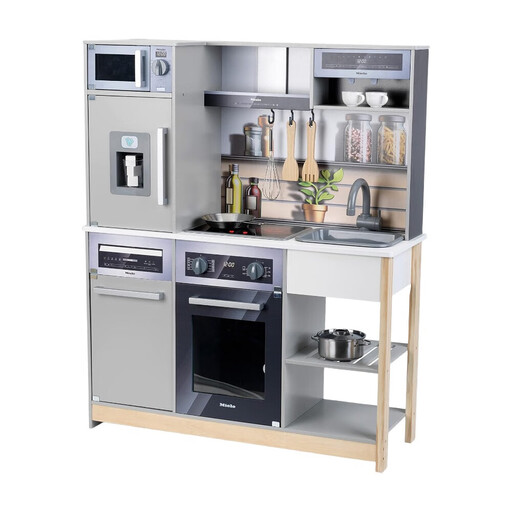
Why this product suits the profile: Measuring 83.5 × 30 × 101 cm, this wooden kitchen offers several play areas and is aimed at children aged 3 and over who enjoy longer role-play sessions.
The product information lists the dimensions, materials, assembly requirements and batteries needed. This makes it easier to check whether the available space and accessories are suitable before buying.
FSC-certified wood according to the product description; hob with light and sound functions, plus several accessory areas.

Why this product suits the profile: This set of 28 magnetic building pieces is intended for children aged 3 and over and offers open-ended construction possibilities for repeated play sessions.
The warning about small parts and strong magnets is clearly stated. Check the pieces regularly for cracks and exposed magnets.
28 pieces, a storage bag and a stated individual piece size of 5.5 cm; no batteries required.
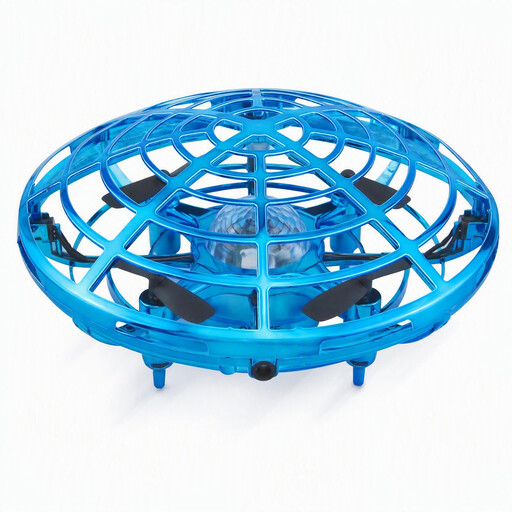
Why this product suits the profile: This hand-controlled flying toy is aimed at children aged 6 and over and is designed for level indoor spaces. It combines movement with simple gesture controls.
According to the product information, it has a fully enclosed protective cover. Nevertheless, avoid using it close to the face, with damaged covers or while it is charging.
USB-rechargeable battery, LED lighting and integrated obstacle-avoidance sensors according to the product description.
We have put together a complete, regularly updated list of products that fully meet these strict selection criteria and the safety regulations applicable in the EU.
Products with clear age labelling, straightforward operation and manageable small parts are suitable. Role-play toys such as a doctor’s case, children’s kitchen or toy cash register may be suitable for this age group. For every product, take the specific warnings and recommended supervision into account.
Their lifespan depends on the materials, care and how they are used. Mechanical wind-up toys should not be wound too tightly. With electronic toys, regularly check the battery compartments, casing, cables and moving parts. If you notice visible cracks, unusual heat or damaged covers, stop using the product.
In addition to the purchase price, you may need to buy batteries, charging accessories or consumable materials. Battery-free products have lower ongoing costs in this respect. Bubble toys also require bubble solution. Before buying, therefore, check what is included and which parts may need to be purchased separately.