
Lieferung heute & morgen

Qualitätsgarantie

Willkommens-Angebote freischalten: KOSTENLOSE Lieferung | Bis zu 80 % RABATT | Kostenlose 30-Tage-JoyPlus-Testphase
App herunterladen
Toys for children should be entertaining, support their development and work reliably in family life. The choice ranges from baby toys, educational toys and Montessori toys to family games and remote-controlled vehicles. This wide variety can make choosing the right product confusing.
An age recommendation is not simply a marketing detail. It takes into account factors including the size of the parts, the level of difficulty, the volume and the motor skills required. For example, a construction toy with small magnets may be suitable for older children but pose a significant choking hazard to younger children.
Lights, music, sounds and multiple play modes can look appealing in product images. In everyday use, however, ease of operation, volume control, stability and straightforward storage are often more important. With musical toys for children, you should also check whether batteries are included and how the toy can be switched off.
Warnings such as ‘not suitable for children under 3 years’, ‘small parts’ or ‘strong magnets’ must not be overlooked. A product marketed as a baby toy may also specify a different age group. The information on the product page and packaging is what matters, not just the category description.
For babies from around six months, grasping, cause-and-effect and movement toys with sufficiently large, securely attached parts are suitable. Toddler toys from one year old should be easy to hold and require no complicated assembly. From the age of three, role play, simple construction tasks and the first rule-based games become suitable. For children aged six or eight and over, controls, strategy and more intricate tasks can be more challenging.
The age recommendation does not replace supervision. Parents should accompany children when using toys with batteries, moving wheels, microphones or magnets, and check the product regularly.
Look for clear information about the material, manufacturer and responsible person in the EU. Smooth edges, sturdy connections and a casing without cracks are practical points to check. The CE marking indicates that the manufacturer declares compliance with the relevant EU requirements; it is not, however, an independent quality seal.
With plastic toys, information such as ABS or BPA-free can provide additional product details. It should not nevertheless be treated as a blanket guarantee of safety. With magnetic toys, warnings about small and strong magnets are particularly important.
Before buying, check whether the toy will fit in the intended space. For an RC car for children, level floors, carpets and outdoor surfaces are all relevant. With battery-powered products, the cost of batteries and replacement intervals form part of the ongoing expense. Rechargeable models, on the other hand, require charging time and a suitable place to charge them.
Volume also matters in the home. Volume control is practical for musical toys for children. Follow the manufacturer’s instructions for chargers and lithium batteries: do not charge them unattended, disconnect them once fully charged and do not continue using damaged batteries.

Why this product suits the profile: This cube combines eight play options in one compact format, making it suitable for families looking for a range of functions without having to buy several separate products.
Rather than relying solely on light and sound effects, this model combines a piano, guitar, cogs and role play, among other features. It is recommended for children aged 1 to 3 years.
Compact dimensions of 23 × 23 × 24 cm, a carry handle and several manual controls; batteries are not included.
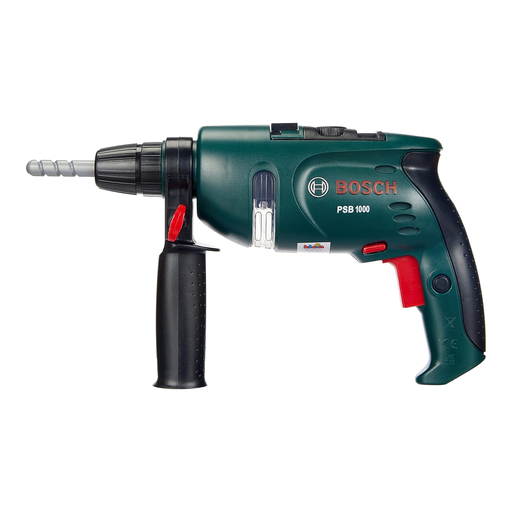
Why this product suits the profile: This battery-powered toy drill is designed for children aged three and over who enjoy role play centred around workshops and DIY.
The product is described as having a slowly rotating drill bit as well as light and sound effects. The age limit and the information that two AA batteries are not included should be taken into account before buying.
28.5 × 4.5 × 16 cm, weighing approximately 200 g, with a plastic casing; suitable for individual and group play.

Why this product suits the profile: This set is designed for children aged three and over who enjoy creating their own patterns and three-dimensional constructions.
The product information explicitly mentions small, strong magnets and recommends supervision. If parts are damaged or magnets become visible, the set should no longer be used.
28 ABS plastic construction pieces, piece size 5.5 cm and a storage bag; no batteries required.
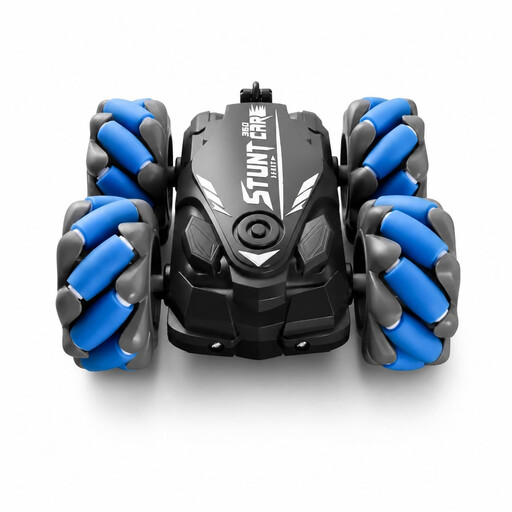
Why this product suits the profile: This model is aimed at children aged eight and over who enjoy driving indoors and outdoors, performing stunts and taking part in competitions together.
The product description clearly states the age limit of 8 years, warns about small parts and highlights the need for supervision during play and charging. Wheels, casing and connections should be checked before every use.
2.4-GHz remote control plus gesture control, four-wheel drive, USB charging cable and integrated lithium battery; vehicle dimensions: 134 × 130 × 62 mm.
We have put together a complete, regularly updated list of products that fully meet these strict selection criteria and the safety regulations applicable in the EU.
For younger children, a sensory toy with grasping and cause-and-effect elements or a small drum could be a good choice. According to the product information, the baby musical drum toy is suitable for children aged six to 36 months and combines drum surfaces, shapes, colours and animal sounds. Batteries are not included; adult supervision remains important.
For role play from the age of three, consider a toy drill, supermarket playset or dinosaur race track. A 43 cm children’s ukulele model can provide an introduction to musical toys for children. For shared evenings from the age of six, a family game such as ‘Hands Up!’ by Schmidt Spiele is a good option. It does not require batteries and is specified as suitable for children aged six and over.
When choosing a birthday toy or Christmas toy, do not select the present based on its theme alone. Check the child’s age, the space required, batteries, accessories and interests in advance. This keeps the selection clear and makes it easier to match the purchase to how the child will actually play.
Large, easy-to-use toys without loose small parts are suitable, such as an activity cube or a simple musical toy. Check the specific age recommendation, rounded edges, stability and moderate volume.
Durability depends on the material, use and care. Regularly check casings, wheels, seams, battery compartments and plug-in connections. Damaged products and toys with exposed magnets should no longer be used.
Battery-powered products incur recurring costs and require suitable batteries. With battery-powered RC models, charging time is the main consideration; charging accessories should be used according to the manufacturer’s instructions. Family games and manual construction sets generally have no energy costs.