
Lieferung heute & morgen

Qualitätsgarantie

Willkommens-Angebote freischalten: KOSTENLOSE Lieferung | Bis zu 80 % RABATT | Kostenlose 30-Tage-JoyPlus-Testphase
App herunterladen
The search for the right toys for kids can be a challenge. Faced with countless options and persuasive advertising claims, it's often difficult to find products that not only provide short-term fun but are also durable and developmentally beneficial. Many parents and grandparents know the feeling of spending money on a toy that ends up in a corner or breaks after just a few days.
As a Joybuy Product Recommendation Officer, my job is to filter market information and provide you with practical guidance. This guide will show you which pitfalls to watch out for and which criteria truly matter, helping you make an informed decision on the perfect gifts for kids.
Before we dive into quality features, it's helpful to understand the most common reasons for unsatisfying purchases.
To avoid these pitfalls, you should focus on three objective criteria. These will help you assess a product's true value, independent of marketing messages.
A child's safety is the highest priority. In Europe, the EN 71 standard is the decisive benchmark for toy safety. It regulates, among other things:
Look for robust materials. High-quality wooden toys from sustainable forestry (identifiable by seals like FSC) are often particularly durable and have a pleasant tactile feel. For plastic products, sturdy, shatterproof plastic (e.g., ABS) is an indicator of higher quality.
Good toys support a child's development in various ways without being overwhelming. They can be divided into several categories:
A well-designed play concept often offers multiple ways to play and remains engaging over a longer period.
A product is sustainable when it is used for a long time. Look for designs that "grow" with the child. Height-adjustable elements, like on a basketball hoop, or modular building systems that can be expanded are good examples. Check whether the play concept still offers challenges for older children or if it's purely a beginner's toy.
Based on the criteria mentioned, we have curated a selection of products suitable for various interests and age groups.
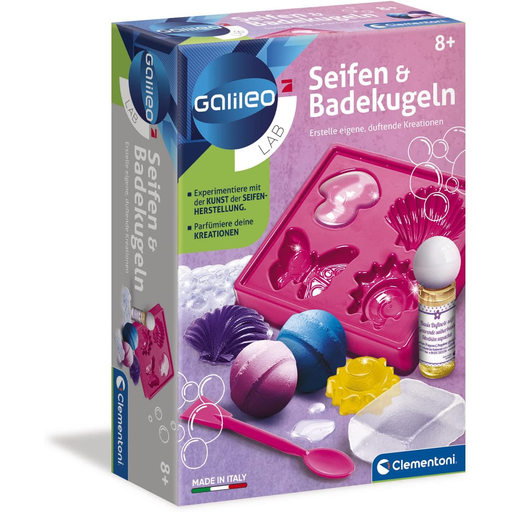
Why This Fits Their Persona: Ideal for kids aged 8 and up who love to experiment. This kit combines scientific curiosity with a creative and sensory result that they can actually use.
The kit includes all essential utensils and basic ingredients. It bypasses the pitfall of incomplete sets and offers a clear, achievable goal, making it more durable than a fleeting trend.
Promotes an understanding of chemical processes in a playful way. The illustrated instructions guide children safely through the experiments.

Why This Fits Their Persona: Perfect for kids who love to be active. This set promotes coordination and can be used both indoors and outdoors, making it a versatile companion for family games.
The height adjustability (100-150 cm) ensures the set grows with the child and won't be outgrown after one season. The sturdy ABS material withstands even energetic play.
Enhances hand-eye coordination and gross motor skills. The complete set includes everything needed to start playing immediately.
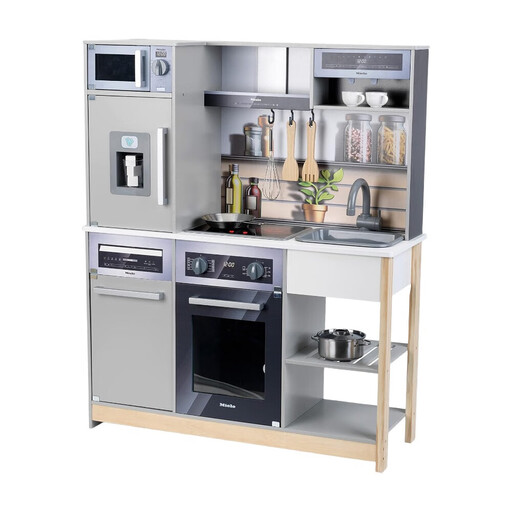
Why This Fits Their Persona: A classic in role-playing toys. Kids love to imitate adult activities. This kitchen provides a detailed and realistic play environment.
Made from FSC-certified wood, this kitchen is designed for durability, avoiding the pitfall of short-lived plastic toys. Its extensive features ensure long-lasting play value.
Fosters creativity and social skills. Realistic light and sound effects on the stove and an ice dispenser on the fridge enhance the play experience.
We've compiled a complete, up-to-date list of products that fully meet these strict selection criteria and European safety regulations.
The most important indicator within the EU is the CE mark. It shows that the manufacturer declares compliance with European safety standards, particularly EN 71. Additionally, check the toy for sturdy construction, the absence of sharp edges, and, for children under three, any small parts that could be swallowed.
The manufacturer's age recommendation is a starting point. However, always consider your child's individual developmental stage and interests. A child who is very skilled with their motor skills might be able to handle a more complex building set earlier. Observe what your child enjoys playing with to select suitable gifts for kids.