
Lieferung heute & morgen

Qualitätsgarantie

Willkommens-Angebote freischalten: KOSTENLOSE Lieferung | Bis zu 80 % RABATT | Kostenlose 30-Tage-JoyPlus-Testphase
App herunterladen
Toys for toddlers should suit the child’s age, environment and abilities. Between 9 months and 5 years, movement patterns, grip strength, balance and attention span change significantly. A product that looks versatile in an online shop can still be unsuitable in everyday use if its size, safety clearance or usage situation haven’t been considered.
This buying guide from the Joybuy Product Recommendation Officer shows what families in Germany should look for when choosing baby toys from 1 year, educational toys and children’s ride-on vehicles.
Lights, melodies and sensors can encourage a child to press, push or observe. What really matters, however, is whether the operation matches their developmental stage. Too many features can overwhelm a child or simply stop being used after a short time. With interactive toys, parents should therefore check:
The manufacturer’s label “from 1 year” is a guide, but it doesn’t replace checking the specific play situation. With a children’s ride-on vehicle, for example, the child must be able to sit securely, steer or hold onto the vehicle. With a bouncy toy, both feet should reach the floor when seated, if this is specified in the safety instructions.
The environment also matters: ride-on vehicles don’t belong on public roads, stairs or sloping surfaces. A flat, clear play area is more important than an overly versatile product description.
A toy can look compact in the shop but take up much more room once assembled. Before buying, families should check the dimensions, weight and storage needs. With battery-operated products, regular checks of the battery compartment are also necessary, and with inflatable items, you’ll need to monitor the air pressure.
First, compare the official age rating, maximum weight capacity and seat or grip height. A 5in1 children’s vehicle can be used for longer thanks to adjustable components, but it isn’t automatically suitable at every developmental stage. The Kikka boo Tricycle 5in1 Flip Grey offers five modes of use: push mode, tricycle, tricycle without pedals, balance bike and bicycle mode. According to the product description, this model is designed for children aged 1 to 5 years and weighs 5.6 kg.
The Chicco Bouncing Unicorn is recommended for use from 2 to 5 years, up to a maximum of 25 kg. The ergonomic seat shape and integrated handles aid handling; according to the safety instructions, direct adult supervision is required.
Look for a wide base, secure connections and controllable moving parts. With a baby walker, large wheels and a sturdy frame are important. The Chicco Happy Hippy Walker combines a walking aid with an activity centre, according to the product details, and has four large wheels. It is designed for children aged 9 to 24 months. The manufacturer points out that the product is not intended for children who are already walking independently or who weigh more than 20 kg.
With plastic toys, parents should check for well-sealed battery compartments, wheels that need regular inspection, and the absence of small, detachable parts. For the Chicco Bouncing Unicorn, BPA- and phthalate-free PVC is stated, along with compliance with EN 71. Such claims should always be cross-checked against the product description and safety instructions.
Check whether the toy will fit through doorways and can be used safely in the intended location. The Kikka boo Tricycle measures 70 × 45 × 65–91 cm. The height-adjustable push handle can be set to three different positions. For interactive toys, the battery type and what’s included in the box are also important: several Tut Tut Baby Flitzer models use two AAA batteries; the RC racing track set requires four AA batteries.
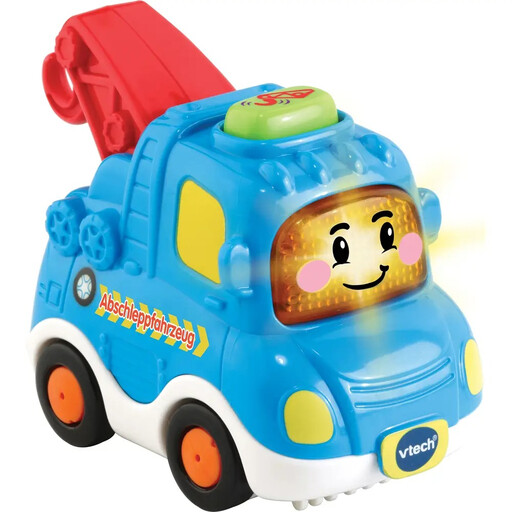
Why this product fits the profile: This compact interactive toy is designed for children from 1 year and requires two AAA batteries, which are included according to the product details. It’s ideal for short play sessions on the floor.
The features focus on pushing, buttons and movement, rather than requiring a large play area to set up.
Light and sound functions, motion-activated response and compact dimensions of 12.7 × 11.8 × 7.4 cm.
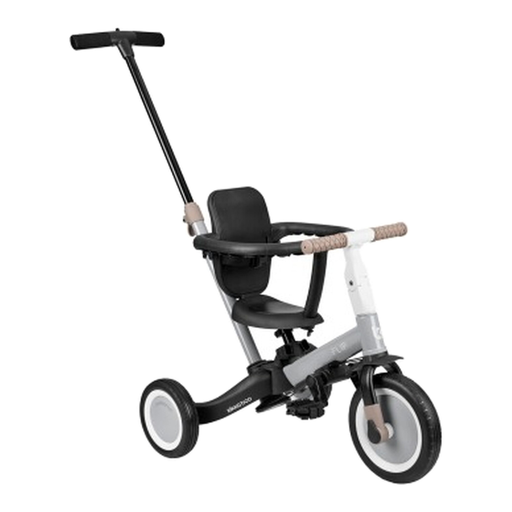
Why this product fits the profile: Families looking for a children’s vehicle that grows with their child through several developmental stages get adjustable components and five described modes for children aged 1 to 5 years.
Seat height and push handle are adjustable; a 2-point harness system and parental push control are explicitly stated.
High-carbon steel construction, three push-handle positions, plus rubber and PU wheels according to the product description.
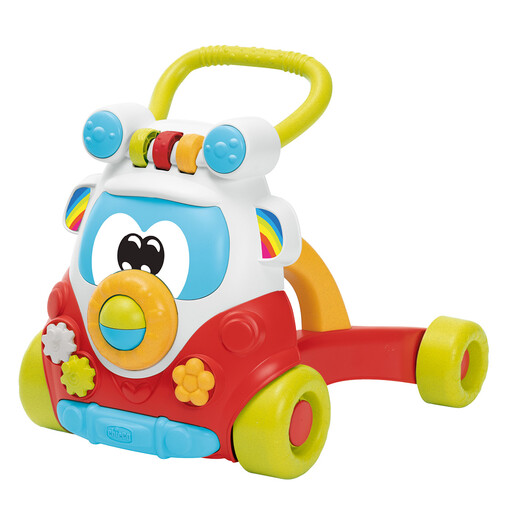
Why this product fits the profile: This educational toy for toddlers combines a push-along walker with five manual activities and is designed, according to the product details, for children aged 9 to 24 months.
The age limit, maximum weight of 20 kg and use on flat, obstacle-free surfaces are clearly stated.
Four large wheels, a wide design and mechanical elements such as gears, sliders and rotating cylinders.
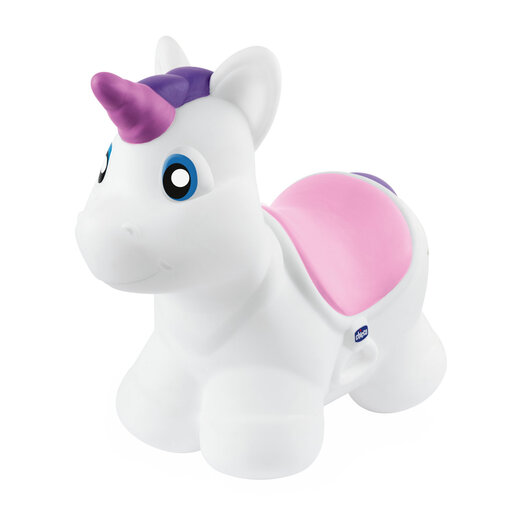
Why this product fits the profile: This bouncy toy is designed for children aged 2 to 5 years up to 25 kg and is suitable for supervised indoor or outdoor play.
The seat height must be checked before purchase; both feet should reach the floor when seated. Air pressure and the surface should be checked regularly.
Ergonomic seat, integrated grab handles, included hand pump, plus BPA- and phthalate-free PVC according to the product details.
We’ve put together a full, regularly updated list of products that fully meet these strict selection criteria and the safety regulations in force across the EU.
Products with a clear age rating, large and securely attached parts, and simple operation are suitable. A baby walker can be interesting for children who can already sit securely and pull themselves up on objects under supervision. Interactive vehicles like Tut Tut Baby Flitzer are designed for children from 1 year, according to the product details. Small parts and battery compartments must remain inaccessible to the child.
The usable life depends on age, weight capacity, material care and the child’s interest. Adjustable products like a 5in1 children’s vehicle can cover several developmental stages. Even so, parents should check the wheels, frame, straps, seams, air valves and battery compartments before each use. Damaged toys should not be used further.
In addition to the purchase price, the main ongoing cost is batteries. Check whether batteries are included, what type is needed and whether the toy has an automatic shut-off. With battery-operated products, it’s advisable to remove the batteries if the toy won’t be used for a long time, and to keep the compartment dry and closed.