
Lieferung heute & morgen

Qualitätsgarantie

Willkommens-Angebote freischalten: KOSTENLOSE Lieferung | Bis zu 80 % RABATT | Kostenlose 30-Tage-JoyPlus-Testphase
App herunterladen
Toys for toddlers should be fun, easy for little hands to hold and suited to a child’s stage of development. At the same time, parents, grandparents and other family members face a huge range of options: educational toys, motor skills toys, wooden toys, construction toys for toddlers, puzzles, interactive toys and familiar brands such as LEGO DUPLO and VTech Tut Tut Baby Flitzer.
But a product that catches your eye won’t necessarily suit everyday life. Three common buying mistakes are particularly likely to lead to the wrong choice.
“From 1 year” or “from 2 years” is useful guidance, but it doesn’t replace checking the specific warnings. A product may be marketed for a wide age range while also containing small parts or a battery compartment that requires adult supervision.
So, check:
Lights, sounds, songs and moving parts can be engaging, but they aren’t automatically educational. An interactive toy with lots of buttons can quickly become confusing or make noise constantly, while a simple sorting game can be played with again and again.
Look for ways your child can take an active role: building, sorting, grasping, comparing, moving things or making up their own story.
Wooden toys may feel sturdy, but you should still check for splinters, loose parts and damaged surfaces. For plastic toys, it’s worth checking the material information, cleaning instructions and build quality. It should also be easy to tidy away after play. A product with lots of separate parts can become less useful in everyday life if they keep getting lost.
For educational toys from 1 year, large, easy-to-grip pieces with clear shapes are usually a good choice. A peg toy, a simple puzzle or a shape-sorting house can help children learn to match things. For a puzzle for toddlers, large knobs and a few sturdy pieces are often more practical than a complex picture.
From around the age of 2, simple building tasks, role play and vehicles may become more appealing. Construction sets should be designed so children can connect and separate the pieces without using too much force.
With wooden toys, rounded edges, a smooth finish and sturdy joints are important things to check. According to the product information, the hauck shape-sorting toy is made from FSC-certified wood and includes eight blocks. Even so, check it regularly to make sure no parts have come loose and the surface is undamaged.
For plastic products, cleaning is a key consideration. LEGO DUPLO, for example, recommends washing its bricks by hand in warm water with a soft cloth. High temperatures, dishwashers and harsh cleaning products can affect the material and shape.
The CE marking indicates that the manufacturer declares the product meets the relevant EU requirements. It is not an independent quality mark. Information about the European toy safety standard EN 71 may also be relevant. The manufacturer’s information, age recommendation and intended use remain key.
Batteries in electronic toys should be secured in a child-resistant compartment. Keep batteries out of reach of young children. Toys with buttons, sensors and tunes should also be used in a way that prevents children from accessing the battery compartment or small parts unsupervised.
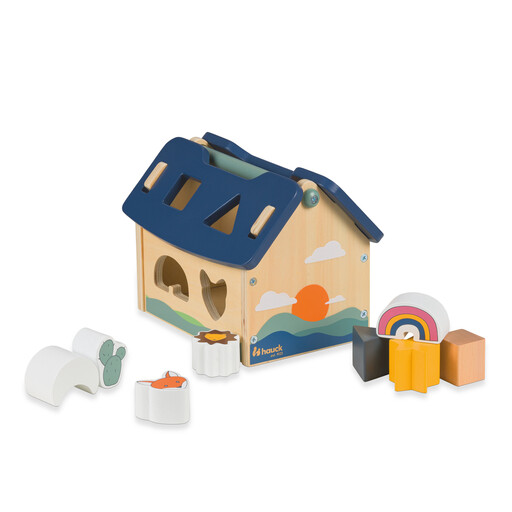
Why this product suits this buyer: According to the product information, this shape-sorting house is suitable for children from 12 months and combines storage, grasping and matching in one toy.
Rather than relying on electronics or lots of extra features, it offers eight shapes, a removable roof and built-in storage.
FSC-certified wood according to the product information, eight blocks and a carry handle.
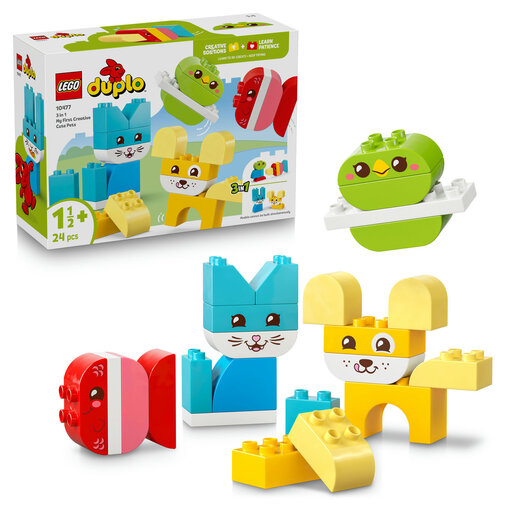
Why this product suits this buyer: This set includes 24 large bricks and several ways to build, for children aged 18 months and over.
The clearly stated number of pieces and age recommendation make it easier to assess. However, you should still take note of the small-parts warning.
A three-in-one concept, easy-to-grip bricks, and opportunities to match colours and shapes.
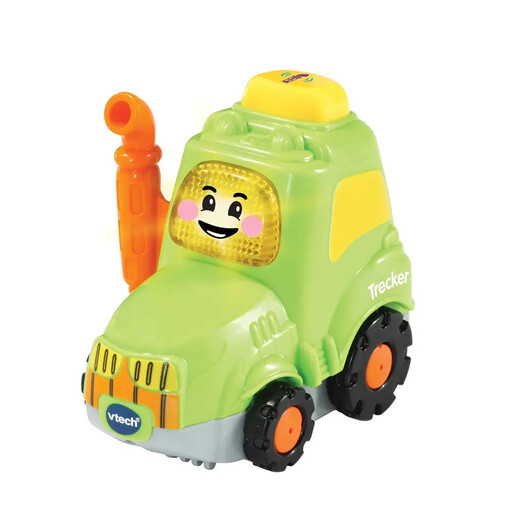
Why this product suits this buyer: For children aged one and over who prefer vehicles and want to add to an existing Tut Tut Baby Flitzer collection.
Its features are clearly described: movement, an illuminated button, songs and tunes. That makes it easier to assess what it offers before you buy.
Three children’s songs, six tunes, two AAA batteries and compatibility with other pieces in the range.
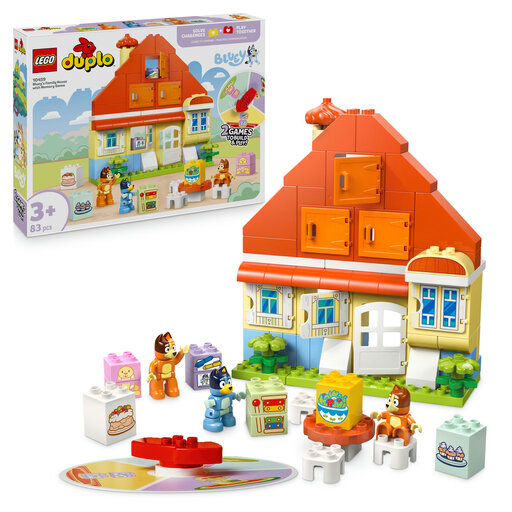
Why this product suits this buyer: Aimed at Bluey fans aged 3 and over, this set combines family role play with a memory game.
There’s more than one way to play: the house, figures, windows and memory pieces can all be used together.
83 pieces, three figures and a memory game that encourages playing and comparing together.
We’ve put together a comprehensive, regularly updated list of products that meet these strict selection criteria and fully comply with the safety regulations in force in the EU.
From 1 year, suitable options include large, easy-to-grip pieces, simple sorting games, peg toys, sturdy wooden puzzles and vehicles without small parts that are difficult to reach. The specific age recommendation and warnings are key. A toy should suit your child’s ability to grasp things and their attention span.
The term Montessori toy doesn’t automatically describe a verified product feature. A toy is useful if it lets children act independently, repeat activities and find their own solutions. Shape-sorting houses, simple peg toys and building blocks can encourage this kind of play, as long as the size and level of difficulty are right.
How long a toy stays interesting depends less on the number of pieces than on the ways to play with it. A building or role-play set with different combinations can be used for longer than a toy with just one fixed function. With electronic toys, check the batteries, volume, cleanliness and condition of the battery compartment regularly.