
Lieferung heute & morgen

Qualitätsgarantie

Willkommens-Angebote freischalten: KOSTENLOSE Lieferung | Bis zu 80 % RABATT | Kostenlose 30-Tage-JoyPlus-Testphase
App herunterladen
There’s a wide choice of toys and games for children. Parents, grandparents and other family members need to compare more than just themes and prices: it’s also important to check age recommendations, what’s included and safety information. An eye-catching box or lots of features alone won’t tell you whether a product will really suit family life.
Lights, sounds and electronic features may seem appealing at first. However, they can distract from the main purpose of the toy or mean you need extra batteries. If you’re considering a battery-operated product, check which features can be used without batteries and whether you’ll need to replace them regularly.
A game for ages 3+ won’t necessarily suit every three-year-old. Small parts, complicated rules or long playing times can be too much for younger children. The manufacturer’s age recommendation is a useful starting point, but it doesn’t replace an adult’s judgement.
The term educational toy isn’t a consistent measure of quality. It’s more useful to look at the specific activities involved: sorting, building, matching, storytelling, counting or making decisions together. With educational toys for children, these activities should suit the child’s development and interests, without making unsupported claims about their abilities or learning outcomes.
Check the recommended age range and the warnings on the packaging and product page. Many games contain small parts and are therefore not suitable for children under 36 months. Even for products aimed at children aged 3 and over, direct supervision may still be sensible, depending on how the game is played.
For children aged 3 to 4, simple matching activities, creative games for ages 3+, pretend-play toys and manageable building sets are often a good fit. Games for children aged 4 and over can involve several steps, but should still have clear rules and an appropriate playing time.
For plastic toys, rounded edges, sturdy connections and clear information about the materials are useful things to check. For card and board games, look for suitably sturdy cards, easy-to-read instructions and safe storage for small parts. If a toy will be used often, it’s also worth checking whether its surfaces can be cleaned with a dry or slightly damp cloth.
The CE mark should be shown on the product or packaging. It indicates conformity with the applicable EU requirements, but it isn’t an independent quality mark. Warnings, manufacturer details and, where stated, relevant standards such as EN 71 should also be easy to verify.
Before you buy, check:
These points can help you choose between games for children, family games, board games, building sets and pretend-play toys. Compact card games are handy for travelling, while larger sets are more likely to need a dedicated spot in a child’s bedroom.
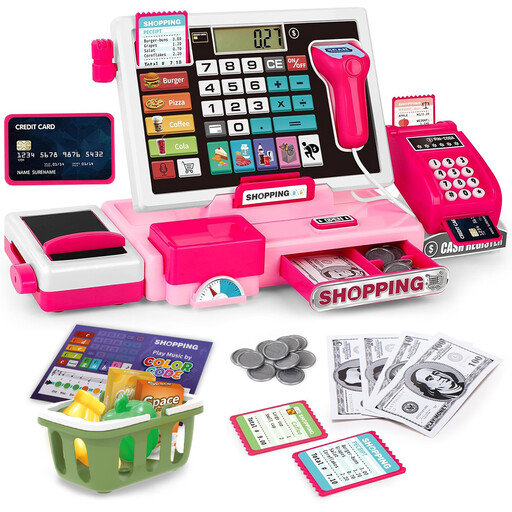
Why this product suits this need: According to the product details, this pretend-play set is for children aged 3 and over. It combines a shop game with a calculator, play money, scanner, shopping basket and toy food.
The purpose of the game is clear, with visible accessories and several pretend-play scenarios. However, bear in mind that it contains small parts and needs supervision.
Calculator, play money, credit card and accessories; according to the product details, batteries are not included.
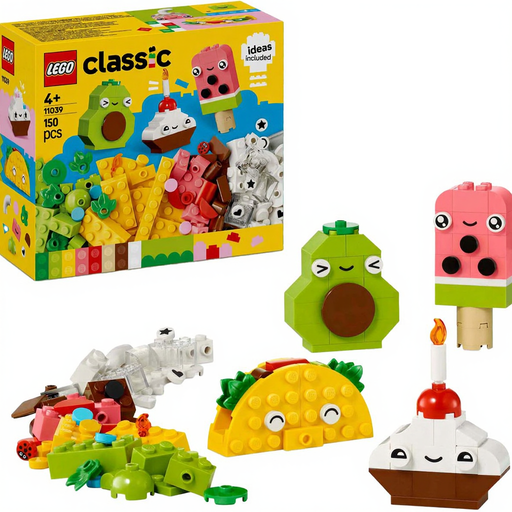
Why this product suits this need: The set contains 150 pieces and, according to the product details, is intended for children aged 4 and over. It offers plenty of scope for building, rebuilding and creative play.
The reusable bricks can be used to make different models, rather than just one build. Be sure to follow the age warning, as the set contains small parts.
150 building pieces, four suggested food characters and extra ways to customise them with colours, faces and accessories.
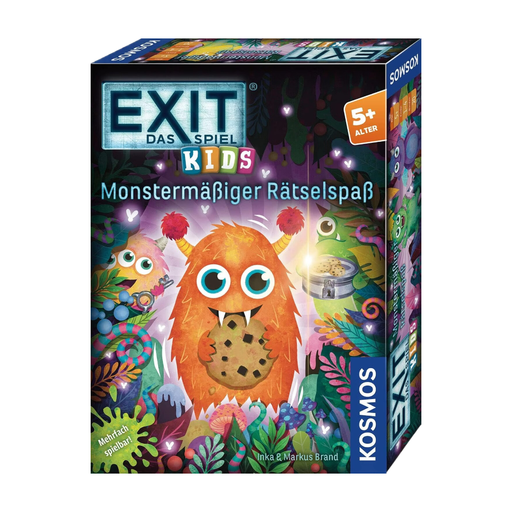
Why this product suits this need: This co-operative puzzle game is listed for 1 to 4 players aged 5 and over, making it a good choice for playing together with an adult alongside.
The product description says the rules are designed with children in mind, and the optional app isn’t essential. That means you can play without any extra technology.
For 1 to 4 players, no batteries required, with an optional timer and hints available through the Kosmos app.

Why this product suits this need: This board game is designed for 2 to 4 players aged 6 and over. It uses simplified trading rules and child-friendly game elements.
The number of players and recommended age are clearly stated. An adult can help set up the game and explain the rules for the first time.
For 2 to 4 players, no batteries required, with simplified trading mechanics for family game nights.
We’ve put together a complete, regularly updated list of products that meet these strict selection criteria and fully comply with the safety regulations applicable in the EU.
For birthdays, Christmas or a family visit, choose something that fits into the child’s everyday life. Toys for boys and girls are best chosen according to their interests, rather than rigid categories: building, stories, vehicles, animals, puzzles or playing cards together.
If space is limited, card games, puzzle boxes or compact board games are good options. Building sets and pretend-play toys are great for creative play at home. If several people play together regularly, family games with a flexible number of players are often more practical than a game designed for just one person.
Simple pretend-play toys, building sets with age-appropriate pieces, matching games and creative games for ages 3+ can all be suitable. The key things to consider are the manufacturer’s age recommendation, the size of the individual parts and whether the child can be supervised.
How long they last depends on the materials, how they’re stored and how often they’re used. Cardboard and plastic parts should be kept dry and put back in the box after play. Batteries and moving parts can be additional points of wear in electronic toys.
You may need to factor in the cost of batteries as well as the purchase price. Check whether batteries are included, what type is needed and whether the product can be used without its electronic features. Battery-free games, including many board games, card games and building sets, don’t incur any extra energy costs during use.