
Lieferung heute & morgen

Qualitätsgarantie

Willkommens-Angebote freischalten: KOSTENLOSE Lieferung | Bis zu 80 % RABATT | Kostenlose 30-Tage-JoyPlus-Testphase
App herunterladen
There is a huge choice of toys for children. Colourful packaging, numerous features and terms such as “educationally valuable” do not always make the buying decision any easier. For parents, grandparents and other family members, the most important question is: does the toy suit the child’s age, stage of development and everyday life?
Lights, sounds and app functions may seem attractive at first. However, they can make the toy more expensive and require batteries or rechargeable batteries. By contrast, children’s toys without batteries often encourage children to try things out directly, engage in role play, sort objects or play together.
What matters is not the number of features, but whether the child can use the product regularly and in as many different ways as possible.
A toy marked as suitable from 3 years is not automatically right for every three-year-old. Fine motor skills, language comprehension and attention develop at different rates. Small parts, complex rules or lots of accessories can overwhelm younger children.
The manufacturer’s age recommendation should be used as a first guide. It is also worth checking the warnings, how the game is played and which skills are required.
Large workbenches, extensive construction sets and games with lots of individual pieces need a dedicated storage space. Without one, parts may get lost or the toy may be used less often. When choosing a product, you should therefore consider product dimensions, the number of accessories and available storage options.
For learning toys from 3 years, manageable tasks, large handles and clear play activities are suitable. For example, a tool box containing a few familiar tool shapes can support role play and help children match objects.
With toys from 4 years, simple board-game rules, counting and taking turns can be introduced. Toys from 6 years can offer more challenging rule variations, strategic decisions and more complex role play.
Look out for:
The CE marking is not a quality seal. Instead, it indicates a declaration of conformity with relevant EU requirements. Products containing small parts should be used under supervision wherever possible. Toys should be checked regularly for damaged parts, sharp edges and loose components.
For battery-operated toys, check the battery type, charging method and battery life. For example, the Alilo Kids Learning Tablet uses a rechargeable lithium-ion battery and charges via USB-C. It therefore does not need disposable batteries, but it is not a completely electricity-free toy.
If you are specifically looking for children’s games without batteries, suitable options include classic board games, toy figures, role-play sets, sticker books and manually operated vehicles.
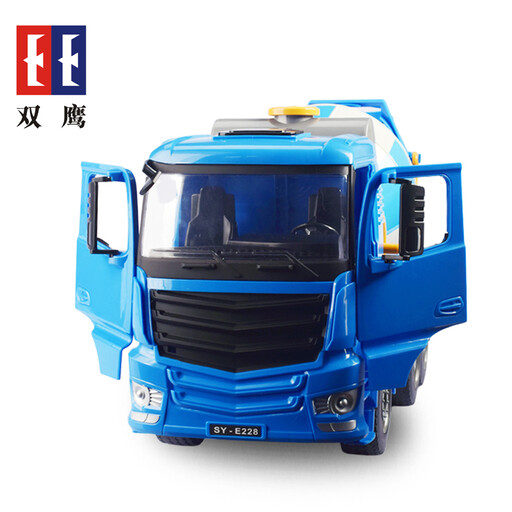
Why this product suits this profile: This manually operated construction vehicle is suitable for children aged 6 and over who enjoy vehicles and construction-site scenarios. It does not need batteries and can be incorporated into creative role play.
The features are mechanical: a rotating mixer drum, tilting cab and opening doors. This makes the play possibilities easy to understand, without requiring batteries or additional technology.
Manual features, a 1:20 scale and an age recommendation from 6 years.

Why this product suits this profile: This toy figure for children aged 5 and over is ideal for families looking for a compact, collectible product for imaginative storytelling. It can be used on its own or with other figures from the bayala range.
The product details specify the age recommendation, material, hand-painted finish and the warning about small parts. This helps buyers assess whether the figure is suitable for the child and the level of supervision planned.
No battery required; detailed ABS plastic toy figure for role play from 5 years.
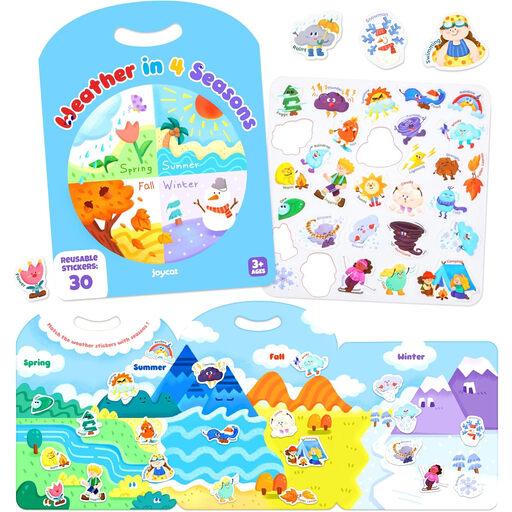
Why this product suits this profile: This compact sticker book for children aged 3 and over is suitable for car journeys, flights, restaurants and visits. The stickers can be repeatedly applied to and removed from smooth surfaces.
The portable design, with a carry handle and integrated storage, helps reduce loose individual pieces when travelling. According to the product details, the stickers are washable and reusable.
30 jelly stickers, laminated pages, with no assembly or batteries required.
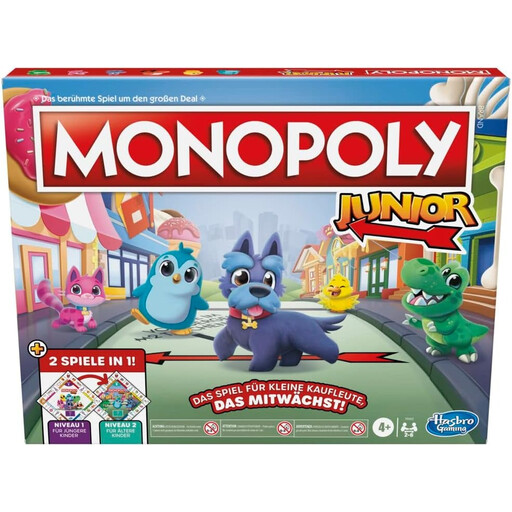
Why this product suits this profile: This board game for children aged 4 and over offers two levels of play: one version for ages 4 to 5 and a second for ages 6 and over. It is designed for 2 to 6 players.
The double-sided design makes the level of play clear. Before buying, shoppers can check whether the number of players, age range and time available for playing suit their family.
2 to 6 players, two difficulty levels, play money and no batteries required.
For children who enjoy building and acting out practical activities, construction and tool toys such as the Theo Klein Tool Box or Bosch Workbench are good options. You should check the dimensions, space required and number of accessories.
Creative role-play toys range from toy figures and magic sets to household accessories in a child-friendly format. The Mofari Magic Carnival Set for ages 3 and over contains 15 props and instructions with video tutorials. For children interested in transport, the Theo Klein Traffic Sign Set with five signs can create an additional play environment.
For older players aged 8 and over, classic board games for children and families are worth considering. Jumbo’s Rummikub set is designed for 2 to 4 players, contains 106 plastic tiles and does not require batteries. With an age recommendation from 8 years, it is more suitable for older children and games played together with adults.
We have put together a complete, regularly updated list of products that fully meet these strict selection criteria and the safety regulations applicable in the EU.
Suitable options may include simple role-play sets, large toy figures, sticker books, first sorting and construction games, as well as manual vehicles. Pay particular attention to the warning “not suitable for children under 3 years” and to any small parts. The choice should suit the individual child’s motor skills and attention span.
Lifespan depends on the material, workmanship, frequency of use and storage. Plastic parts can often be cleaned with a damp cloth, while card games should be stored dry and complete. For sets with lots of pieces, a sealable box is recommended to prevent accessories from getting lost.
Battery-free toys normally incur no electricity or battery costs after purchase. With electronic learning toys, however, you should consider the battery, charging cable and charging intervals. A rechargeable device can reduce the need for disposable batteries, but it still needs to be charged regularly.