For the keyboard test itself, functions must be operable using the keyboard; the W3C Web Accessibility Initiative sets this out in Success Criterion 2.1.1. A trackball is an additional pointing device for other tasks at the test station, not a replacement for a keyboard-only test. The main things to consider when choosing one are which hand you use and how it fits, the space beside your keyboard, and compatibility with the test computer’s connections and software.
Who might need a trackball at a test station?
People testing keyboard accessibility
You want to carry out pointing tasks on the same computer without treating a successful trackball click as a pass in the keyboard test. The W3C Web Accessibility Initiative says that the functions being tested must be operable through a keyboard interface.
Working from home with limited desk space
If there’s little room beside your keyboard and documents to move a mouse around, a stationary trackball can provide an additional way to control the pointer. Logitech describes this use for its trackball models, but you should still check that the device and your hand will fit in the available space.
Test stations used with different hands
If you share the device or switch hands, look for a design explicitly made for both left- and right-handed use. Kensington describes the Orbit Wireless Trackball K70992WW as ambidextrous.
What should you look for when choosing one?
| Priority |
What to check before buying |
Who is it most important to? |
| Keeping keyboard testing separate from pointer use |
Carry out the test without using a pointer and check whether you can move keyboard focus out of a component. The W3C Web Accessibility Initiative describes these requirements. |
When I’m checking keyboard accessibility, a trackball click must not replace the keyboard interaction. Around 29% of consumers put a clear distinction between keyboard testing and pointer use first. |
| Space and fit |
Check the available space beside your keyboard and whether the ball, buttons and scroll function are within easy reach. |
When I need to fit both the device and my hand into a cramped test station, fit matters more than a general promise of ergonomic design. Around 23% of consumers prioritise space and fit. |
| Hand preference and ball control |
Check whether the specific model is designed for the hand you need to use or for both hands. |
If several people use the test station or switch hands, I need a suitable design rather than one that’s simply assumed to be ambidextrous. Around 18% of consumers are most concerned about accommodating different hands. |
| Connection and setup |
Check that the connection is compatible with the test computer and whether any button customisation you want requires additional software. |
If the test computer only allows certain connections or doesn’t permit additional software, the way I want to use the device needs to work within those limits. Around 18% of consumers put connection and setup first. |
| Maintenance and after-sales terms |
Check the power supply, what’s included in the box, cleaning guidance and the terms of the specific offer. |
If I’m planning to use the device regularly, I want to factor cleaning and power into my decision. Around 12% of consumers give the greatest weight to maintenance and after-sales terms. |
Trackball buying pitfalls
-
Counting a pointer click as passing the keyboard test
A click using the trackball doesn’t show whether the same function can be operated with a keyboard. The W3C Web Accessibility Initiative treats keyboard operability and the ability to move out of a component using the keyboard as separate checks.
Carry out the relevant test without a pointer, and use the trackball only for other tasks.
-
Assuming “space-saving” means “fits on any desk”
A stationary trackball doesn’t need space for moving a mouse, but it still takes up room on your desk and needs space for your hand.
Check the space available beside your keyboard and whether you can reach the ball and controls from your usual seating position.
-
Planning to use extra features without checking the software and what’s included
Customisable buttons may require additional software for some models. Check whether you’re allowed to use it on the test computer and whether the features you want are available without it.
Check what comes with the exact model. Logitech says the MX Ergo S doesn’t include a USB-C cable, so check whether you’ll need one.
Brands and model ranges to consider
Logitech
The ERGO M575S and MX Ergo S thumb-operated trackballs could suit a station mainly used by one person. Make sure the fit works for your hand.
- Logitech says the ERGO M575S lets you move the cursor with your thumb without shifting the trackball across the desk. For the MX Ergo S, the manufacturer lists a 20° tilt and six customisable buttons.
- These model-specific details don’t prove that the design will be ergonomic for everyone. Logitech says the MX Ergo S doesn’t include a USB-C cable.
Kensington
The Orbit Wireless Trackball K70992WW is worth considering if ambidextrous use or a scroll ring is important to you.
- Kensington lists an ambidextrous design, a scroll ring, Bluetooth and 2.4 GHz wireless connectivity, plus four DPI settings for this model.
- Kensington says you’ll need KensingtonWorks software to customise the buttons. Check whether you can use it on the test computer.
Elecom
The finger-operated DEFT PRO M-DPT1MRXBK is an alternative if you’d like a choice of connection types.
- Elecom lists wired, wireless receiver and Bluetooth connections for this model, and says that the ball is removable.
Joybuy products for additional pointing tasks
This selection includes trackballs for additional pointing tasks at the test station; keyboard testing itself remains separate.
 No image available
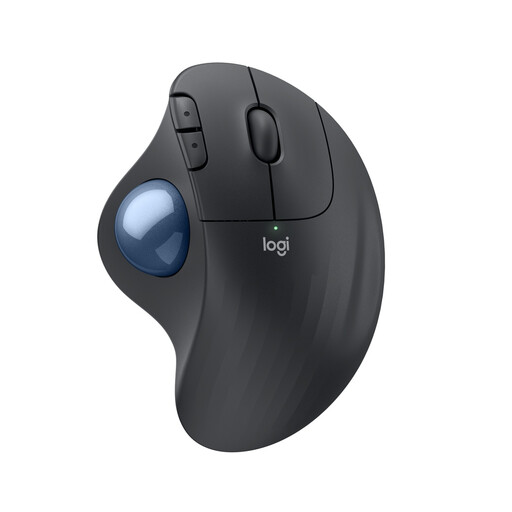
Logitech ERGO M575S Graphite
Thumb control is handy for additional pointing tasks when you want to move the cursor without shifting the device across the desk; it doesn’t replace a keyboard-only test.
View at Joybuy
Frequently asked questions
Can I use a trackball to prove that an interface is keyboard-accessible?
No. To test keyboard accessibility, operate the functions through a keyboard interface; using a pointer as an additional method doesn’t replace this check. Also check whether you can move keyboard focus out of a component.
Do I need to install software to customise trackball buttons?
That depends on the model and the features you want. Kensington says you need KensingtonWorks software to customise the buttons on the Orbit Wireless. Check separately whether you can use the software on the test computer and whether the device’s basic functions are compatible.
What should I know about cleaning and ongoing costs?
Elecom says the DEFT PRO’s ball is removable, while Logitech says the MX Ergo S doesn’t include a USB-C charging cable. Check the power supply and what’s included with the specific offer too, rather than assuming that similar designs will have the same ongoing costs.
Is a manufacturer’s guarantee the same as my rights against the seller?
No. Your statutory rights are with the seller, while a guarantee is a voluntary promise subject to its own terms. So be sure to check the terms of the specific offer.
Does German accessibility law require a particular trackball for private keyboard navigation tests?
Germany’s Accessibility Strengthening Act doesn’t generally require a particular trackball for private tests. It applies to certain products and services; whether a specific offer is covered depends on the type of product or service and the provider. The W3C requirement for keyboard operability doesn’t mean you have to use a trackball.


