What to look for when buying
First, consider which hand you want to use and how much room you have for your puzzle book, keyboard and hand rest. Then you can compare scrolling controls, connectivity and power options more closely.
| What you need |
What to check |
Who it matters most to |
| Room for your puzzle book and pointing device |
Make sure there’s clear desk space for the trackball, keyboard and paper; allow for a removable hand rest too. |
When I spread puzzle pages out beside my computer, I don’t want to have to move the trackball across the paper to move the pointer. Around 31% of consumers prioritise having room for their puzzle book and device. |
| Scrolling and pointer control |
Compare the scrolling mechanism and available pointer-speed settings for the exact model. |
When working with long pages and small layout elements, I want to be able to adjust scrolling and pointer control to suit what I’m doing. Around 25% of consumers prioritise scrolling and positioning in their layout work. |
| Hand fit and which hand you use |
Check whether thumb or finger control, button reach and the hand rest suit your hand. |
If I want to switch hands or share a device, ambidextrous use matters. With a thumb-operated model, it’s important that the controls suit my hand. Around 19% of consumers put hand fit and which hand they use first. |
| Click noise |
Check which comparison model the manufacturer is referring to; quieter clicks don’t mean silent operation. |
When I’m working in the same room as other people, I want to keep distracting click noises to a minimum. Around 13% of consumers prioritise click noise in their workspace. |
| Connectivity and power |
Check available USB ports, Bluetooth support, power requirements and what’s included with the exact model. |
If my computer has few spare ports, I want to know in advance whether a cable, wireless connection or Bluetooth will work for my setup. Around 12% of consumers prioritise connectivity and ongoing running requirements. |
Joybuy products for working on your puzzle book
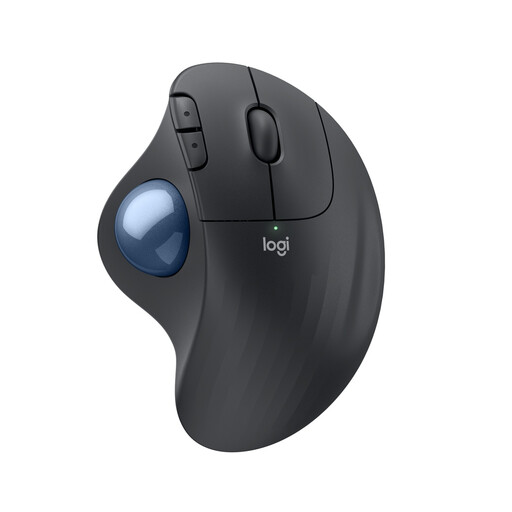
This selection features a thumb-operated trackball for desk work, leaving room for paper beside your computer.
 No image available
Logitech ERGO M575S – Graphite
Thumb control is a good fit if you want to move the cursor without sliding the trackball across your paper.
Joybuy
Frequently asked questions
What should I consider when setting it up beside my keyboard and puzzle book?
Allow room for the trackball, your hand and, if needed, a hand rest. The Federal Institute for Occupational Safety and Health recommends enough desk space to position your mouse and keyboard flexibly, as well as a hand and arm rest. A particular trackball design alone can’t guarantee a suitable posture.
What can I do if the ball sticks or feels stiff?
Check for dirt around the ball or its socket, and clean the device according to the instructions for your model. Kensington notes that dirt build-up can cause the pointer to move less smoothly or jerkily.
Do I need extra software to customise the buttons?
For custom button assignments, Logitech lists Logi Options+ for the MX Ergo S, while Kensington offers TrackballWorks for the Orbit K72337EU’s two customisable buttons. Before buying, check that the relevant software supports your operating system.
Are a guarantee and statutory rights the same thing?
No. When you buy from a retailer in Germany, your statutory rights are against the seller; a guarantee is an additional, voluntary offer with its own terms. The Verbraucherzentrale says new goods are generally covered by a two-year statutory guarantee from the date of delivery.
How should I dispose of an old trackball and its batteries?
Electrical waste shouldn’t go in your household bin. You can take it to a local collection point, for example. If the batteries can be removed, take them out and dispose of them separately where possible. The German Environment Agency recommends removing batteries from devices before disposal, if possible.


