What should you look for when buying?
Start by taking test shots of your card under your artificial light. Then decide, based on the framing you need, whether you can keep using your existing device or need a different lens or camera system.
| What matters |
What to check before buying |
Who should pay particular attention |
| Reflections |
Check that you can position the camera and lights securely and independently of one another; test different light angles and diffusion with your card. |
When I photograph glossy surfaces, I want to show the text and condition without reflections obscuring important areas. Around 33 % of consumers say controlling reflections is their main concern. |
| Small details |
For the specific lens, compare maximum magnification and minimum focusing distance; test both an overall shot and a close-up. |
To capture small print, edge or corner details, I need the right close-up magnification without losing sight of the card as a whole. Around 27 % of consumers say capturing details is their top priority. |
| Consistent colour |
Check the white balance settings and, where relevant, whether the specific camera model supports RAW; assess test shots under your lamps. |
When I photograph several cards in consistent lighting, I want better control over colour from one image to the next. Around 20 % of consumers say consistent colour is their main concern. |
| A simple set-up |
Check whether a lens is built in or needs to be bought separately, and whether the specific items included will suit your shooting space. |
If you want to shoot without changing lenses, you may prefer a straightforward set-up; with a mirrorless camera, check which lens you’ll need separately. Around 20 % of consumers say a simple set-up is their top priority. |
Joybuy products for the job
Joybuy product options for photographing trading cards.
 No image available
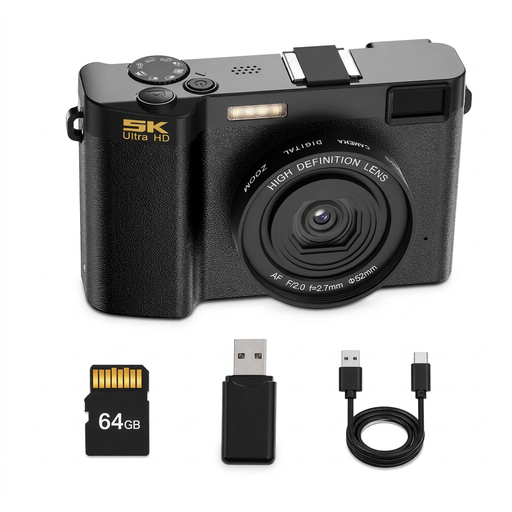
Digital camera with 64 GB microSD card, black
For a compact shooting set-up; test it with your trading card to make sure the text and details you want to capture remain legible under your artificial light.
The product name specifies a 64 GB microSD card.
View at Joybuy
Frequently asked questions
Do I need a 1:1 macro lens to photograph a whole trading card?
No, not just for an overall shot. First, check whether your existing or included lens gives you the framing and legible text you need; greater close-up magnification mainly matters for very small details.
How should I set up my shooting space under a lamp?
Keep the camera stable and, for repeat shots, try to use the same position each time. If you get harsh highlights, change the position of the light or diffuse it, then check the result with test shots. In consistent lighting, you can set a suitable white balance and check it again if the light changes.
What should I check before taking a series of shots?
Check that the framing and focus are right, and that the colours look true under the lighting you’re using. If the lamp or room lighting changes, check the white balance again.
What additional items might I need for a mirrorless camera?
Depending on what you want to photograph, you may need to buy a compatible close-up or macro lens separately. For the specific Nikon Z50II kit described with a 16–50 mm f/2.8 VR lens, Nikon notes that no charger is included; this doesn’t necessarily apply to other kits.
What are my rights when buying a camera online in Germany for personal use?
The Verbraucherzentrale explains that, for online orders, you generally have 14 days from delivery to withdraw from the purchase; exceptions and the terms of the specific purchase should be checked. EU consumer information also states that goods bought from a seller come with a minimum two-year legal guarantee from receipt. This is separate from any voluntary manufacturer’s warranty.


