What should you look for when buying?
For shoppers choosing video lighting to photograph traditional dress, each row focuses on the most important buying consideration.
| Consideration |
What to check before buying |
Who it matters most to |
| Consistent fabric colours |
Check the colour specifications for the exact model and use a repeatable white balance; take a test photo of the traditional dress under your planned lighting. |
If I want to compare fabric colours across several shots, I need a fixed white balance and should test the outfit under the lighting I intend to use. Shoppers whose main priority is colour accuracy are estimated to make up around 36%. |
| Even lighting across the whole outfit |
Decide on the area you need to cover and the space available; allow for a diffuser or compatible light modifier, as well as room and suitable mounting. |
To show the sleeves, hem and trim together in one shot, I want to check the lighting across the whole area, not just in the centre. Shoppers who prioritise evenly lit full-length shots are estimated to make up around 29%. |
| Visible hand-crafted details |
Check whether the light can be positioned securely and dimmed; consider taking separate test shots for the full view and the details. |
If I want to show embroidery, seams or shiny trim, I need to vary the direction of the light and assess the details separately. Shoppers whose main priority is hand-crafted detail are estimated to make up around 21%. |
| Set-up and power |
Check the connections and contents of the exact variant; look into stands, light modifiers, adapters and any batteries that may need to be bought separately. |
When I’m shooting in different locations, I want to know in advance how to mount and power the light and its accessories. Shoppers whose main priority is a flexible set-up are estimated to make up around 14%. |
Joybuy products for photographing traditional dress
The products below range from a photo box to portable video and COB lights. Check that the format, light distribution and accessories suit your subject; it’s still worth taking a test shot of the specific outfit.
 No image available
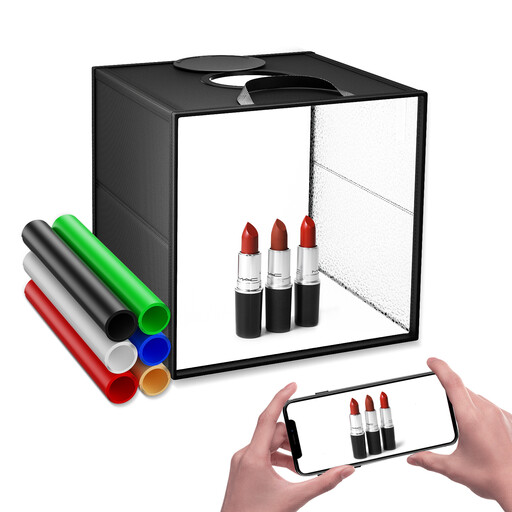
Foldable photo box with soft light and adjustable brightness
For product photography with adjustable colour temperature; check that the outfit or the framing you want will fit inside the photo box.
120 LEDs, dimmable brightness and a colour temperature of 3000–5600 K; CRI over 95 according to the product description. Two shooting openings and six backdrop cards are listed.
View at Joybuy
 No image available
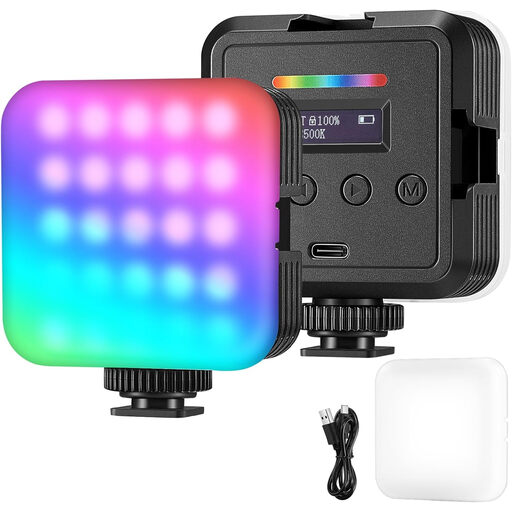
Portable RGB video light for photography and video
A portable option for photography and video when you want to set different light colours.
Brightness and colour temperature are adjustable; the product description lists RGB, white and warm light modes, with a built-in battery or USB for power.
View at Joybuy
 No image available
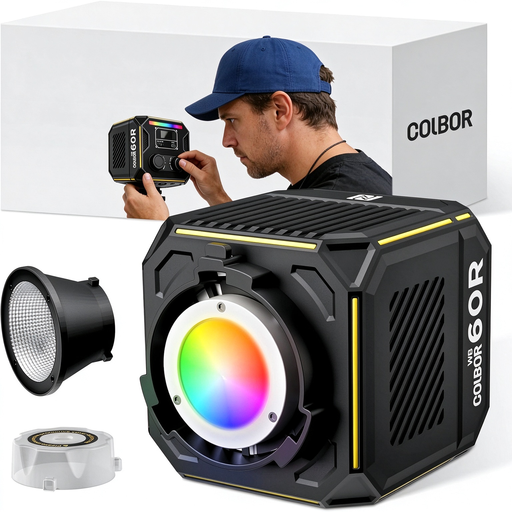
COLBOR 60W portable RGBCW COB video light
For adjustable light colour and shooting in different locations, provided the power supply suits your planned set-up.
Bi-colour 2700–6500 K, dimmable RGBCW light, built-in 59-Wh battery and CRI 96+ according to the product description. A PD charger and DC input are listed as power options.
View at Joybuy
 No image available
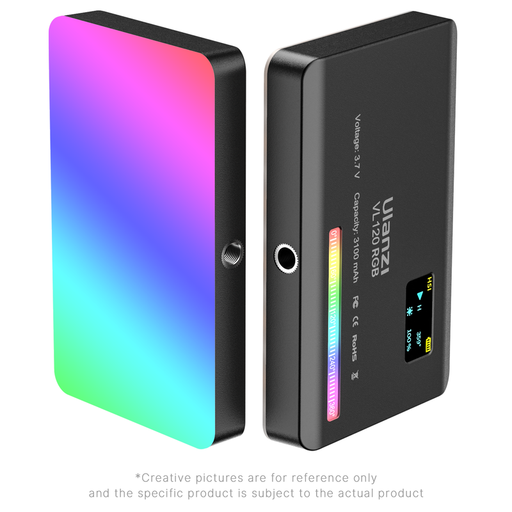
Ulanzi VL120RGB, black
For portable shooting when a compact light with adjustable colour temperature suits your set-up.
120 LEDs, built-in battery and cold shoe mount. The product description gives a maximum run time of 2.5 hours, with adjustable colour temperature and brightness, plus RGB colour control.
View at Joybuy
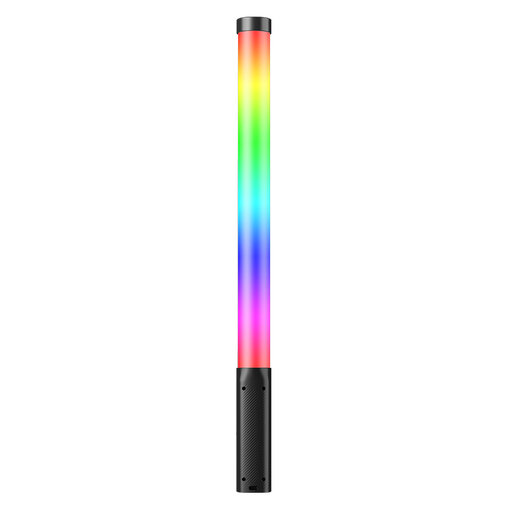 No image available
Ulanzi VL119 handheld video light, 10 W
For handheld or portable shooting, when the light bar’s length and power supply suit your subject.
360° RGB, adjustable colour temperature of 2500–9000 K and a stated 360 lux at 0.5 m. The product description lists a built-in 3300-mAh battery.
View at Joybuy
Frequently asked questions
Is a high CRI rating enough to make all the colours of traditional dress look right?
No. A high CRI rating alone cannot guarantee how the colours of an outfit will appear. A study of selected historic textile dyes in the Journal of the American Institute for Conservation describes how colours can look different under LED lights with the same colour temperature. Use the manufacturer’s figures to narrow down your options, then check the specific outfit with your camera’s white balance fixed.
How can I photograph embroidery without losing the full view?
Plan a full-length shot and, if needed, additional close-ups with the light coming from a different direction. The Canadian Conservation Institute describes using light from both sides to illuminate a surface evenly; light from a different direction can make its texture stand out more. The view you need depends on whether colour and cut or craftsmanship are your main focus.
What should I consider when setting up a softbox?
Check that the mount on the specific light is compatible with the modifier, and check what comes with the variant you’ve chosen. The amaran 100x S has a Bowens mount, but the documented standard contents do not include a softbox; the manufacturer’s manual specifies an adapter for using Bowens accessories with the Nanlite FS-60B.
What should I bear in mind with delicate or historic traditional dress?
Limit unnecessary exposure to light and avoid moving very fragile or damaged textiles just to photograph them. The Canadian Conservation Institute notes that light damage is cumulative and irreversible; the Smithsonian advises against moving extremely fragile or damaged textiles for a shoot. These are conservation guidelines, not blanket legal limits on lighting for private photographs of traditional dress.
Which labels and consumer rights matter when buying in Germany?
The EU product rules and labels that apply to a particular electric light depend on its design; CE marking is required only if relevant legislation says it is. According to information from the European Union, consumers generally have a 14-day right to cancel ordinary online purchases from the date of delivery, subject to legal exceptions, as well as a statutory guarantee of at least two years.


