Check trail camera photos on your phone
If you want to view a removed card straight away, make sure the card format, reader, phone and file access are all compatible.


First, check your trail camera’s card format and whether your phone or laptop can read both the card and the image format. A USB-C connector alone doesn’t guarantee access to your photos. For occasional viewing, a compact reader with the right slots is often enough, while a hub is useful if you need extra ports on the go. High speed ratings matter mainly when copying larger amounts of data, and performance also depends on the card and the device you’re copying to.
If you want to view a removed card straight away, make sure the card format, reader, phone and file access are all compatible.
If you use SD and microSD cards, check that the cards you actually use and their standards match the reader’s slots and specifications.
If you’re copying lots of photos or videos, compare compact card readers with hubs, and check the ports on the device you’re copying to.
First, decide whether you want to view the card on a phone or laptop. Then you can choose between a compact reader and a hub with extra ports. Transfer speed matters most when copying larger amounts of data.
| What you need | What to check before buying | Who it matters most to |
|---|---|---|
| Access on your viewing device | Check for a USB-C data connection and file access on the specific phone or laptop you’ll use. Test a camera card before your trip. | If I want to view my photos directly on the device I’ve brought with me, the whole connection — card, reader and device — needs to work. Around 36% of consumers prioritise access while out and about. |
| Compatible memory card | Check whether the card is SD or microSD, and compare its label, such as SDHC or SDXC, with the reader’s specifications. | If I use several trail cameras, I check each card I remove against the right slot and card standard. Around 29% of consumers focus on card compatibility. |
| Easy to use outdoors | Consider the design and the ports you need. Finish reading or copying before removing the card. | If I’m just checking cards quickly outdoors, I want to carry as little extra equipment as possible and avoid deleting the original photos too soon. Around 21% of consumers prioritise ease of use while out and about. |
| Copying larger amounts of data | Compare the UHS standard of the card and reader, as well as the data connection on the device you’re copying to. Don’t assume manufacturers’ stated figures reflect real-world copy speeds. | If I’m backing up lots of photos or videos, I check that the card, reader and device are compatible. Around 14% of consumers prioritise copying larger amounts of data. |
The SD Association points out that the potential bus speed isn’t the same as the guaranteed speed of a particular copy, and that performance also depends on the card.
The connector alone doesn’t tell you whether your device can access the card or display its file format.
Before heading outdoors, test an actual camera card and an existing photo on the device you plan to use.
Depending on the connection, you may also need a suitable adapter or a different viewing device.
SD and microSD are different physical card formats, and the supported SD standard must also match the card.
Check the label on your card and compare SD, SDHC or SDXC with the card reader’s specifications.
If a reader doesn’t have the slot you need, you may need an additional card reader.
USB and UHS specifications don’t automatically tell you how quickly your camera card will copy.
Check the card, card slot and device connection separately. Prioritise speed only if you regularly copy large amounts of data.
Extra hub features may go unused if you’re only viewing cards.
Check that your device can use the ports and that any accessories you need are included. Anker says the 565 requires a separate charger for pass-through charging, which isn’t included.
You may need to bring a suitable charger as well to use this charging feature.
The 50706 card reader is a compact option for compatible USB-C or USB-A devices and SD or microSD cards.
According to Anker, the 565 USB-C Hub is designed for people who want to combine a card reader with other ports.
According to Belkin, the CONNECT AVC009 is a USB-C hub with an SD and microSD reader, as well as additional ports.
The products below include compact USB-C card readers and USB-C hubs with card slots. Before use, check that your card format and device are compatible.
 No image available
A hub option if you want to use a card reader and other ports with a compatible device.
The product name lists an SD/TF card reader, 3× USB 3.0 at 5 Gbit/s, HDMI with 4K@30Hz and 100W PD charging.
 No image available
This compact reader is an option if you want to read SD or microSD/TF cards on a compatible USB-C or USB-A device.
Specifications include SD, microSD/TF, SDHC and SDXC, as well as USB 2.0. USB 2.0 is listed at up to 480 Mbit/s; this isn’t a guaranteed copy speed.
 No image available
This dock could suit you if you need extra ports alongside SD and TF card readers on a compatible USB-C device.
The product name lists 2× HDMI, 2× USB-C 3.2 and 1× USB-A. The description also mentions SD and TF card readers.
 No image available
A compact option if you want to read a microSD/TF card on devices with a USB-A or USB-C port.
The product name lists USB-A and USB-C; the description specifies a microSD/TF card reader.
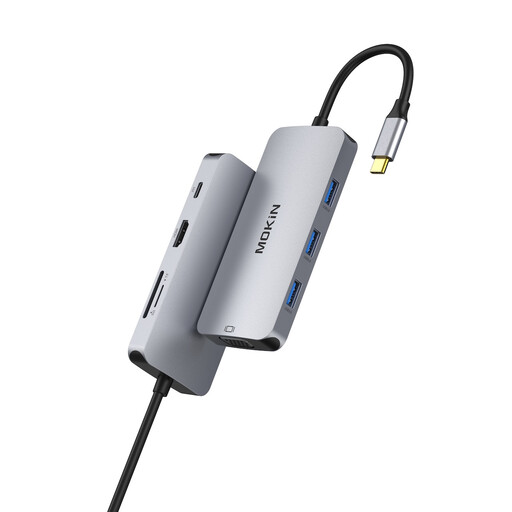 No image available
This hub is an option if you want to read SD or TF cards and use other ports with a compatible laptop.
The description lists HDMI, VGA, three USB 3.0 ports, and SD/TF card readers. According to the description, the device is compatible only with laptops that have a fully functional USB-C or Thunderbolt port; MHL devices aren’t supported.
It depends on whether your phone, card reader and card format are compatible, and whether your device can open the photos. Apple Support explains how to access connected SD cards through the Files app and lists connection and file system requirements. Files by Google explains how to access USB storage on supported Android devices running Android 7.0 or later. Test the exact combination with an existing photo before you set off.
First, check where the files are stored and whether your device can display their format. Don’t format the card as a first step: Apple Support notes that reformatting deletes every photo on the card.
Not simply because it has a higher interface specification. UHS-II is a card standard; whether it makes a difference when copying also depends on the card and the device you’re copying to. The SD Association explains that potential bus speed isn’t the same as actual copy speed. If you only view photos occasionally, first make sure the card and device connection are compatible.
Check whether you need the extra ports and whether any accessories you require are included. Anker says the 565 needs a separate charger for pass-through charging, which isn’t supplied. The consumer advice centre Verbraucherzentrale also distinguishes between statutory rights and a voluntary guarantee.
The available guidance doesn’t provide a blanket permission to do so. The Data Protection Conference treats trail cameras as a data protection issue. For the use it describes, the Rhineland-Palatinate data protection authority requires, among other things, that images of people be deleted immediately, and says their distribution generally requires the consent of those affected. The specific legal position depends on where and how the camera is used; guidance from Rhineland-Palatinate shouldn’t automatically be treated as an identical rule for every German state.