Listening to interviews on noisy routes
If train noise drowns out quieter parts, a comfortable fit and good noise isolation are key, so you don’t have to simply turn the interview up louder.


When train noise drowns out interview voices, well-fitting, noise-isolating in-ear headphones with switchable ANC are a good choice. The WHO recommends well-fitting, noise-cancelling headphones so you don’t have to turn the volume up as much in noisy environments. If hearing announcements and people speaking to you directly is more important, look for an easily accessible pause or transparency function, or consider open-ear headphones. Bear in mind, though, that open designs let more train noise through to the interview. On longer journeys, focus on how the headphones actually fit and their playback time per charge in the listening mode you use, rather than the total battery life including the charging case.
If train noise drowns out quieter parts, a comfortable fit and good noise isolation are key, so you don’t have to simply turn the interview up louder.
If you want to hear announcements or people speaking to you directly, an easily accessible pause function or greater awareness of your surroundings are important features to look for.
For longer listening sessions, it’s important that the headphones are comfortable and that their playback time per charge suits the listening mode you use.
First decide whether noise isolation or awareness of your surroundings matters more to you. Then check the fit, controls and battery life against the journeys you usually make.
A good choice if: train noise regularly drowns out interview voices and the ear tips feel comfortable and create a good seal. The WHO recommends well-fitting, noise-cancelling headphones so you don’t have to turn the volume up as much in noisy environments.
The trade-off: Noise isolation can make announcements harder to hear. Check whether you can pause playback quickly or switch to an ambient mode.
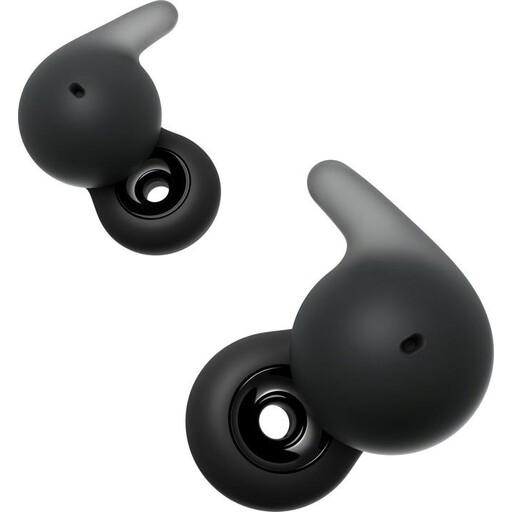
A good choice if: you want to stay aware of your surroundings or don’t find sealed ear tips comfortable. Sony describes the LinkBuds Open as having an open, ring-shaped design.
The trade-off: Open-ear headphones don’t block train noise like snug-fitting in-ear headphones. Check that you can understand interview voices at a comfortable volume on your usual route.
| What matters to you | What to look for when buying | Who should particularly consider this? |
|---|---|---|
| Speech clarity | Check that the ear tips fit comfortably and create a good seal. For ANC models, look for a mode you can switch off and an easily accessible pause function. | When train noise drowns out quieter parts of an interview, I want to understand the voices at a comfortable volume. Around 29% of consumers therefore put speech clarity first. |
| Fit and comfort | Check the available ear tip sizes or open-ear fit, and how comfortable the headphones feel for the planned listening time. | If headphones press on my ears or don’t stay securely in place during a longer conversation, finding the right fit comes first. Around 24% of consumers prioritise fit and comfort. |
| Announcements and surroundings | Check the pause function and how to switch between ANC and ambient mode. An open design lets in surrounding sounds, but also train noise. | If I want to hear announcements or someone speaking to me directly, an easily accessible pause function or greater awareness of my surroundings matters. Around 18% of consumers put announcements and ambient awareness first. |
| Playback time per charge | Compare playback time in the listening mode you plan to use with the length of your journey, and consider it separately from the charging case’s total battery life. Sony quotes up to 8 hours with NC on for WF-1000XM5; Apple quotes up to 8 hours with ANC per charge for AirPods Pro 3. | If I want to listen to a longer interview without stopping to recharge, playback time per charge in the mode I actually use matters most. Around 17% of consumers put battery life first. |
| Device compatibility | Check that the Bluetooth connection and any app or mode features you need work with your playback device. | If I want to use specific features with my phone, I first check that they’re available on my device. Around 12% of consumers prioritise device compatibility and the right set of features. |
The WHO identifies volume, duration and frequency of exposure as factors in hearing damage. It recommends well-fitting headphones so you don’t have to turn the volume up as much in noisy environments.
Check the fit and speech clarity at a moderate volume; use ANC as an extra if you need it.
An open design lets surrounding sounds through. This can help you stay aware of your surroundings, but it also means more train noise can reach the interview.
Choose according to your main priority: noise isolation or staying aware of your surroundings.
Manufacturers’ playback time per charge figures apply to the specific modes they list. Total battery life with the charging case is a different figure.
Compare playback time per charge with your planned settings and the length of your journey.
§ 312g BGB sets out an exception for certain sealed goods that are unsuitable for return for health protection or hygiene reasons. This doesn’t automatically apply to every in-ear headphone.
Before removing a seal, check the details of the specific offer and ask the seller if anything is unclear.
Sony offers both sealed ANC in-ear headphones and open-ear headphones here; each design has a different purpose.
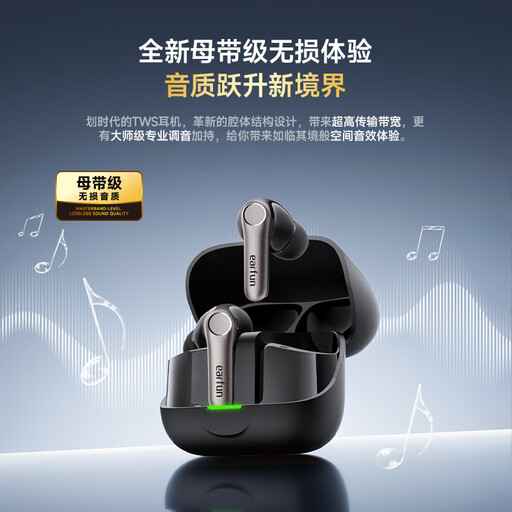
EAH-AZ100 is a true wireless option with adaptive ANC for journeys where noise isolation matters.
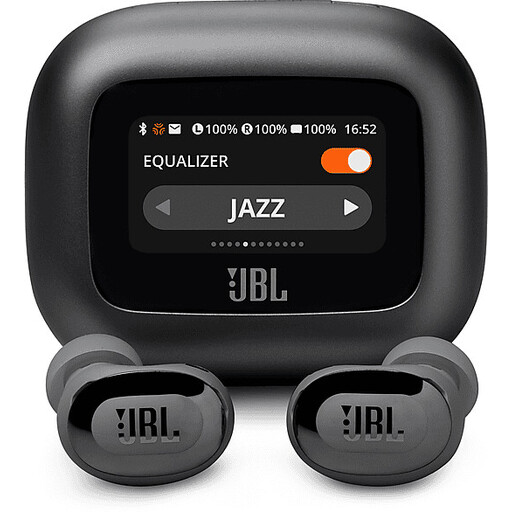
According to JBL, Tour Pro 3 combines ANC with a touchscreen charging case.
According to Samsung’s model comparison, Galaxy Buds3 Pro are ANC in-ear headphones with an ambient mode.
AirPods Pro 3 are ANC in-ear headphones with Transparency mode and playback controls.
This selection includes sealed in-ear headphones with ANC to block out train noise, as well as open-ear headphones if you want to stay aware of your surroundings while listening to an interview.
 No image available
For journeys when you want to block out train noise, the product description lists adaptive hybrid ANC.
Five ear tip sizes; up to 12 hours of playback with ANC off. This battery life figure specifically applies when ANC is switched off.
 No image available
For interviews where you want to block out train noise, the product description lists True Adaptive Noise Cancelling.
Up to 8 hours of playback with ANC per charge; up to 40 hours including the charging case.
 No image available
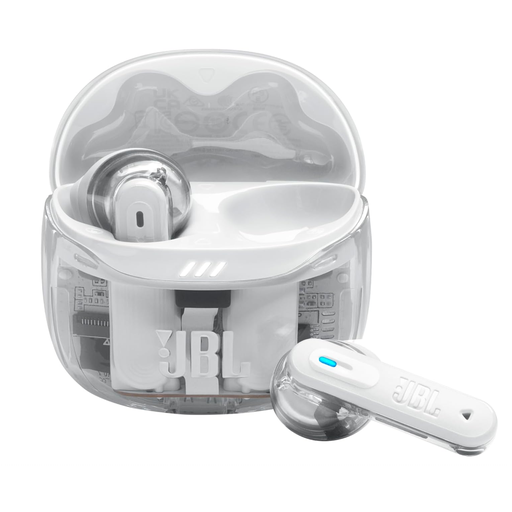
ANC is useful on journeys where train noise is a problem; Smart Ambient offers a way to stay aware of your surroundings.
Up to 8 hours of playback with ANC per charge; the description lists switching between ANC and ambient modes.
 No image available
These in-ear headphones are worth considering if you want ANC to block out train noise and an ambient mode for when you need to hear announcements.
The product description lists up to 6 hours of playback with ANC per charge and touch controls for switching modes.
 No image available
The open ring design lets surrounding sounds through, making these a good fit for journeys when you want to stay aware of your surroundings.
The product description lists up to 8 hours of playback from the headphones per charge. On noisy routes, more train noise may also be audible alongside the interview.
No. If you can understand the voices clearly at a comfortable volume, ANC isn’t essential. If train noise is distracting, the WHO recommends well-fitting, noise-cancelling headphones to reduce the temptation to turn the volume up. Also check how you can pause playback to hear announcements.
Try the available ear tip sizes and check the fit and controls before setting off. Compare playback time per charge in the listening mode you’ll use, and follow the instructions for your specific model when cleaning and drying it. Don’t assume the headphones’ water resistance also applies to the charging case.
Deutsche Bahn says that listening to music loudly, even through headphones, is not welcome in the ICE quiet carriage. This is a rule of conduct set by Deutsche Bahn, not a general legal decibel limit established here. Independently, the WHO advises limiting volume and listening time to protect your hearing.
For a qualifying online purchase from a business seller, you generally have 14 days from delivery to cancel. The consumer may have to pay return costs unless the seller agrees to cover them. Your statutory rights if an item is faulty are separate from any voluntary manufacturer’s warranty. § 312g BGB provides an exception for certain sealed goods that are unsuitable for return for health protection or hygiene reasons, if the seal has been removed after delivery. Whether this exception applies to a particular pair of headphones cannot be determined solely from the product category.