
Lieferung heute & morgen

Qualitätsgarantie

Willkommens-Angebote freischalten: KOSTENLOSE Lieferung | Bis zu 80 % RABATT | Kostenlose 30-Tage-JoyPlus-Testphase
App herunterladen
In a globally connected business world, language barriers are an everyday hurdle. An AI translator glass promises to overcome these barriers in real-time, simplifying communication in international meetings or on business trips. However, the market is filled with products whose marketing promises don't always hold up to reality. Many users invest in a device only to find it's unsuitable for professional use.
As your Joybuy Product Recommendation Officer, I'm here to help you separate the wheat from the chaff. This guide focuses on the critical pitfalls and shows you which technical parameters to look for to make an informed decision.
Before you make a purchase, you should be aware of the typical flaws that often only become apparent after buying, rendering a promising gadget useless.
To avoid the pitfalls mentioned above, you should carefully examine three technical aspects before buying. These parameters determine whether real-time translator glasses truly add value in daily use.
The quality of the translation depends directly on the underlying AI model. Models that access established engines, like the technology behind ChatGPT or Gemini, generally offer higher accuracy and lower latency. Pay attention to the number of supported languages and check if the ones relevant to you are covered. A stable Bluetooth 5.3 connection to your smartphone is also critical, as the processing power for translation usually resides in the cloud and requires a constant data stream.
For professional use, a battery life of at least 8 to 12 hours of active use is an important benchmark. This ensures the glasses function reliably during long meetings or while travelling. Also, check the charging options. A magnetic charging port or a universal USB-C port offers flexibility. Charging time is also a factor; a fast-charging feature can be a significant advantage in a hectic daily routine.
Modern AI audio glasses should feature an open-ear headphone system. This technology directs sound to your ear without blocking the ear canal, allowing you to remain aware of your surroundings, which enhances safety in traffic and facilitates interaction with colleagues. For clear communication during calls, at least two microphones with noise cancellation are required. These filter out ambient noise and ensure your voice is transmitted clearly and intelligibly—a must-have for any glasses for meetings.
Based on the criteria above, we have compiled a selection of products suitable for specific user groups and their requirements.
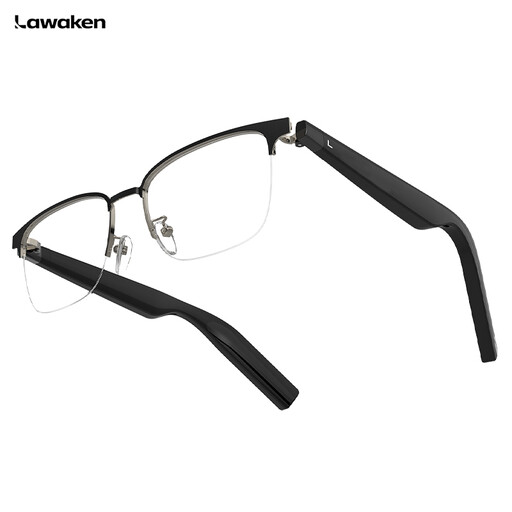
Why This Fits Their Persona: Ideal for frequent travellers who need a robust, lightweight, and stylish device. The titanium material ensures durability and superior comfort, while comprehensive language support enables global communication.
The stated 12-hour battery life bypasses the pitfall of a dead battery on long travel days. The lightweight titanium frame prevents the lack of comfort found in many bulkier models.
Supports real-time translation for 128 languages and is compatible with prescription lenses. The IPX4 water resistance offers protection against splashes.
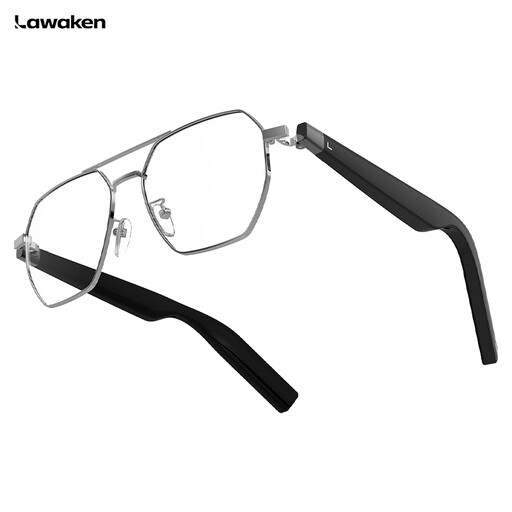
Why This Fits Their Persona: Perfect for managers who want to not only communicate but also optimise their workflows. The integration of AI assistants and meeting summaries turns these glasses into a true productivity tool.
Instead of just offering simple translation, the "AI Note" feature directly addresses the pain point of inefficient meetings. It delivers tangible value that goes beyond mere marketing promises.
Offers an AI agent function with connections to ChatGPT, Gemini, and Claude. The "AI Note" feature can record and automatically summarise meetings.
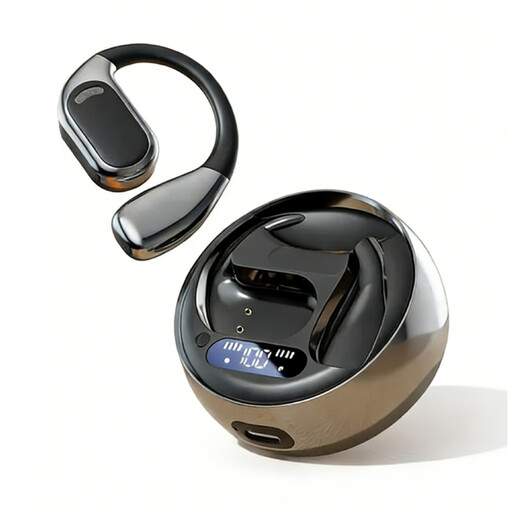
Why This Fits Their Persona: A pragmatic alternative for users who primarily want to use the AI translation feature for travel or learning, without investing in fully-fledged smart glasses. The focus is on the core function.
By focusing on the translation function in an earphone format, this product avoids the high costs and design compromises of entry-level glasses. It delivers the core function without exaggerated promises.
Supports translation for approximately 150 languages, according to the manufacturer. The Bluetooth 5.4 connection ensures stable connectivity. The in-ear design provides good sound isolation.
We have compiled a complete, up-to-date list of products that fully meet these strict selection criteria.
1. How accurate is the real-time translation of AI glasses? The accuracy depends on several factors: the AI model used, the stability of your internet connection, and ambient noise. In quiet environments with a stable connection, modern devices can achieve high accuracy sufficient for most business and everyday conversations. However, precision may decrease with complex technical jargon or in noisy surroundings.
2. Can I use AI glasses with my prescription lenses? Some models, like the LAWAKEN AI Glasses, are designed so that the lenses can be replaced by an optician. This is an important point to check before purchasing. It is recommended to have prescription lenses fitted exclusively by qualified professionals to avoid damaging the frame.
3. Do translator glasses work without an internet connection? Most current models require an active internet connection (via Wi-Fi or the paired smartphone), as the complex AI calculations for translation are performed in the cloud. Offline functionality is rare and usually limited to a small number of languages and a reduced vocabulary. Check the product specifications carefully if this is a requirement for you.