
Lieferung heute & morgen

Qualitätsgarantie

Willkommens-Angebote freischalten: KOSTENLOSE Lieferung | Bis zu 80 % RABATT | Kostenlose 30-Tage-JoyPlus-Testphase
App herunterladen
As a Joybuy Product Recommendation Officer, I regularly analyse the market to bring you practical and expert buying advice. In a globally connected world, language barriers are an everyday challenge, whether on international business trips, on holiday, or when learning a new language. Translator earbuds have emerged as an innovative solution to overcome these hurdles directly and effortlessly. This article provides an overview of how these devices work and presents a selection of models that meet different needs.
Choosing the right model depends on your individual needs. Three key criteria will help you make your decision.
The core function is translation. Check how many languages the device supports and whether your relevant target languages are included. Some models, like specialised AI translator earbuds, offer coverage for over 100 languages. Also, pay attention to the available modes. Common ones include:
Intuitive operation is crucial, especially in hectic situations. Modern Bluetooth earbuds with a touchscreen on the charging case offer a clear advantage here. Functions like music selection, volume control, or changing the translation mode can be managed directly on the case, without needing to reach for your smartphone. Sensitive touch controls on the earbuds themselves for answering calls or playing music are also an important factor for daily use.
For travel earbuds with translation, reliable battery life is essential. Pay attention to the specified usage time per charge and the total runtime when combined with the charging case. Most real-time translator earbuds require a stable Bluetooth connection to a smartphone and a dedicated app to use the AI-powered translation services. Check for compatibility with your operating system (iOS/Android) and the app's requirements.
Here is a selection of models that are compelling for different user profiles due to their specific features and functions.
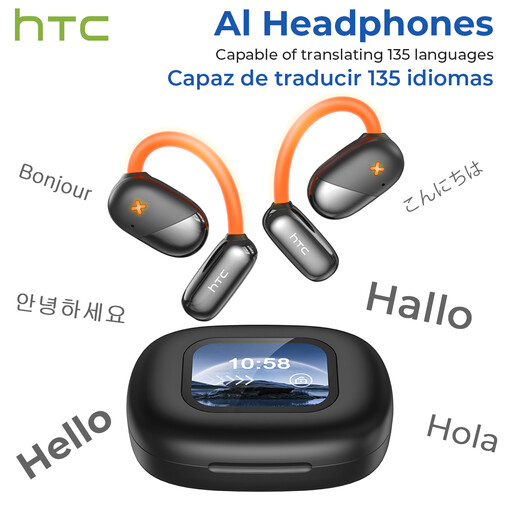
Why they stand out: These HTC AI earbuds are specifically designed for real-time translation. The charging case features an LCD colour touchscreen that allows direct control of translation modes, music, and other functions without using your smartphone.
Pros:
Who are they for? International business travellers and tech-savvy users who are looking for a dedicated solution to overcome language barriers and appreciate the convenience of a smart charging case with a display.
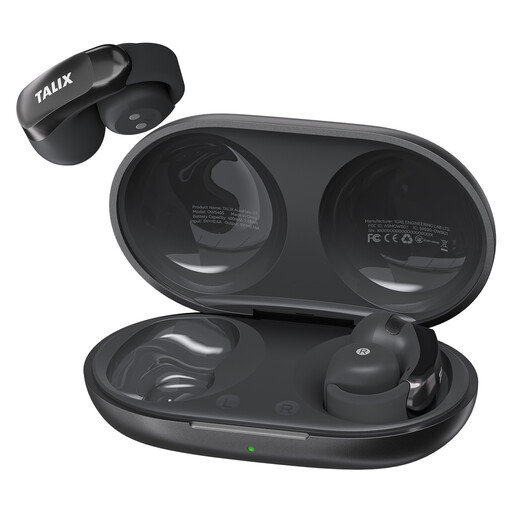
Why they stand out: The main feature of these earbuds is their extremely lightweight, clip-on design, engineered for long-term comfort. They focus on clear call quality through a 4-microphone system.
Pros:
Who are they for? Users who primarily value all-day comfort and excellent voice quality for phone calls and online meetings, and do not require an integrated translation function.
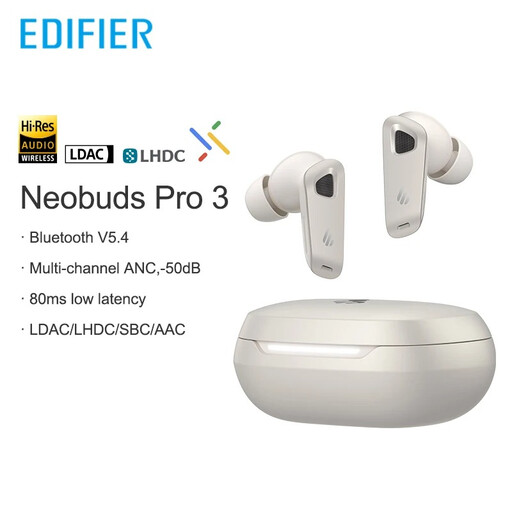
Why they stand out: The NeoBuds Pro 3 from Edifier are aimed at audiophiles and users seeking premium active noise cancellation (ANC). With Hi-Res Audio support and technologies like LDAC and LHDC, they deliver superior sound quality.
Pros:
Who are they for? Commuters and frequent travellers who prioritise outstanding audio quality and effective isolation from ambient noise for focused work or music enjoyment.
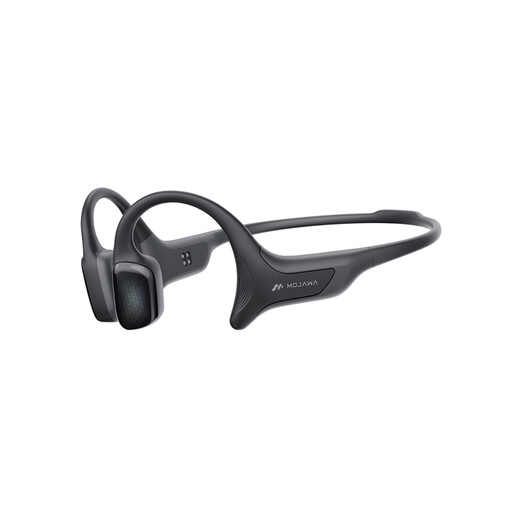
Why they stand out: This model uses bone conduction technology, where sound is transmitted through the cheekbones. The ears remain open, which allows for awareness of ambient sounds and increases safety during sports.
Pros:
Who are they for? Athletes, especially runners, cyclists, and swimmers, who are looking for safe, waterproof headphones with integrated music storage and fitness tracking features.
The models presented cover specific use cases. If you are looking for other models with different specialities, you will surely find a suitable alternative in our broader selection.
? Discover more Bluetooth headphones with a microphone
1. How do translator earbuds work? Most earbuds with a translation function work in conjunction with a smartphone app. The earbuds' microphones capture the spoken language, send the data to the app where it is processed and translated by a cloud-based AI. The translation is then sent back to the earbuds and played for the user.
2. Do AI translator earbuds always need an internet connection? Yes, for real-time translation of most languages, an active internet connection (Wi-Fi or mobile data) is required because the complex AI algorithms run in the cloud. Some models may offer offline packages for a limited number of languages, but the full range of features is typically available online.
3. Can you also use translator earbuds for listening to music and making calls? Yes, all the models presented here are fully-featured Bluetooth earbuds. You can use them without any issues for listening to music, podcasts, or making phone calls, just like conventional wireless earbuds. The translation function is an additional, specialised application.