
Lieferung heute & morgen

Qualitätsgarantie

Willkommens-Angebote freischalten: KOSTENLOSE Lieferung | Bis zu 80 % RABATT | Kostenlose 30-Tage-JoyPlus-Testphase
App herunterladen
The idea of effortlessly overcoming language barriers while travelling or in international business meetings is alluring. Translator earbuds, often called AI translator headsets, promise to do just that. However, the market is flooded with devices whose advertised capabilities often fall short in practice. Before you make a purchase, it's crucial to understand the common pitfalls to avoid a poor investment.
This guide focuses on the objective criteria that define a functional device, helping you make the right choice for your needs.
Many products promise more than their technology can deliver. Pay close attention to these three areas where marketing claims often diverge from reality:
To avoid these problems, you should base your selection on verifiable technical specifications. These three aspects are critical for functionality.
A good pair of translator earbuds offers different modes for various conversational situations. Check if the device supports the following modes:
The term real-time translator earbuds is relative. Every translation has a slight delay (latency) because the data must be sent to a server for processing. A stable internet connection is therefore a basic requirement for most models.
For clear translations, especially for travel and business, microphone quality is paramount. Look for models with:
The earbuds with translation features are the hardware; the app is the brain. Make sure the companion app is available for your operating system (iOS/Android), receives regular updates, and has positive user reviews regarding stability and usability. Offline packages for specific languages can be a useful bonus but are often limited in scope and quality.
Instead of making a one-size-fits-all recommendation, we have identified models tailored to specific use cases that take the aforementioned pitfalls into account.
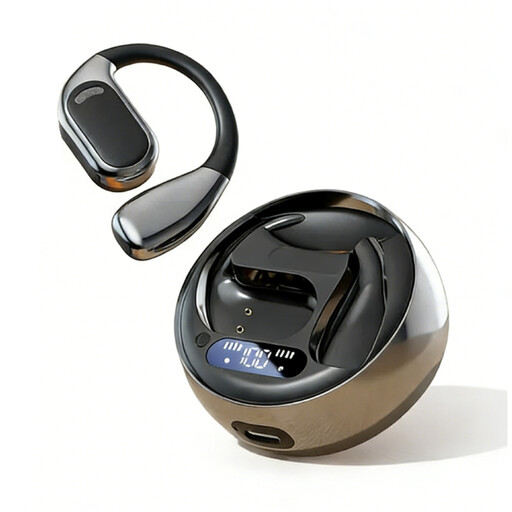
Why This Fits Their Persona: The discreet in-ear design is suitable for professional settings. The included charging case ensures extended battery life for long workdays or travel. Its broad language coverage is advantageous for global business operations.
This model focuses on clear voice capture, addressing the pitfall of poor microphone performance in busy environments like meetings or trade shows.
In-ear design for discretion; charging case for extended mobile use; support for around 150 languages according to the manufacturer.
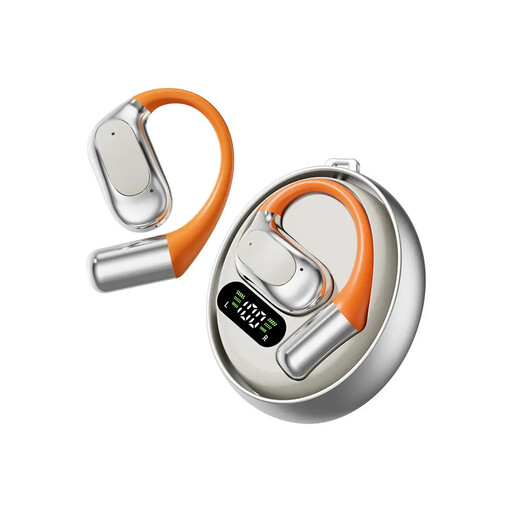
Why This Fits Their Persona: The lightweight ear-hook design offers high comfort for long days of sightseeing. It focuses on the core function—translation—making it a pragmatic solution for typical travel situations, like in a hotel or at a market.
This device offers broad language coverage via straightforward app connectivity, thus avoiding the pitfall of paying for superfluous premium features that aren't needed on holiday.
Lightweight ear-hook design for all-day comfort; simple operation for basic travel communication.
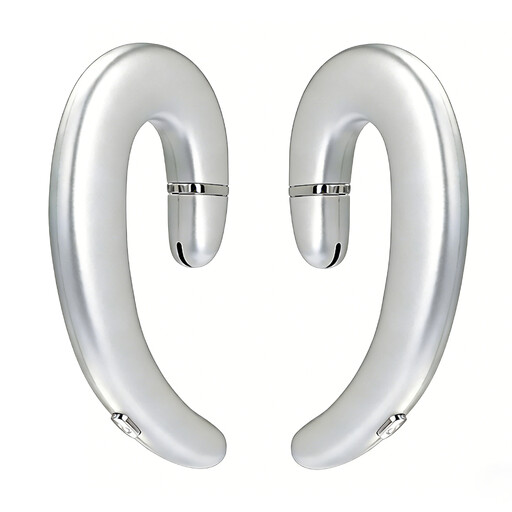
Why This Fits Their Persona: The dual-ear design allows for immersive listening to language courses or foreign-language media. It can also be used as a conventional Bluetooth headset for music and calls, making it a versatile everyday companion.
Its dual function as both a translator and a standard headset avoids the pitfall of being a "single-purpose gadget." Its utility remains high even when the translation feature is not in active use.
Dual-ear design for immersive learning and media consumption; versatile use as a standard Bluetooth headset.
We have compiled a complete, up-to-date list of products that fully meet these strict selection criteria and all relevant safety standards.
Do translator earbuds work without the internet? Most models require an active internet connection (Wi-Fi or mobile data), as the AI translation is processed on cloud servers. Some devices offer optional offline packages for common language pairs. However, the functionality and accuracy of these offline modes are typically limited compared to online translation.
How accurate is the translation in a noisy café? The accuracy depends directly on the device's microphone technology. Models with advanced noise cancellation and multiple microphones that focus on the speaker's voice deliver significantly better results in loud environments than basic devices with only a single microphone.
Does the other person I'm speaking with also need a device? That depends on the selected translation mode. In modes where the translation is played through the smartphone's speaker, the other person does not need their own device. For a more fluid, two-way conversation mode where both people can speak and listen simultaneously, it is often necessary for each person to wear one earbud from the pair.