
Lieferung heute & morgen

Qualitätsgarantie

Willkommens-Angebote freischalten: KOSTENLOSE Lieferung | Bis zu 80 % RABATT | Kostenlose 30-Tage-JoyPlus-Testphase
App herunterladen
Dining tables, kitchen worktops and desks face plenty of wear and tear in everyday use. Spilt drinks, grease, felt-tip pens, scratches from crockery and hot plates can quickly leave visible marks. A transparent 2 mm PVC table protector can help protect the surface without completely hiding the table’s grain or colour.
However, table protectors vary considerably in thickness, edge shape, surface texture and temperature tolerance. If you focus only on a glossy product photo or the words ‘heat-resistant’, you could end up buying the wrong protector. The following points can help you avoid common mistakes.
Several PVC table protectors on the market are rated as heat-resistant up to 80 °C. This gives you a clear guide for warm plates, cups and serving dishes. However, pans taken straight from the hob or oven can be considerably hotter and may deform the material.
A heat-resistant table protector is no substitute for heat mats. Always treat the stated temperature as an upper limit, not as the all-clear for placing any hot cookware on it.
PVC protectors are often delivered rolled up and may be slightly curved at first. Some product details also mention a possible shrinkage tolerance of around 1 to 5 mm. If you order a protector to fit exactly edge to edge, it may turn out to be slightly smaller once it has settled.
Before buying, measure the table’s length and width in several places. If you’re buying a made-to-measure table protector, also consider whether you want straight edges, rounded corners or an overhang.
A transparent table cover can usually be placed directly on matt wood or plastic surfaces. On glass, gloss lacquer or highly polished surfaces, however, air bubbles, marks from adhesion or a visual ‘floating effect’ may occur. Several product descriptions recommend placing a thin layer of fabric between the table and protector on these surfaces.
The suitability of your table’s surface should therefore be part of your buying decision. Don’t choose a transparent PVC table cover based on appearance alone.
At 2 mm thick, this protector is more substantial than very thin covers. It can offer better everyday protection against liquids, stains, scuffs and light scratches, while also softening the sound of cutlery on the table. PVC is not indestructible, though: sharp knives, rough ceramic bases and pointed objects can damage the surface.
For families with children, craft areas or kitchen tables in frequent use, a scratch-resistant table protector that’s 2 mm thick is a sensible choice. A thinner cover may be enough for a side table that’s rarely used.
A waterproof PVC table protector has a smooth, non-absorbent surface. This makes it easy to wipe away liquids, oil and many everyday spills with a soft, damp cloth. For regular care, mild soapy water is usually all you need.
Scouring pads, harsh bleach and abrasive cleaners can dull the transparent finish. Don’t put the protector in the washing machine unless the manufacturer specifically says it’s safe to do so.
Straight edges are easy to work with and can be trimmed if needed using a sharp cutting tool. A 45-degree bevelled edge can feel more comfortable along the sides of a table, as it sits less sharply against the edge and makes it easier to rest your forearms. For a round or irregularly shaped table, trace the outline onto paper or card before cutting.
A non-slip texture can help keep the protector in place on matt table tops. It won’t necessarily stop all movement, particularly if there’s dust or grease, or if the surface is very smooth.
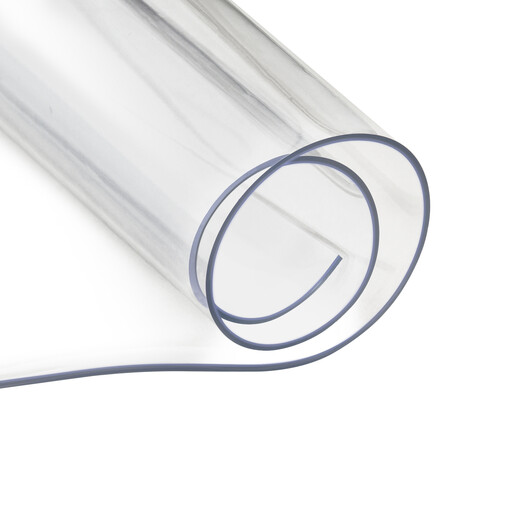
Why this product suits this profile: Its compact size is ideal for smaller dining tables, kitchen tables or desks, providing a transparent, wipe-clean cover for everyday use.
The product details specify a 2 mm thickness, water resistance and cleaning with a damp cloth. The stated temperature limit of 80 °C helps prevent it being used with very hot cookware.
2 mm PVC, transparent, waterproof and wipe-clean, with a non-slip finish according to the product description. Measures 70 x 120 cm.
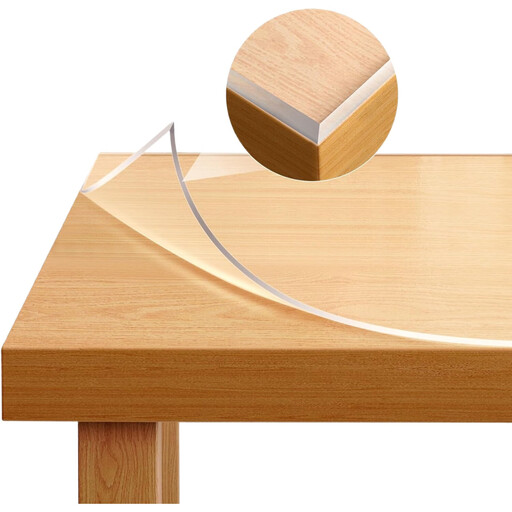
Why this product suits this profile: The bevelled edge makes this a good option for a large dining or work table if you’d prefer a more comfortable finish around the edges.
The 45-degree edge avoids the sharp look of a straight finish. The product description also recommends using a layer of fabric on glass and gloss surfaces.
2 mm PVC with a water- and grease-resistant, wipe-clean surface and 45-degree bevelled edges. Measures 90 x 180 cm.

Why this product suits this profile: Its medium size makes it suitable for kitchen worktops, dining tables, desks or craft areas where spills and everyday wear are common.
The product description says it can be trimmed with scissors or a cutting tool. It also warns against temperatures above 60 °C, so you’ll still need to use heat mats.
2 mm thick PVC with a transparent finish and a water- and oil-resistant surface. Can be cut to fit a range of table shapes.
We’ve put together a complete, regularly updated list of products that meet these strict selection criteria and fully comply with the safety regulations in force in the EU.
Unroll the protector onto a clean, dry table and leave it to settle. Heavy books placed along the edges can help it flatten out. Don’t use high heat to remove creases, as PVC can warp if it gets too hot.
Some of the products mentioned are rated as heat-resistant up to 80 °C, while others warn that temperatures above 60 °C may cause warping. Always follow the guidance for the specific product. Hot pans and pots should always be placed on a heat mat.
Its lifespan depends on sunlight, cleaning products, wear and tear, and how it’s exposed to heat. Regular cleaning with mild soapy water and avoiding abrasive products can help keep the surface clear for longer. Replace the protector if it develops cracks, permanent warping or significant cloudiness.