
Lieferung heute & morgen

Qualitätsgarantie

Willkommens-Angebote freischalten: KOSTENLOSE Lieferung | Bis zu 80 % RABATT | Kostenlose 30-Tage-JoyPlus-Testphase
App herunterladen
A transparent 2 mm PVC table cover should protect your table without hiding its surface. However, details matter – especially for families, high-quality dining tables, desks or tables used in commercial settings. Although a cover may be waterproof and wipe-clean, the wrong dimensions, an unsuitable edge shape or excessive heat can still make it impractical.
A rectangular table cover should not automatically be larger than the tabletop. Overhanging edges can catch on chairs or shift during frequent use. With a PVC table protector, choosing a size that fits as closely as possible is crucial.
Before buying, measure the length and width at several points. For rounded or irregularly shaped tables, a product that can be cut to size may be a sensible choice. Also bear in mind that rolled PVC covers may have a shrinkage tolerance of around 1 to 5 mm, depending on the product specifications.
PVC protects against warm plates, cups and everyday kitchen spills. However, this does not mean that a hot saucepan straight from the hob or a baking tray should be placed directly on the cover. Depending on the design, temperatures of up to 80 °C may be specified, while other product information states lower limits.
Always check the specific manufacturer’s information. A heat-resistant table cover still requires a trivet underneath very hot items. Naked flames and direct heat sources should always be avoided.
On wood, matt finishes or many coated tabletops, a transparent table cover can leave the grain visible while keeping liquids away. On glass and high-gloss surfaces, however, air bubbles or sticking may occur. For these surfaces, several product descriptions recommend placing a thin layer of fabric between the table and the cover.
A thickness of 2 mm offers more substance than very thin table covers. It can help keep scratches, stains, liquids and everyday wear away from the table. A thicker cover can also reduce noise from cutlery or writing implements.
The term scratch-resistant table protection should nevertheless be viewed realistically: PVC is not impervious to sharp objects. Do not cut directly on the cover and avoid using abrasive cleaning products.
A smooth, non-porous surface makes cleaning easier. For everyday use, a soft, damp cloth is usually sufficient; mild soapy water can be used for grease or heavier dirt. Harsh bleach and rough sponges may affect the transparency.
A non-slip table cover or textured underside can help keep the cover stable on matt table surfaces. With glass or high-gloss lacquer, however, compatibility is more important than maximum grip, as air bubbles may become visible.
Straight edges are suitable for practical table protectors that can be cut to size if required. Some versions feature a 45-degree bevelled edge. This bevelled edge can feel more comfortable when resting your arms on the table and reduces sharp transitions at the table edge.
If you need a made-to-measure table protector, check whether the product can be cut and whether the edges will fray or curl after cutting. Many PVC covers can be carefully trimmed with a sharp knife or sturdy scissors.
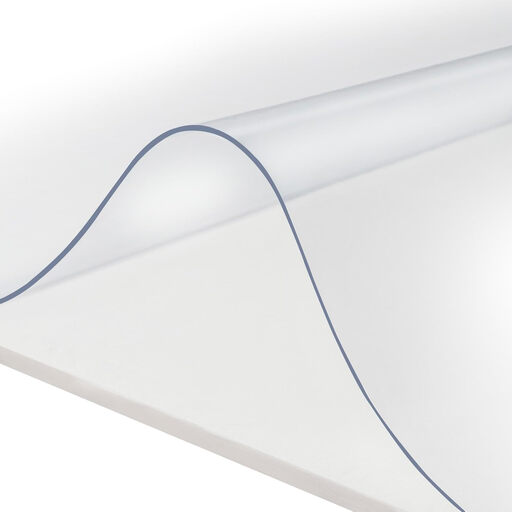
Why this product suits this profile: The rectangular 100 x 180 cm size is suitable for many larger dining tables and work tables. The transparent design keeps your existing table décor visible.
The clearly specified standard size makes choosing easier. According to the product description, the surface is waterproof and can be wiped clean with a damp cloth.
2 mm PVC, a rectangular 100 x 180 cm size, plus a water-repellent and wipe-clean design.
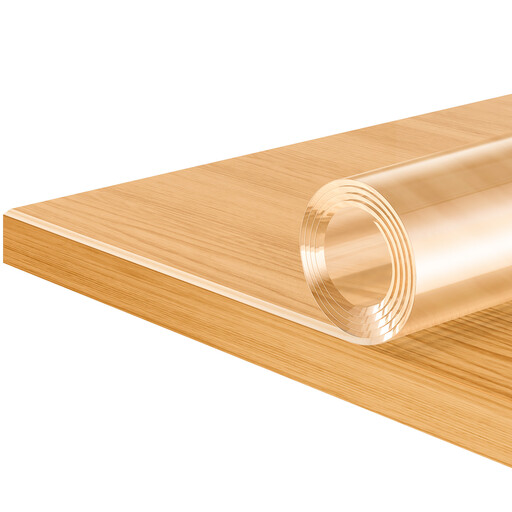
Why this product suits this profile: The 45-degree edge and textured underside combine a defined edge finish with stable positioning on suitable table surfaces.
The product description explicitly states the limitations on glass and high-gloss surfaces. This makes it easier to check whether it is suitable before buying.
Bevelled edge, waterproof surface, stated abrasion resistance and the option to cut it to size.
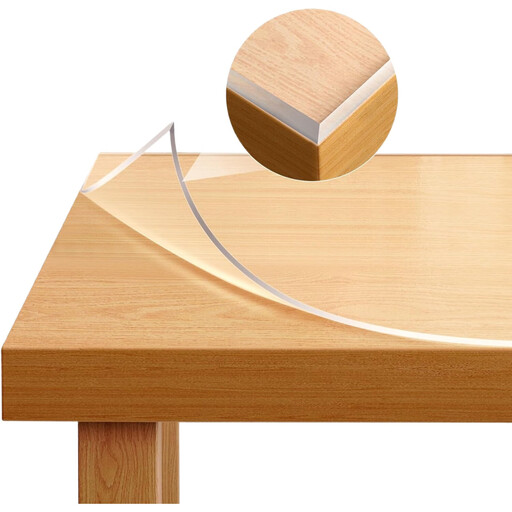
Why this product suits this profile: The larger size is ideal for long dining tables, desks or frequently used work surfaces in offices, cafés and educational establishments.
The guidance on cleaning, cutting to size and air bubbles on glass surfaces helps you plan for long-term use.
90 x 180 cm, 2 mm thickness, bevelled edges and a water- and grease-repellent surface according to the product specifications.
Rolled covers often need a short settling-in period. Place the table cover on a clean, dry surface and leave it flat. Heavy objects placed along the edges can help smooth it out. If you use a hairdryer at all, do so carefully and only at a low temperature.
For everyday use, follow these steps:
For smaller surfaces, a PVC table cover 80 x 140 cm, 80 x 120 cm or 70 x 120 cm is a practical size. Larger tables can be covered with a PVC table cover 100 x 180 cm, 90 x 180 cm or 100 x 200 cm. Before ordering, it is worth comparing these dimensions with the actual table size and the desired edge position.
We have put together a complete, regularly updated list of products that fully meet these strict selection criteria and the safety regulations applicable in the EU.
Unroll the cover and lay it flat on the cleaned table surface. Depending on how tightly it was rolled, it may take 24 to 48 hours to settle properly. Weights placed along the edges can help speed up the process. Avoid applying strong heat to delicate surfaces.
Its lifespan depends on exposure to sunlight, cleaning products, temperature, the table surface and mechanical wear. Regular cleaning with soft cloths and avoiding sharp objects can help preserve its transparency and shape. It is not possible to give a reliable general lifespan.
Only within the specific temperature range stated for the product in question. Information such as up to 80 °C does not automatically mean that containers taken directly from the hob or oven can be placed on it. Hot saucepans and baking trays require an additional trivet.