
Lieferung heute & morgen

Qualitätsgarantie

Willkommens-Angebote freischalten: KOSTENLOSE Lieferung | Bis zu 80 % RABATT | Kostenlose 30-Tage-JoyPlus-Testphase
App herunterladen
A transparent 2 mm PVC table protector protects table surfaces without completely hiding the wood grain, colour or pattern beneath. It is suitable for families with children, creative workspaces, kitchen worktops, offices, cafés, schools and nurseries. Liquids, paint residue and everyday marks can usually be wiped straight off the smooth surface.
However, to ensure your table protector remains practical over time, you should not focus solely on the price or the description “crystal clear”. Material thickness, accurate dimensions and suitability for the particular table surface are all important factors.
A rectangular table protector should not simply be ordered to match the exact size of the table. Depending on how it will be used, a small overhang may be helpful, while a flush edge can be more comfortable on a desk. If the protector is too small, areas around the edges will remain unprotected. If it is significantly too large, it may extend beyond the corners or move out of place.
Before buying, measure the length and width of the table surface at several points. If you are buying a made-to-measure table protector to cut to size, it is advisable to start with a slightly larger format. This allows you to trim the protector later with a sharp craft knife or suitable scissors.
Several available models specify temperature resistance of up to 80 °C. This is relevant for warm plates, mugs or serving dishes. However, pots and pans taken directly from the hob or oven can be considerably hotter. They should therefore always be placed on an additional trivet.
For localised heat protection, a separate protector such as the PAN PROTECTOR X6 BAIZE is a sensible choice. The three included sizes — 38 × 38 cm, 35 × 35 cm and 28 × 28 cm — are designed for individual pots, pans or bowls. Combining a table protector with a trivet helps reduce the direct heat exposure of the PVC surface.
Air bubbles can form on glass and high-gloss lacquered surfaces. The protector may also adhere more strongly or look visually uneven. The product information for the WOLTU models therefore specifically advises against using them on these surfaces.
A transparent table protector may sit more securely on matt wood, plastic or coated surfaces. Even so, it is advisable to test it on an inconspicuous area before covering the entire surface.
A thickness of 2 mm provides sturdy protection against liquids, stains, scratches and everyday wear. Compared with very thin tablecloths, a PVC protector of this kind generally retains its shape better and is less likely to fold over.
However, the protector is not a substitute for a solid glass top. Sharp objects, heavy point pressure and roughly moving heavy furniture can also damage a scratch-resistant table protector. Felt pads under appliances and furniture are therefore still recommended.
Pay attention to:
Many models are delivered rolled up. After unpacking, the protector may initially show waves or ripples. Laying it flat for 24 to 48 hours and weighing down the edges may help smooth it out. A hairdryer on a low heat setting should only be used carefully and from a distance.
A waterproof table protector should be easy to clean with a soft, damp cloth and mild soapy water. Scouring pads, harsh bleaches and sharp blades can make the transparent surface look cloudy or scratch it.
The smooth surface of PVC protectors is washable, making them suitable for dining areas, desks and craft spaces. In schools and nurseries, you should also check whether the specific use, cleaning routine and surface area comply with internal hygiene requirements.
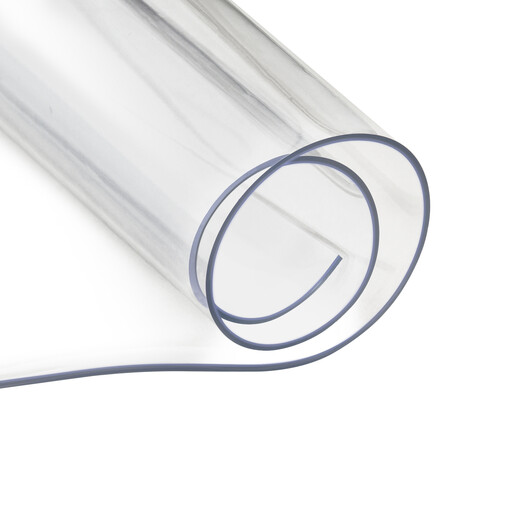
Why this product suits this profile: The compact format is suitable for smaller dining tables, desks or individual work areas. The 2 mm design offers a clearly defined entry-level option for protecting your table.
The fixed dimensions make it easier to choose the right size and avoid an unnecessarily large overhang. The stated temperature resistance of up to 80 °C makes the limit for warm items clear.
Waterproof, washable, transparent and featuring a non-slip surface according to the product information.
Why this product suits this profile: The larger rectangular format covers many standard dining tables and wide work surfaces. It preserves the visible surface and is designed for regular use at home or in commercial settings.
The product information clearly states the material thickness, waterproof properties, washability and restriction against use on glass and high-gloss surfaces.
100 × 180 cm, a smooth wipe-clean surface and stated heat resistance of up to 80 °C.
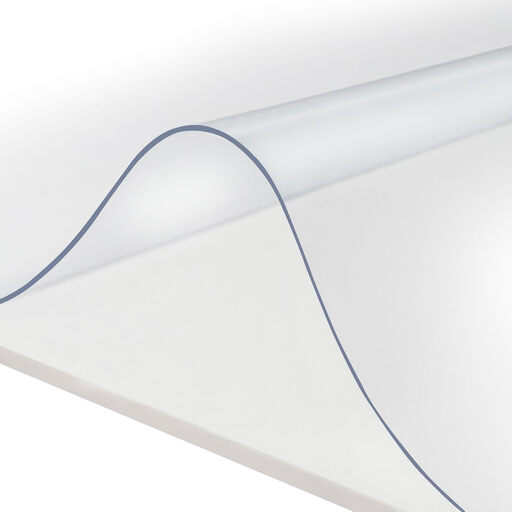
Why this product suits this profile: The format is suitable for smaller tables, desks, craft spaces or kitchen areas that require regular cleaning.
The instructions recommend leaving it flat for 24 to 48 hours to smooth out, and cleaning it with mild soapy water. This helps avoid unfavourable impressions caused by initial ripples from being rolled up.
2 mm thick, transparent, waterproof and designed to be trimmed with household scissors or a craft knife.
We have put together a complete, regularly updated list of products that fully meet these strict selection criteria and the safety regulations applicable in the EU.
In families with children, trimmed-off pieces should be cleared away immediately. Small pieces of PVC should not be left within reach of children or pets.
Its lifespan depends on exposure to sunlight, cleaning products, mechanical stress and heat. It is not possible to provide a reliable specific service life without knowing how the protector will be used. If it is maintained with a mild cleaner and is not exposed to high heat or sharp objects for prolonged periods, it may be suitable for regular everyday use. It should be replaced if it becomes yellowed, cracked or permanently cloudy.
This is not generally recommended for the products mentioned. According to the product information, air bubbles or adhesion problems may occur on glass or high-gloss surfaces. For these surfaces, you should follow the manufacturer’s instructions for the specific model and first test it on a small, inconspicuous area.
The stated values of up to 80 °C refer to the relevant product specification and should not be equated with the temperature of a hot pan. Always place hot cookware on a suitable trivet. For this purpose, an additional heat protector for kitchen and table surfaces may be a sensible choice.