
Lieferung heute & morgen

Qualitätsgarantie

Willkommens-Angebote freischalten: KOSTENLOSE Lieferung | Bis zu 80 % RABATT | Kostenlose 30-Tage-JoyPlus-Testphase
App herunterladen
A transparent 2 mm table cover is designed to protect the table during everyday use without concealing the grain or colour of the surface. In households with children, kitchens and dining rooms, as well as at desks, liquids, craft paint, scratches and food residue are common sources of wear. Cafés, schools and nurseries also often require a washable, waterproof table-protection solution.
When choosing a product, however, the labels “transparent” and “extra robust” are not the only deciding factors. The material, surface finish, dimensions and suitability for the table in question all need to work together. The following advice will help you assess marketing claims and select a suitable PVC table-protection cover.
Many products state heat resistance of up to 80 °C. This provides a useful point of reference, but it does not replace protection against very hot pots, baking trays or open flames. Depending on the temperature and how long it is left in place, a cup of coffee or warm crockery may pose less of a risk than a container taken directly from the oven.
You should therefore check the temperature range specified for the particular heat-resistant table cover. Trivets remain advisable for very hot items.
A clear PVC table-protection cover can work well on wood, matt furniture surfaces or coated tabletops. On glass, high-gloss lacquer or particularly glossy surfaces, however, air bubbles, areas of adhesion or visible marks may appear. This warning is provided, for example, with several 2 mm models from WOLTU and Laneetal.
The table’s surface material should therefore be taken into account before purchasing. For delicate or glossy tabletops, a textile, lightly textured transparent table protector or an intermediate layer may be more suitable.
A table cover does not necessarily need to extend significantly beyond every edge. Depending on your preferences and the shape of the table, it can sit flush or overhang slightly. What matters is that its length and width match the tabletop and that the cover does not catch on walkways.
For roll material, cutting the cover to size can be practical. However, it should first be unrolled and smoothed out before making the final cut. Some products specify a small dimensional tolerance caused by adjustment or shrinkage.
2 mm PVC provides a more substantial structure than thinner covers. This thickness can help shield the tabletop from everyday scratches, stains and spills. At the same time, such a cover is heavier and less flexible than a thin tablecloth.
Pay attention to the following specifications:
A claim such as “scratch-resistant” should generally be understood as protection against normal everyday use. Sharp knives, rough objects or vigorous rubbing can still damage a scratch-resistant table cover.
A washable PVC tablecloth can normally be cleaned with a soft, damp cloth and mild detergent. Its smooth, non-absorbent surface is particularly practical when dealing with liquids, grease, pens or craft materials.
Avoid abrasive sponges, harsh solvents and stiff brushes. They can dull the clear surface or leave fine scratches. Spilled liquids should be removed as soon as possible to prevent them from running underneath the cover at the edges.
A transparent tablecloth with bevelled edges can feel more comfortable around the table edge because the edge is less sharp. An anti-slip structure can improve grip on matt wood or plastic surfaces. Even so, the tabletop should be clean, dry and free of crumbs before the cover is placed on it.
Extra care is required with glass or high-gloss lacquer. Check the manufacturer’s instructions and, if possible, test the cover on an inconspicuous area first.
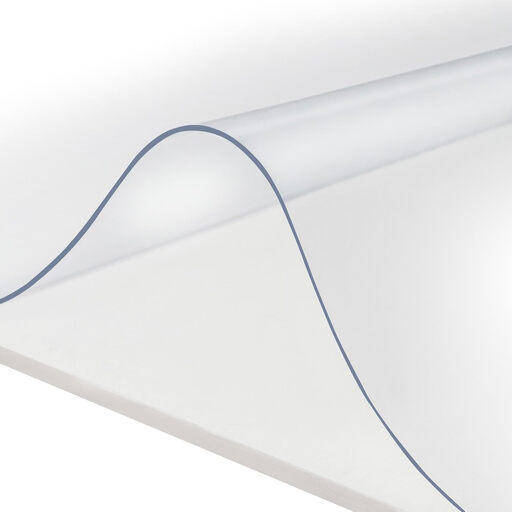
Why it suits this profile: The rectangular format is suitable for many dining tables and provides a clear, waterproof protective layer for everyday use.
The stated 2 mm thickness and smooth surface are clearly verifiable specifications rather than vague claims of durability.
Waterproof, wipe-clean PVC surface; 90 x 180 cm format.
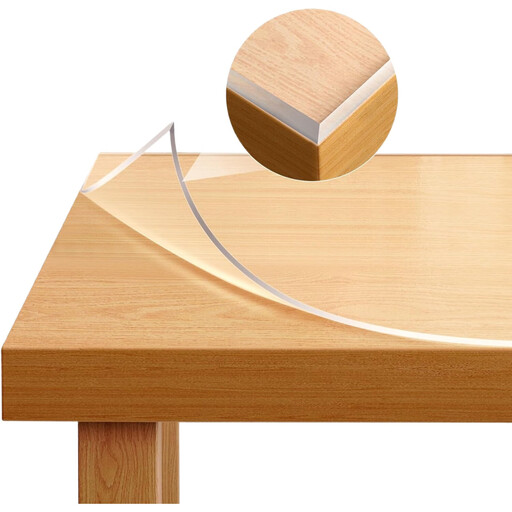
Why it suits this profile: The clear PVC cover with 45° edges is aimed at users who prefer a precisely defined edge profile and a discreet look on the dining table.
The product specifications explicitly state that the cover is waterproof, grease-resistant and wipe-clean, as well as confirming its 2 mm thickness.
45° edge, transparent finish and, according to the product description, food-safe PVC.
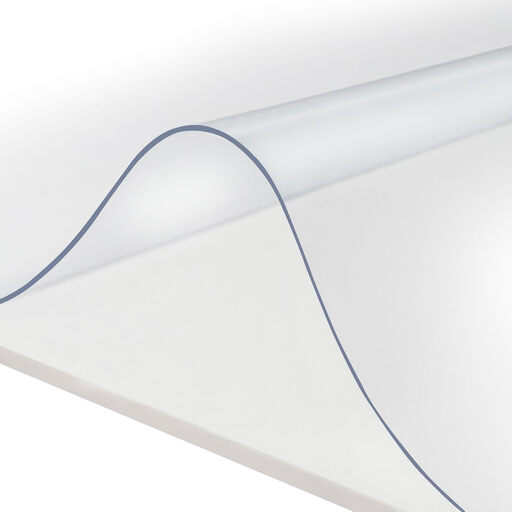
Why it suits this profile: The more compact dimensions are suitable for smaller dining tables, kitchen worktops, desks or children’s craft areas.
The manufacturer specifies heat resistance of up to 80 °C, waterproofing and cleaning with a damp cloth. Very hot items still require a trivet.
2 mm thick, transparent, water-repellent and designed for wood and matt surfaces.
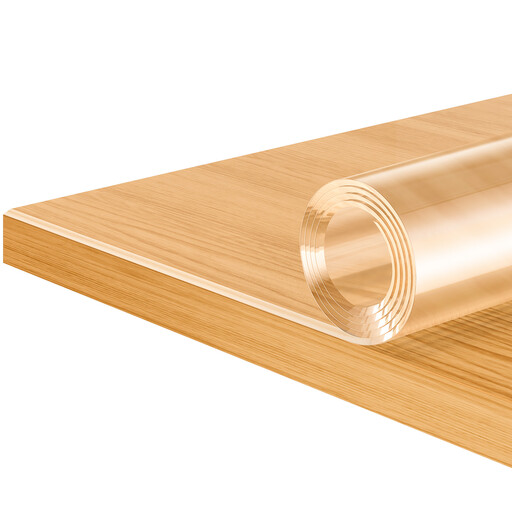
Why it suits this profile: The compact cover with bevelled edges is suitable for smaller tables, workspaces and surfaces where a flush fit is preferred.
The 45° edge and the option to trim the cover help prevent an overhanging or uncomfortably sharp edge.
Waterproof, wipe-clean surface, anti-slip structure and 70 x 110 cm dimensions.
PVC covers are often delivered rolled. Place the table-protection cover on a clean, dry surface and allow it to lie flat first. Heavy books placed along the edges can help smooth it out. A hairdryer should only be used carefully and from a safe distance, provided the manufacturer’s instructions permit it.
For trimming, use a suitable cutting tool and work on a protected surface. Children should be kept away while the cover is being cut. The cover must not come into direct contact with open flames or intense heat sources.
The category features a current selection of tablecloths and table protectors in a range of sizes, materials and applications.
Yes, provided that its size, surface compatibility and temperature range match the table. Suitable PVC models are designed for wood or matt tabletops. Air bubbles or areas of adhesion may occur on glass and high-gloss surfaces. The relevant manufacturer’s instructions should be followed.
Light soiling can usually be removed with a soft, damp cloth. For grease or dried-on residue, mild soapy water can be used. Abrasive cleaners, rough sponges and harsh cleaning products may affect the cover’s transparency.
Its service life depends on daily use, cleaning, exposure to sunlight and contact with sharp or hot objects. A 2 mm table cover is designed for regular everyday protection, but it should be replaced if it becomes permanently scratched, brittle or heavily discoloured.