
Lieferung heute & morgen

Qualitätsgarantie

Willkommens-Angebote freischalten: KOSTENLOSE Lieferung | Bis zu 80 % RABATT | Kostenlose 30-Tage-JoyPlus-Testphase
App herunterladen
A transparent 2 mm table protector is designed to protect your table’s surface without hiding its design. In the home, common concerns include spilt drinks, felt-tip pens, scratches and pet hair. In offices, hospitality venues and care facilities, regular cleaning and daily wear and tear are also key considerations.
However, choosing one is not simply a matter of selecting the right thickness. The material, dimensions, edge shape and intended temperature range are all important. If you focus only on a glossy product image or the term “heat-resistant”, you could end up with an unsuitable table protector.
A waterproof table protector protects against liquids, oil and dirt. However, this does not indicate whether hot pots or pans can be placed directly on it. Depending on the model, the products described here specify temperature limits of up to 80 °C. Other guidance warns against direct heat, naked flames or very hot objects.
This specification should therefore be understood as protection for warm plates, not as permission to place cookware straight from the hob or oven on the protector.
Sizes such as 70x120 cm table protector, 80x140 cm table protector or 100x180 cm table protector refer to the original rectangular size. Before buying, measure the length and width of the tabletop at several points. Rounded corners or overhangs may mean that the protector needs to be trimmed.
Some models are supplied on a roll and can be adjusted with a suitable knife or pair of scissors. When doing so, take into account the possible shrinkage of approximately 1 to 5 mm.
Air bubbles can form between the table and protector on glass, high-gloss lacquer or highly polished surfaces. For some PVC table protectors, a thin fabric layer is therefore recommended as an underlay. Depending on the surface, this can alter the grip but may prevent visible bubbles.
Before laying out the protector, the tabletop should be clean, dry and free from dust. Rolled-up protector material often needs some time to flatten. Evenly distributed weight can help to speed up the process.
PVC is widely used for transparent table covers because it is water-repellent, wipe-clean and flexible. A thickness of 2 mm provides more substance than thin plastic tablecloths and can protect the surface from scratches, stains and abrasion during everyday use.
Even so, the protector is still a protective product, not a cut-resistant surface. Sharp knives, rough objects and intense heat can damage the material.
A wipe-clean table protector with a smooth surface can generally be cleaned with a soft, damp cloth. Mild soapy water is sufficient for many applications. Abrasive cleaners, hard sponges and concentrated bleach can affect its transparency.
A slightly textured or non-slip underside can improve grip on the tabletop. However, the actual slip resistance also depends on the table material, dust and moisture.
A table protector with a bevelled edge features a 45° V-cut in the variants mentioned. This allows the edge to sit more flatly and can feel more comfortable when resting your arms on it than a sharply cut edge. This detail may be particularly relevant for families with children or tables where the front edge is frequently touched.
For use purely on a desk, or where the protector will be completely covered by objects, a straight edge may be sufficient. The key factors are the table edge, the look you want and how the table is used every day.
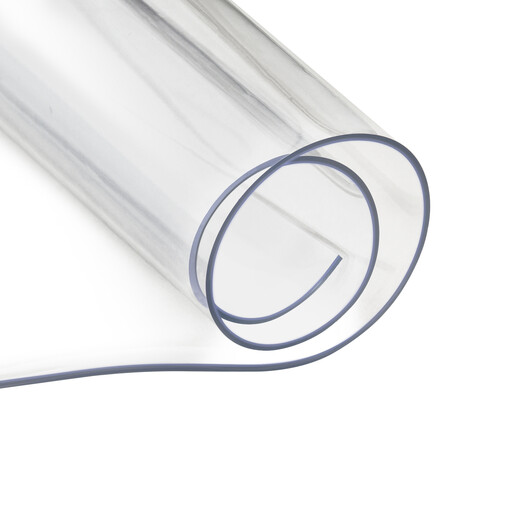
Why this product suits this profile: The compact standard size is suitable for smaller dining tables, kitchen tables or desks. According to the product description, the protector is water-repellent, wipe-clean and designed for temperatures of up to 80 °C.
The product details specify the material thickness, exact dimensions and temperature range. This makes it easier to compare the protector with your table size and intended use.
2 mm PVC, transparent design, wipe-clean surface and rectangular dimensions of 70 x 120 cm.
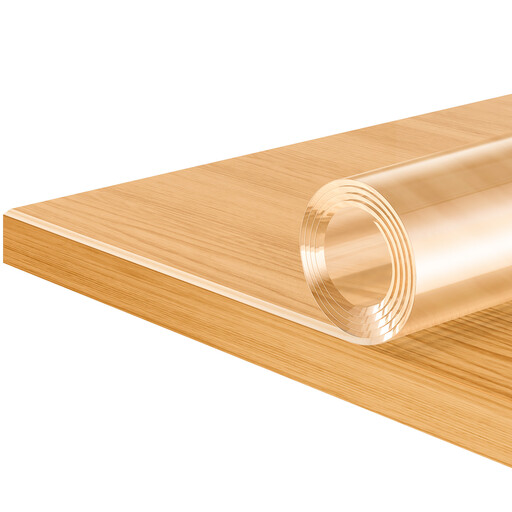
Why this product suits this profile: The bevelled 45° edge is useful for dining tables where arms are regularly rested. The 80 x 140 cm size suits many medium-sized tabletops, but should be checked carefully against your table before purchase.
The product description highlights the risk of air bubbles on glass and polished surfaces, as well as possible shrinkage. This guidance makes it easier to prepare the table properly.
45° edge, water- and grease-repellent surface, non-slip texture and 2 mm material thickness.
Why this product suits this profile: The large format is intended for long dining tables, work surfaces, offices, cafés or care facilities. According to the product description, the protector can be trimmed to size if required.
The usage guidance rules out naked flames and very high temperatures. This helps prevent the protector from being mistakenly used as a mat for hot cookware.
Generous 100 x 180 cm size, transparent PVC, wipe-clean surface and easy trimming.
We have put together a complete, regularly updated list of products that fully meet these strict selection criteria and the safety regulations applicable in the EU.
Households with children and pets should store cutting tools, packaging remnants and cut-off pieces of protector safely. For glass and high-gloss tables, check before full use whether an underlay is required.
This depends on the product specifications. Several of the models mentioned state a temperature range of up to 80 °C. However, direct contact with cookware taken from the hob or oven is not intended. Always follow the specific manufacturer’s instructions.
It is not possible to give a general fixed lifespan. This depends on daily use, cleaning, exposure to sunlight, the table surface and contact with sharp objects. Regularly wiping the protector with a soft cloth and avoiding abrasive cleaners can help preserve the surface.
Many rectangular 2 mm protectors can be cut to a custom size. Before cutting, take the tabletop, edge shape and possible tolerances into account. For strongly rounded or unusually shaped tabletops, consider a made-to-measure cutting solution.