
Lieferung heute & morgen

Qualitätsgarantie

Willkommens-Angebote freischalten: KOSTENLOSE Lieferung | Bis zu 80 % RABATT | Kostenlose 30-Tage-JoyPlus-Testphase
App herunterladen
A transparent PVC table cover 2 mm is designed to protect your table without hiding its surface. Particularly useful for high-quality wooden worktops, matt finishes, desks and homes with children, a clear table cover makes it easier to deal with liquids, crumbs, grease, pens and everyday scratches. To ensure your purchase remains suitable in the long term, you should check the material, dimensions and surface carefully.
The clarity of a transparent table cover can vary depending on the material density, surface and manufacturing process. A 2 mm-thick PVC cover generally feels more stable than thin table-cover film, but it may be delivered rolled up and initially show some ripples. Claims such as “glass-like clarity” should therefore always be considered alongside the product images and technical specifications.
A waterproof table cover protects against spilled drinks, but it is no substitute for a trivet for very hot pots or pans. Several of the models featured here are stated to withstand temperatures of up to 80 °C according to the manufacturer. This does not automatically mean they are suitable for naked flames, baking trays or prolonged exposure to heat. A suitable trivet remains advisable for hot items.
PVC can create air bubbles or stick to glass, high-gloss lacquer or highly polished surfaces. For such surfaces, the product information expressly points out certain limitations. A non-slip table protector is often more suitable for wooden and matt table surfaces. Before buying, you should also check whether the cover lies flat and whether overhanging edges could cause problems in everyday use.
The specification 2 mm PVC is an important point of comparison. This thickness can give the cover greater stability and protect the table from light scratches, stains and liquids. However, it does not make the material resistant to cuts. Knives, sharp-edged objects and heavy concentrated pressure can damage even a robust table protector.
For everyday use in the dining room, kitchen, office or nursery, the following features are relevant:
Measure the tabletop in several places. For rectangular tables, note down the length and width, then decide whether the cover should fit exactly or overhang slightly. An overhang can hang down at the edges and therefore slip more easily. With a made-to-measure table cover, you should also take cut-outs, rounded corners and the desired edge shape into account.
Many available models are rectangular and come in fixed sizes, such as 80 × 120 cm, 90 × 140 cm, 90 × 180 cm, 100 × 180 cm or 100 × 200 cm. A 45° bevelled edge can be more comfortable when resting your arms on it than a sharply cut edge.
Rolled-up PVC covers usually need a short period to settle. Unroll the cover and, if necessary, weigh down the edges with suitable objects. One model specifies a settling time of 24 to 48 hours according to the manufacturer. Clean the surface with a soft cloth and mild soapy water. Scouring pads, harsh cleaning products and stiff, sharp-edged brushes can affect the clarity.
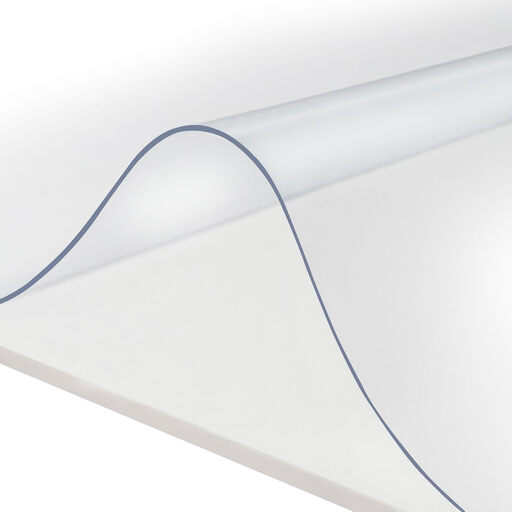
Why this product suits this profile: The compact rectangular size is suitable for smaller dining tables, desks or creative worktops.
The stated 2 mm thickness sets this model apart from very thin covers. According to the product description, there are restrictions for glass and high-gloss surfaces.
2 mm PVC, transparent design and a rectangular 80 × 120 cm format.
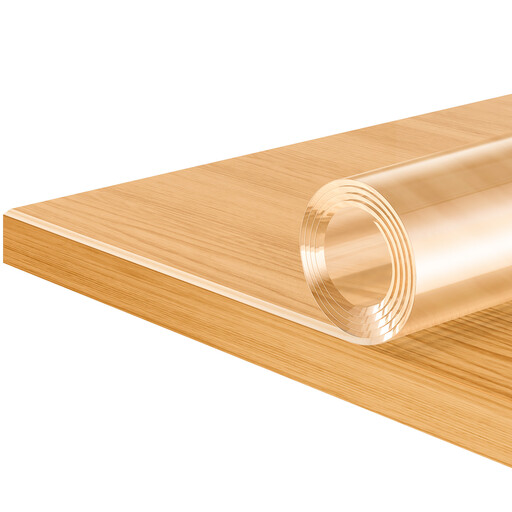
Why this product suits this profile: The 45° edge and transparent PVC design suit dining and work tables where appearance and everyday practicality are equally important.
The product description warns against using it on glass or polished surfaces. The edge shape reduces sharp finishing edges.
2 mm PVC, a bevelled 45° edge and a water- and grease-resistant surface according to the manufacturer.
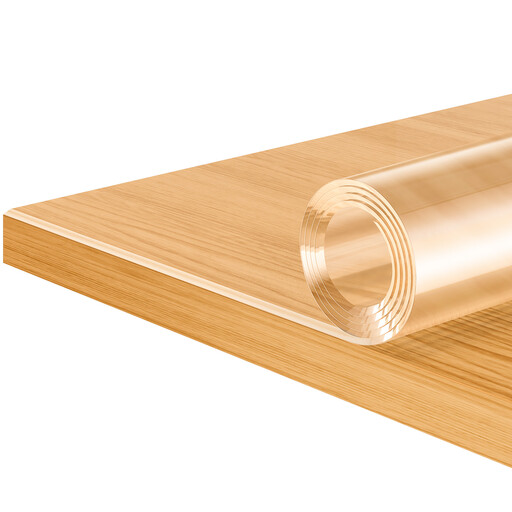
Why this product suits this profile: The larger format is suitable for long dining tables, conference tables, buffets or frequently used worktops.
The dimensions are clearly stated; the product information also specifies a low shrinkage tolerance. An underlay is intended for high-gloss and glass surfaces.
Generous dimensions, 2 mm PVC, a bevelled edge and a water- and grease-repellent surface according to the manufacturer.
We have put together a complete, regularly updated list of products that fully meet these strict selection criteria and the safety regulations applicable in the EU.
Before laying it down, the tabletop should be clean, dry and free from dust. Carefully unroll the cover and align it with the table edges. If it initially curls or bulges, the material can be left to settle at room temperature. Only weigh down the edges with clean, suitable objects.
For cleaning, a damp cloth with mild detergent is usually sufficient. Nevertheless, liquids should be removed promptly, particularly if they could run underneath the edge. A PVC table cover should not come into direct contact with naked flames or powerful heat sources. Also check regularly for cracks, sharp edges or permanent deformation.
The cover is usually delivered rolled up. Spread it out on the tabletop and leave it at room temperature. Depending on the model, allowing it to settle for 24 to 48 hours may be advisable. Placing heavy objects along the edges can help smooth it out. If using a hairdryer, only gentle, light warming is required.
Its lifespan depends on the surface, how it is used and how it is cared for. Frequent cutting, friction from sand or harsh cleaning products can make the surface look matt more quickly. On a suitable, smooth and matt tabletop, a 2 mm-thick table cover can remain usable for longer with normal use. It is not possible to give a reliable fixed lifespan without specific information about how it will be used.
According to many product descriptions, PVC models are not recommended for glass and high-gloss surfaces because they can create air bubbles or stick to the surface. Read the guidance for the specific model before buying. If an underlay is recommended, it can prevent direct contact between the cover and the surface; however, it will change the appearance and grip.