
Lieferung heute & morgen

Qualitätsgarantie

Willkommens-Angebote freischalten: KOSTENLOSE Lieferung | Bis zu 80 % RABATT | Kostenlose 30-Tage-JoyPlus-Testphase
App herunterladen
A transparent 2 mm PVC table cover protects table tops, desks and work surfaces from spills, stains and everyday scratches without completely concealing the look or colour of the wood. At first glance, choosing one seems straightforward. In practice, however, unclear measurements, unrealistic expectations about heat resistance and unsuitable surfaces often lead to disappointing purchases.
This buying guide explains which features really matter and which option is right for your household.
A table cover measuring 100 x 180 cm will not automatically fit every table top perfectly. The length, width, rounded corners and desired overhang all matter. For a close-fitting cover, the sheet should ideally align precisely with the edge of the table. A large overhang may hang down at the sides or get in the way when sitting down.
Rolled products may also undergo a slight change in size during delivery. Some product descriptions state a shrinkage tolerance of around 1 to 5 mm. For this reason, do not plan down to the last millimetre and check the measurements given for the specific product.
A heat-resistant table cover can protect against warm plates or mugs, but it is not a substitute for a trivet. The precise temperature limit varies from model to model. Several WOLTU versions are described as resistant up to 80 °C according to the product description. Other descriptions warn against temperatures above 60 °C or direct contact with hot objects.
Hot frying pans, oven dishes and saucepans should therefore always be placed on a suitable trivet. Naked flames and direct heat can deform or damage PVC.
A transparent table cover will often sit differently on matt wood or a textured surface than it does on glass or high-gloss lacquer. Air bubbles may form on shiny surfaces, or the cover may stick more firmly. WOLTU explicitly points out this limitation for several variants.
Before buying, check the following:
PVC is easy to care for, water-repellent and simple to wipe clean thanks to its smooth surface. A thickness of 2 mm offers more substance than very thin table covers and can reduce the noise made by crockery and cutlery. At the same time, the material remains flexible enough to lie flat on a rectangular table top.
However, a scratch-resistant table protector will not prevent every type of damage. Sharp knives, rough ceramic bases or heavy objects exerting concentrated pressure can still cut into a thick cover. Always use chopping boards and avoid dragging hard objects across the surface.
A waterproof table cover, or PVC table cover, creates a sealed surface that stops spilled liquids from immediately penetrating the table top. This is practical for families with children, craft areas and desks. An easy-clean table cover can generally be cleaned with a soft, damp cloth and, if necessary, mild soapy water.
Avoid scouring pads, harsh bleaching agents and sharp cleaning tools. They can scratch or cloud the transparent surface.
Straight edges are practical if the cover is to be cut to size. On some versions, a bevelled edge softens the rigid shape of the edge and can feel more comfortable when resting your arms on the table. This difference is particularly noticeable when using a table protector in a dining area.
Many models can be carefully adjusted with a suitable cutting tool. Always cut on a stable surface and keep sharp tools away from children. When looking for a table protector cut to size, check the measurement tolerances and permitted adjustments in the product description.
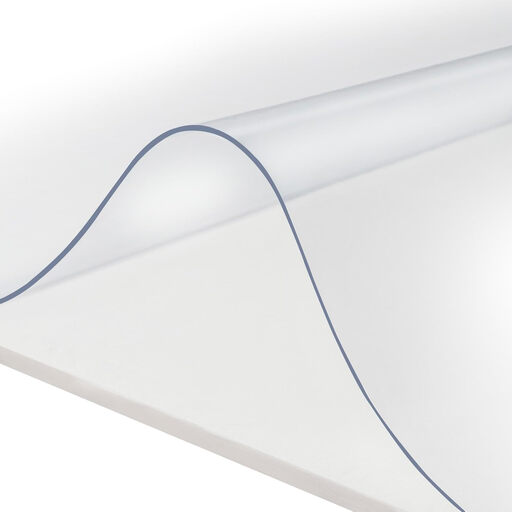
Why this product suits this profile: The rectangular format is suitable for people looking for a transparent table cover without a bevelled edge for a table measuring around 100 x 180 cm. According to the product description, the cover is waterproof, easy to clean and designed for use with warm objects.
The specific size makes it easier to compare the cover with your own table top. The product description states the 2 mm thickness as well as water and heat resistance; the temperature limit should be checked again before use.
2 mm thick, transparent and rectangular, with dimensions of 100 x 180 cm to suit a common table size.
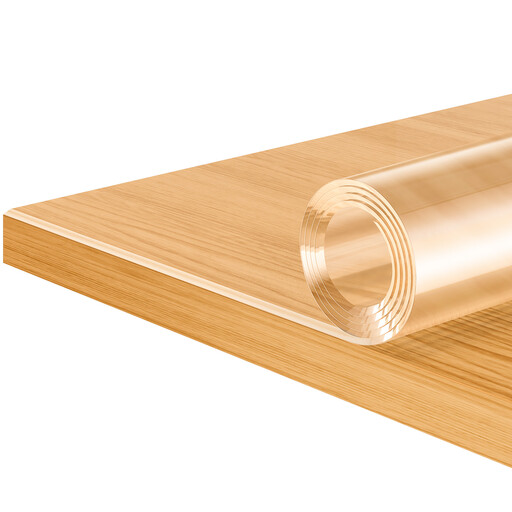
Why this product suits this profile: The version with a bevelled edge is aimed at households where comfort at the table edges and a clean appearance are important. According to the product description, the 45-degree edge, non-slip structure and transparent PVC surface are key features.
The edge shape is stated clearly rather than being promoted merely with a general reference to comfort. For glass or high-gloss surfaces, the warning about possible air bubbles should still be taken into account.
2 mm PVC, 100 x 200 cm, a bevelled edge and a water- and grease-repellent surface according to the product description.
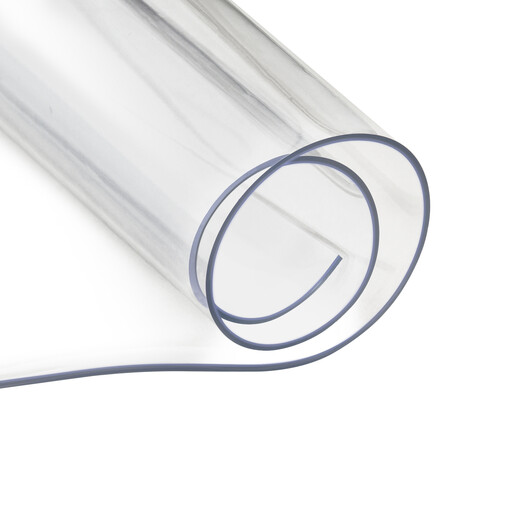
Why this product suits this profile: The more compact dimensions may be suitable for smaller dining tables, desks, kitchen surfaces or craft areas. According to the product description, the cover is heat-resistant up to 80 °C, waterproof and fitted with a non-slip surface.
The stated temperature limit provides a clearer basis for making a decision than an unexplained claim of being ‘heat-resistant’. Nevertheless, naked flames and very hot containers must be avoided.
Compact format, 2 mm thickness and, according to the product description, waterproofing, easy cleaning and heat resistance up to 80 °C.
We have put together a complete, regularly updated list of products that fully meet these strict selection criteria and the safety regulations applicable in the EU.
For a non-slip table cover, the underside should remain clean and dry. Dust can reduce its grip and cause visible unevenness.
Not every version is suitable. Air bubbles may form on glass or high-gloss lacquer, or the cover may stick to the surface. Check the manufacturer’s instructions and, if necessary, use a thin textile layer between the surfaces.
Its lifespan depends on exposure to sunlight, cleaning products, heat and mechanical stress. Regular cleaning with mild products and the use of trivets can help protect the surface. Visible cracks, severe clouding or permanent deformation indicate that the cover should be replaced.
Many rectangular models can be carefully adjusted. Measure the table top twice, mark the cutting line and use a stable cutting mat. With bevelled edges, cutting the cover yourself may alter its original shape. Before buying, check whether the existing size is already a sufficiently close fit.