
Lieferung heute & morgen

Qualitätsgarantie

Willkommens-Angebote freischalten: KOSTENLOSE Lieferung | Bis zu 80 % RABATT | Kostenlose 30-Tage-JoyPlus-Testphase
App herunterladen
A transparent PVC table protector is designed to protect your table’s surface without hiding the wood grain, colour or design. At home, in the office, in cafés, schools and nurseries, it needs to be above all practical: liquids, grease, paint residue and scratches should be easy to remove.
However, not every transparent table cover is suitable for every tabletop. Marketing terms such as “glass-like”, “heat-resistant” or “scratch-resistant” alone reveal little about its actual suitability. The key factors are material thickness, dimensions, surface structure and the manufacturer’s specific usage instructions.
Air bubbles can form beneath a PVC table protector on glass, high-gloss lacquer or highly polished surfaces. Depending on the material and surface, the protector may also stick more firmly. Some manufacturers therefore recommend placing a thin layer of fabric between the tabletop and protector, or avoiding use on these surfaces altogether.
Before buying, you should therefore check:
A PVC protector described as a heat-resistant table cover is not automatically suitable for hot saucepans, baking trays or items placed directly from the hob. For example, the 2 mm WOLTU model is stated to withstand temperatures of up to 80 °C according to the product information. Other instructions nevertheless advise against placing very hot food or items directly on the protector.
For everyday use, this means that hot cups, plates and bowls may be suitable depending on the manufacturer’s instructions. For cookware from the oven or hob, an appropriate heat mat should also be used.
PVC is often supplied rolled up and may initially develop waves after unpacking. Several product descriptions also mention a possible shrinkage tolerance of around 1 to 5 mm. If you want the protector to fit exactly flush with the table, unroll and smooth the material first before cutting it to size.
With a rectangular table protector, it is advisable to measure the length and width in several places. This helps account for slightly uneven table edges or irregular dimensions.
A 2 mm PVC table cover is sturdier than a very thin protective sheet and tends to stay relatively stable on many table shapes. The material thickness can also help reduce the tabletop’s direct exposure to crumbs, liquids and everyday friction.
However, a thicker protector is not automatically better for every application. It may be heavier and more noticeable around the edges. For a dining table used frequently, or a desk where you work and do crafts, a 2 mm version is often a sensible choice. A thinner option may be sufficient for a surface used only occasionally.
A smooth, washable table cover can generally be cleaned with a damp cloth. When dealing with water, oil and food residue, it is best to remove dirt promptly. Mild soapy water may be used according to the manufacturer’s instructions; abrasive sponges, harsh bleach and sharp cleaning tools can affect the protector’s transparency or surface.
A textured or non-slip underside can help keep the table protector more securely in place. However, it may be more visible on delicate surfaces. Before buying, you should therefore decide what matters most: a discreet appearance or a stronger grip during everyday use.
A made-to-measure table protector is practical when standard sizes do not fit. Many PVC protectors can be cut with a sharp knife or suitable scissors. A straight, stable cutting surface should be used for this. Children should not be nearby while the protector is being cut.
Bevelled edges, such as a 45-degree cut, can make a dining-table protector more comfortable to use. The edge is less sharp and provides a more comfortable resting surface for your arms. On a desk or work surface, however, a straight cut may be more functional.
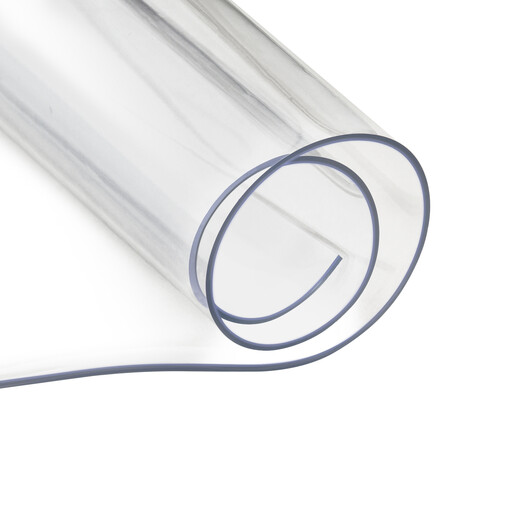
Why this product suits this profile: The compact dimensions are suitable for smaller kitchen tables, side tables or desks. The 2 mm PVC version is transparent and, according to the product information, waterproof and easy to wipe clean.
The specific format makes choosing the right size easier. Even so, you should measure your own tabletop before ordering, as trimming may be required.
2 mm material thickness, transparent design and cleaning with a damp cloth according to the product description.
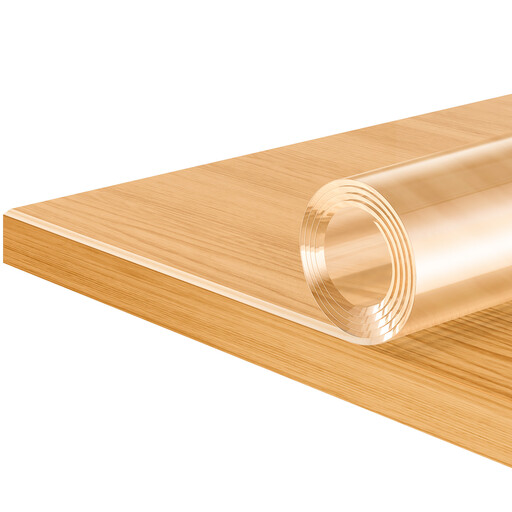
Why this product suits this profile: The large rectangular dimensions are suitable for dining and conference tables. The bevelled 45-degree edge can improve comfort at the table edge, while the transparent design keeps the tabletop visible.
The product information specifies a shrinkage tolerance of 1 to 5 mm. This should be taken into account when planning accurately, rather than assuming a millimetre-perfect fit.
2 mm PVC, a water- and grease-repellent surface and a non-slip structure according to the product description.

Why this product suits this profile: The format is designed for frequently used kitchen, dining and office tables. According to the product description, the protector can be adjusted with scissors or a knife if required.
The instructions mention that an odour may develop after unpacking and that airing out is required. This makes it easier to plan when the protector can be used.
Water- and oil-resistant surface, 2 mm material thickness and the option to cut it to size according to the manufacturer’s information.
Why this product suits this profile: The large surface is suitable for dining tables, work areas or communal tables where liquids, food or craft materials regularly come into contact with the surface.
According to the description, the protector can be wiped clean and cut to the desired shape. Before use, however, you should follow the instructions regarding heat and delicate surfaces.
Transparent PVC design, smooth wipe-clean surface and heat resistance up to 80 °C according to the product information.
We have compiled a complete, regularly updated list of products that fully meet these strict selection criteria and the safety regulations applicable in the EU.
For the most even result possible, it is worth following a few steps:
On glass and high-gloss tables, pay particular attention to the relevant manufacturer’s warning. A fabric layer can reduce air bubbles, but may affect the protector’s grip and appearance.
Its lifespan depends on the material thickness, daily use, cleaning and exposure to heat. A scratch-resistant table protector can limit everyday marks, but it is not impervious to knife blades, sharp-edged crockery or abrasive cleaning products. The protector should be replaced if it develops visible cracks, permanent deformation or significant clouding.
Many models can be cut according to the product description. Before cutting, you should confirm the final dimensions, possible shrinkage tolerance and desired edge shape. A paper template can be helpful for rounded tables.
A waterproof table protector protects against liquids, but this does not automatically indicate heat resistance. The specific manufacturer’s information is what matters. Even when heat resistance is stated, using a heat mat for very hot saucepans, frying pans and ovenware is a sensible precaution.