
Lieferung heute & morgen

Qualitätsgarantie

Willkommens-Angebote freischalten: KOSTENLOSE Lieferung | Bis zu 80 % RABATT | Kostenlose 30-Tage-JoyPlus-Testphase
App herunterladen
A high-quality table is often the centrepiece of the home—whether it's the solid wood dining table where the family gathers or the desk where creative work happens. To protect these valuable surfaces without compromising their appearance, a 2mm transparent table protector is a smart solution. However, the market is flooded with products that look identical at first glance. In practice, there are critical differences that can mean the difference between satisfaction and frustration.
Many buyers find that their protector becomes unsightly after a short time, doesn't fit properly, or even damages the table surface. This guide will walk you through the most common pitfalls and explain the objective criteria you should look for to find a durable and functional protective solution.
Before you make a decision, it's helpful to know the typical flaws of low-quality products. These often lead to the protector needing to be replaced after just a few months.
To avoid the problems mentioned above, you should base your choice on three key, verifiable characteristics. These define the quality and suitability of a protector for your specific use case.
Thickness is the most important criterion for protective performance and durability.
To prevent air bubbles, the texture of the protector is crucial. For high-gloss and glass surfaces, protectors with a slightly matte or textured underside are the better choice. Alternatively, manufacturers like WOLTU suggest that for completely smooth protectors, placing an ultra-thin, barely visible fabric tablecloth underneath can solve the problem. For matte or natural wood surfaces, however, a crystal-clear, smooth protector is ideal as it showcases the wood grain without distortion.
A good heat-resistant table protector should withstand temperatures of up to 80°C according to the manufacturer's specifications. This is sufficient for warm plates or cups, but not for hot pots or pans straight from the hob. Another advantage is if the table protector is cuttable. This allows you to fit it perfectly to round or unconventionally shaped tables. Some models also offer factory-beveled edges (a faceted cut), which are not only visually appealing but also provide a more comfortable resting surface for your forearms and minimise the risk of injury from sharp edges.
Here are some product recommendations tailored to different user profiles that take the above criteria into account.
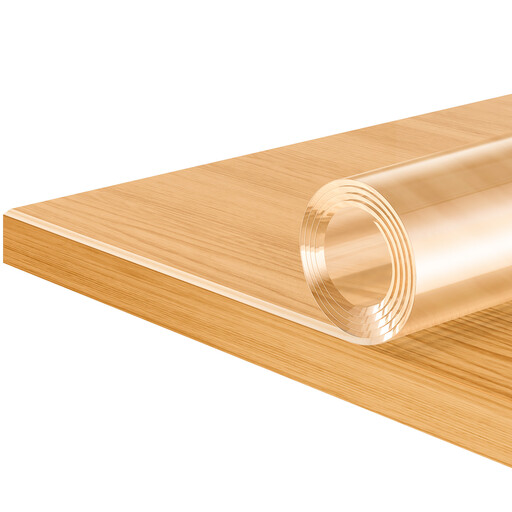
Why This Fits Their Persona: Ideal for a household with children, where the dining table is used daily for meals, homework, and crafts. The robust 2mm thickness and beveled edges offer a high degree of protection and safety.
The 2mm thickness prevents curling and sliding. The 45° V-cut edge is a thoughtful detail that enhances comfort and eliminates sharp edges, a common issue with cheaper, simply cut protectors.
Enhanced safety and comfort thanks to beveled edges. Very durable and effectively dampens the noise of dishes and cutlery.
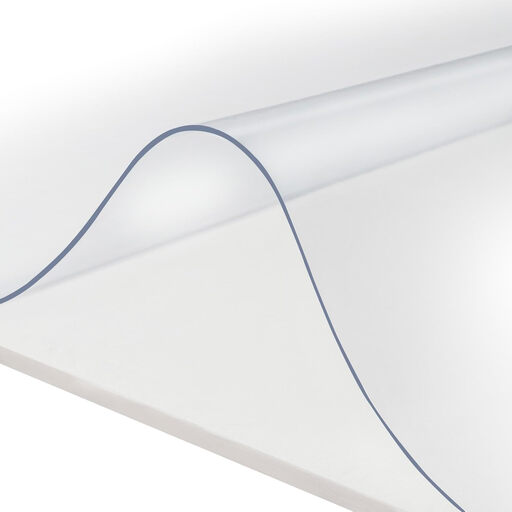
Why This Fits Their Persona: Perfect for owners of designer tables or high-end wood surfaces where the natural beauty of the table is paramount. The focus is on invisible protection.
This product is described as highly transparent, aiming to leave the table's appearance unaltered. The 2mm thickness ensures the protector lies flat and doesn't ripple, an aesthetic issue common with thinner films.
Provides robust protection while keeping the table surface visible. Its heat resistance and waterproof properties make it suitable for everyday use without compromising on looks.

Why This Fits Their Persona: A functional and cost-effective solution for protecting office desks, craft tables, or less frequently used surfaces. The 1mm thickness offers sufficient protection against scratches and spills.
Although it is thinner, it is described as tear-resistant and durable, setting it apart from ultra-thin, disposable films. The manufacturer explicitly states it is not suitable for high-gloss surfaces, thus pre-emptively addressing the air bubble problem.
Good value for money for basic surface protection. Flexible and easy to cut for custom adjustments.
We have compiled a complete, up-to-date list of products that fully meet these strict selection criteria.
1. How do I get the ripples out of my new table protector? Since the protectors are delivered rolled up, they often have ripples at first. The most common method is to spread the protector out on the table and weigh it down with heavy books for 24-48 hours. Alternatively, you can roll it in the opposite direction. Some manufacturers also mention that gently heating it with a hairdryer on a low setting can help the material relax.
2. Why do air bubbles form under my transparent table cover, and how can I avoid them? This phenomenon, also known as adhesion, occurs when two completely smooth, non-porous surfaces meet. The trapped air cannot escape. To prevent this on glass tables or high-gloss surfaces, choose a protector with a slightly matte underside or, as some manufacturers recommend, place a very thin, inconspicuous fabric tablecloth underneath.
3. Can I cut a table protector to size myself? Yes, most PVC protectors can be easily cut to size. Use a sharp utility knife or sturdy scissors and a long ruler or metal straightedge as a guide. Measure the table surface precisely and mark the cutting line beforehand. Note that some materials have a slight shrinkage tolerance; it may be advisable to leave an extra 1-2 mm on each side, which will adjust over time.