
Lieferung heute & morgen

Qualitätsgarantie

Willkommens-Angebote freischalten: KOSTENLOSE Lieferung | Bis zu 80 % RABATT | Kostenlose 30-Tage-JoyPlus-Testphase
App herunterladen
A high-quality table is often the centrepiece of the home—a place for shared meals, homework, or social gatherings. However, surfaces made of wood or other delicate materials are prone to scratches, stains, and daily wear. A transparent table protector offers a practical solution to shield your tabletop without obscuring its original beauty.
This guide is here to help. We'll explain the key features to consider when making your choice and present a selection of products tailored to specific needs.
Choosing the right protective film for your tabletop depends on several factors. Considering the following points will help you make an informed decision.
The thickness of the film is a crucial factor for its protective function and feel.
Most table protectors are made of PVC (Polyvinyl Chloride), a material known for its durability and ease of maintenance. A high-quality PVC table protector mat is typically waterproof and resistant to oils and grease, making it an ideal washable table saver. A damp cloth is usually all that's needed to wipe away spills. Be sure to check the manufacturer's specifications regarding food safety if the film will have direct contact with food.
Not every clear tablecloth is suitable for every surface. On high-gloss, glass, or lacquered tables, smooth films can cause air bubbles to form, which can mar the appearance. For such surfaces, specially matted films are available. In contrast, crystal-clear films can generally be used on natural wood or matte surfaces without any issues. Some manufacturers explicitly mention this limitation in their product descriptions.
Here is a curated selection of transparent table protectors that meet various requirements for thickness, size, and finish.
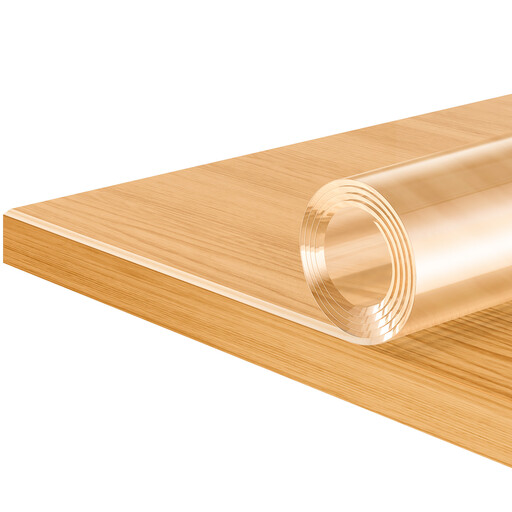
Why it stands out: This model features a 2 mm material thickness and a machine-bevelled 45° edge. According to the manufacturer, WOLTU, this V-cut design allows you to rest your arms comfortably and reduces the risk of injury compared to sharp edges.
Advantages:
Who is it for? Households, especially families with children, who need very robust and safe protection for heavily used dining tables or work surfaces and who value a comfortable, well-finished edge.

Why it stands out: This waterproof and transparent tablecloth also boasts a 2 mm thickness. The manufacturer highlights the material's heat resistance, designed to protect the table surface from hot plates and bowls. However, temperatures above 60°C should be avoided.
Advantages:
Who is it for? Users who need durable, all-around protection for their dining or office table and appreciate the flexibility of being able to customise the film's size themselves.
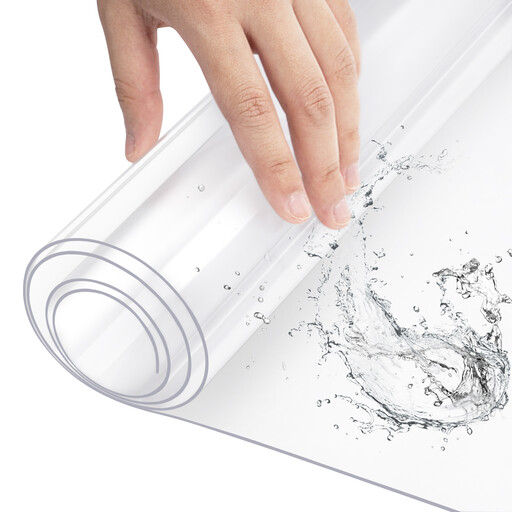
Why it stands out: At 1 mm thick, this film is more flexible and discreet than the 2 mm versions. According to WOLTU, the material contains at least 50% recycled content (certified by the Global Recycled Standard), making it a thoughtful choice for eco-conscious buyers.
Advantages:
Who is it for? Users looking for a discreet and flexible protector for tables with light to normal use. Due to the manufacturer's warning, it is not recommended for high-gloss or glass surfaces to avoid the formation of bubbles.
The products featured here cover common sizes and requirements. If you can't find the right dimensions for your table or are looking for specific features like a matted surface, there is a wider selection to explore.
In our Kitchen Linens category, you will find more formats, thicknesses, and designs to find the perfect protector for your furniture.
After unpacking, the film is often curled because it is delivered rolled up. Lay it flat on the table. The material will typically flatten on its own within 24 to 48 hours. To speed up the process, you can roll the film in the opposite direction or weigh it down with heavy objects like books. Some manufacturers also recommend carefully using a hairdryer on a low setting.
Yes, most PVC films can be cut to size. Use a pair of sharp household scissors or a utility knife and a long ruler or straight edge to ensure a clean cut. Measure your table surface accurately and mark the cutting line beforehand with a non-permanent marker.
On very smooth, non-porous surfaces like glass or high-gloss lacquer, air bubbles can form between the film and the table. To prevent this, you can spray a fine mist of water with a drop of washing-up liquid onto the table before laying down the film. Then, smooth the water out from the centre to the edges using a squeegee or a credit card. Alternatively, choose a slightly matted table protector specifically designed for this purpose.
Your Joybuy Product Recommendation Officer