
Lieferung heute & morgen

Qualitätsgarantie

Willkommens-Angebote freischalten: KOSTENLOSE Lieferung | Bis zu 80 % RABATT | Kostenlose 30-Tage-JoyPlus-Testphase
App herunterladen
A high-quality table is often the centrepiece of a home—be it a solid wood dining table, an elegant marble coffee table, or a functional desk. The goal is to protect it from scratches, stains, and everyday wear and tear without compromising its aesthetic. A transparent table protector seems like the ideal solution. However, the market is flooded with products whose differences in quality are hardly noticeable at first glance.
Many buyers invest in a protector only to find that after a few months, it has discoloured, developed unsightly bubbles, or failed to provide the necessary protection. Before you make a decision, you should be aware of the three most common pitfalls that lead to disappointment and unnecessary expense.
To avoid these problems, it's crucial to focus on objective product features. Three parameters are decisive when selecting a durable and functional table protector film.
The thickness of the film is one of the most important indicators of its robustness and durability.
The nature of your table's surface determines whether a standard transparent table protector is suitable. On high-gloss, lacquered, or glass tables, smooth films adhere directly to the surface, which can lead to the aforementioned unsightly bubble formation.
For such tables, it is advisable to check the manufacturer's instructions carefully. Often, a film with a slightly matted underside or the use of a thin, transparent underlay is recommended for these applications to break the direct contact. For matte wood or stone surfaces, however, smooth, transparent films are generally problem-free.
A good wipeable PVC tablecloth should do more than just be transparent. Pay attention to the following features:
To help you make your choice, we have matched some products to different user profiles based on the criteria mentioned above.

Why This Fits Their Persona: Provides effective basic protection for less-frequented surfaces like side tables, consoles, or home office desks at an accessible price. A great choice for protecting valuable furniture from everyday wear and tear without a large investment.
Although thinner, this is a robust PVC material that bypasses the "insufficient material thickness" pitfall when used correctly (light to medium use) and is significantly more durable than basic films.
Good value for money for basic protection; made from odourless PVC material according to the manufacturer and is easy to cut to size.
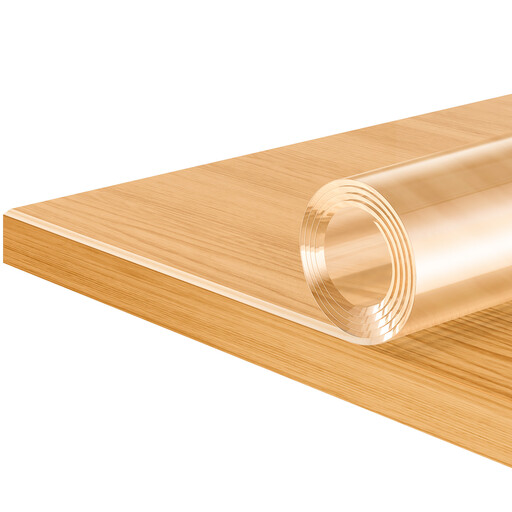
Why This Fits Their Persona: The 2 mm thickness withstands daily family use—from spilled drinks to colouring pens. The bevelled edge is an important safety and comfort feature, especially with children at the table.
Directly addresses the "insufficient material thickness" pitfall with robust 2 mm protection. The 45° V-cut edge is a functional detail often missing from cheaper models that significantly enhances user comfort.
High durability due to 2 mm thickness; increased safety and comfort from bevelled edges; food-safe according to the manufacturer.
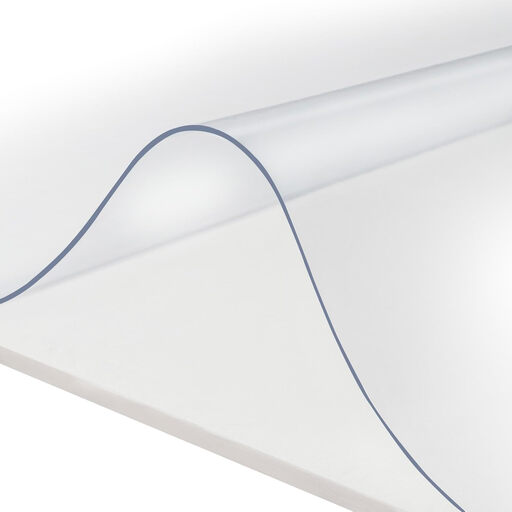
Why This Fits Their Persona: Ideal for large dining or conference tables where both maximum protection and a flawless, clear appearance are required. The 2 mm thickness ensures the protector lies flat and provides substantial, high-quality protection.
Avoids the "yellowing effect" by using high-quality PVC. Its heavy weight and thickness prevent the edges from curling and ensure a premium, glass-like appearance without optical distortion.
Generous dimensions available for large tables; high transparency and material density for a flat, premium look; durable and easy to clean.
We've compiled a complete, up-to-date list of products that fully meet these strict selection criteria and safety regulations.
After unpacking, the protector is often curled. Unroll it and lay it flat on the table. Weigh down the corners and the centre with heavy books for 24 to 48 hours. Alternatively, you can use a hairdryer on a low setting and at a sufficient distance to gently warm and flatten the material.
It is often not recommended, as unsightly air bubbles can form. Always check the manufacturer's instructions, as some protectors are specifically designed for matte surfaces. As an alternative, some users place a very thin, barely visible fabric tablecloth underneath to avoid direct contact and prevent bubble formation.
Measure your table precisely. Place the protector on a clean, firm surface. Use a long metal ruler and a sharp utility knife to achieve a straight, clean cut. Note that according to manufacturer specifications, the material may shrink by a few millimetres. It may be wise to cut the protector with a slight excess and readjust after a few days.