
Lieferung heute & morgen

Qualitätsgarantie

Willkommens-Angebote freischalten: KOSTENLOSE Lieferung | Bis zu 80 % RABATT | Kostenlose 30-Tage-JoyPlus-Testphase
App herunterladen
A high-quality table is often the centerpiece of the home—a place for shared meals, homework, or social evenings. But scratches, stains, and heat damage can quickly spoil the enjoyment. A transparent table protector seems like the ideal solution to shield the tabletop without hiding its appearance. However, insufficient information and exaggerated advertising promises often lead to purchase mistakes. This guide will help you identify the crucial features and make an informed decision.
Many buyers focus on price or superficial product images, overlooking critical quality features. This leads to disappointment and unnecessary expense. Pay special attention to these three pitfalls:
To avoid a bad purchase, you should focus on objective, measurable criteria. These three factors determine the longevity and functionality of your table protector.
The thickness of the protector is a direct indicator of its protective effect and durability. While thinner films may suffice for light-duty applications, a 2mm table protector offers crucial advantages:
A thicker protector is therefore an investment in a long-lasting and reliable waterproof table protector.
The finish of your tabletop is crucial for choosing the right protector.
A good wipe-clean clear tablecloth should be made of high-quality PVC that is easy to care for and safe for contact with food. Look for products described as low-odor. A slight plastic smell may be present after unpacking, but with quality protectors, it should dissipate within 1-2 days. Cleaning should be straightforward with a damp cloth and mild detergent.
Instead of making a one-size-fits-all recommendation, we have compiled products for different user profiles and requirements.

Why This Fits Their Persona: Ideal for users seeking basic protection for less-used surfaces like side tables or craft areas while being mindful of the budget. Provides an effective barrier against liquids and light scratches.
Although it is only 1mm thick, it is clearly declared as such and not advertised as a heavy-duty protector. The manufacturer also explicitly states that it is not suitable for high-gloss surfaces, thus preventing the "air bubble" trap.
Cost-Effective Basic Protection: Offers a waterproof and wipeable surface at an attractive price. According to the manufacturer, the material also contains a portion of recycled PVC.
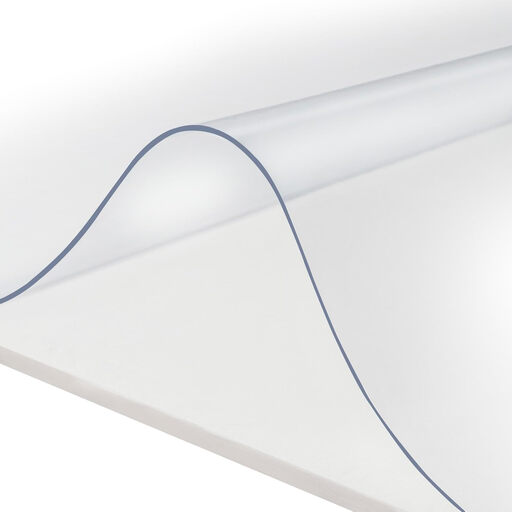
Why This Fits Their Persona: Perfect for the dining table in a busy household. The robust 2mm thickness withstands the daily demands of children, pets, and frequent use, reliably protecting the valuable tabletop.
With a 2mm thickness, it bypasses the "paper-thin" trap and offers real, tangible protection. The heat resistance is stated by the manufacturer Laneetal as up to 80°C, which sets a realistic expectation for protection against warm plates.
Robust Durability: The high material density ensures a long lifespan and a flat lay. Waterproof and Easy to Clean: Liquids bead up and can be wiped away easily.
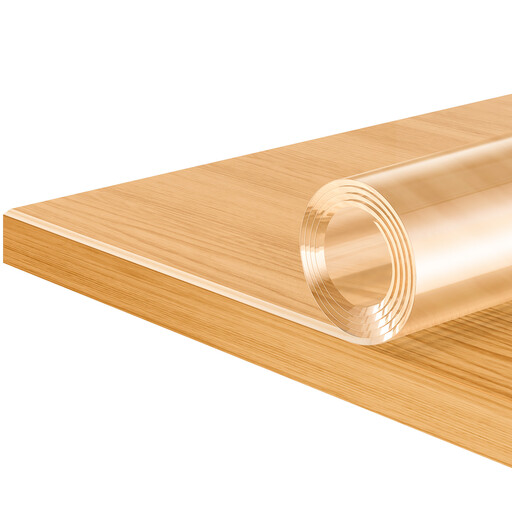
Why This Fits Their Persona: Ideal as a clear desk pad or for dining tables where comfort is important. The beveled edges prevent uncomfortable pressure marks on the forearms during prolonged sitting.
This product solves a problem that many standard protectors have: sharp 90-degree edges. It goes beyond mere protection and addresses user comfort, an often-overlooked aspect in the purchasing decision.
Ergonomic Design: The V-edges, cut at a 45° angle according to manufacturer WOLTU, significantly increase comfort. Non-Slip Texture: The protector stays securely in place without sliding.
We have compiled a complete, up-to-date list of products that fully meet these strict selection criteria and UK safety regulations.
1. How do I get the table protector to lie flat after unrolling? Since the protectors are delivered rolled, they may initially have waves or curled edges. Lay the protector flat on the table and weigh down the corners and wavy areas with heavy books for 24-48 hours. Alternatively, you can gently warm the protector with a hairdryer on a low setting to speed up the process.
2. Can I cut the PVC tablecloth myself? Yes, most PVC protectors can be precisely cut with a sharp utility knife and a steel ruler. Measure the tabletop accurately and cut the protector on a suitable cutting mat. Some manufacturers recommend allowing for a minimal shrinkage margin of a few millimeters, as the material can contract slightly with temperature fluctuations.
3. Why are there bubbles forming under my protector on a glass table? This phenomenon occurs when two perfectly smooth, non-porous surfaces meet. Air trapped between them creates optical distortions that look like bubbles or wet spots. This problem is due to physics and is not a product defect. For glass or high-gloss tables, you should use a specially designed, single-sided matte protector or place a thin fabric tablecloth underneath.