
Lieferung heute & morgen

Qualitätsgarantie

Willkommens-Angebote freischalten: KOSTENLOSE Lieferung | Bis zu 80 % RABATT | Kostenlose 30-Tage-JoyPlus-Testphase
App herunterladen
A high-quality table is often the centerpiece of the home. But daily life poses many threats: scratches from keys, stains from dinner, or marks from the last craft project with the kids. A transparent table protector seems like the ideal solution to shield the tabletop without obscuring its appearance. However, there are several pitfalls in the selection process that can lead to disappointment and unnecessary expense.
As a Joybuy Product Recommendation Officer, I analyze products daily and filter out the crucial information for you. In this guide, I'll show you what to look for to find the right protector for your dining table and how to avoid common purchasing mistakes.
Many transparent table protectors look the same at first glance, but the differences are in the details. These three points often lead to dissatisfaction:
To avoid these problems, you should check three key parameters before buying. These will determine the functionality and longevity of your table cover.
The thickness of the protector is the most important quality feature. It is specified in millimeters (mm) and directly impacts the level of protection and the tactile feel.
The finish of your tabletop is crucial in determining whether a crystal-clear protector is suitable.
A good PVC table protector should be functional. Look for an easy-to-clean, wipeable surface that repels water and grease. Many protectors are delivered as a roll and need some time to flatten out completely. Weighing them down with books can speed up this process.
For a perfect fit, a custom-cut table protector can be ordered, or a standard size can be trimmed yourself. When cutting, plan for a slight overhang, as PVC material can shrink by a few millimeters over time.
Based on these criteria, we have identified several products that offer a thoughtful solution for specific user profiles.
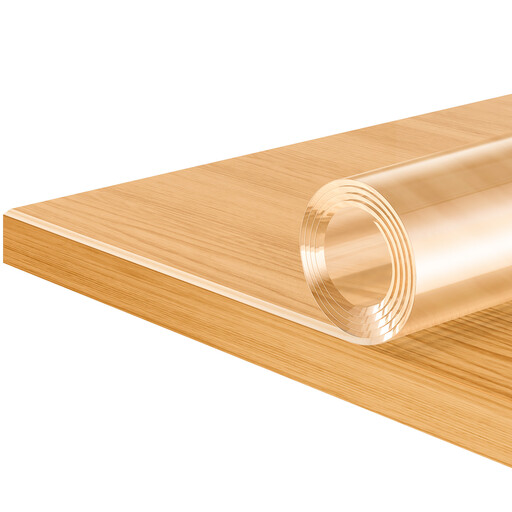
Why This Fits Their Persona: Perfect for the hustle and bustle of family life. The robust 2mm thickness withstands impacts and scratches, while the beveled edges (45° V-cut) provide extra comfort and safety by eliminating sharp corners.
This protector avoids the "too thin" trap with its solid 2 mm thickness. The beveled edge is a thoughtful design feature that prevents sharp corners.
Robust protection and noise dampening; enhanced safety from beveled edges; waterproof and easy to clean.

Why This Fits Their Persona: Anyone who wants to showcase the grain of an expensive wooden table or the flawless surface of a designer piece needs a highly transparent protector. This model delivers exactly that, combined with solid 2mm protection.
This protector addresses the "air bubble" trap through proper application: it's ideal for matte tables. For high-gloss surfaces, a perfect result is achieved by placing a thin fabric tablecloth underneath, as described in our guide.
High transparency to keep the table surface visible; durable, water- and oil-proof material; can be trimmed to size if needed.
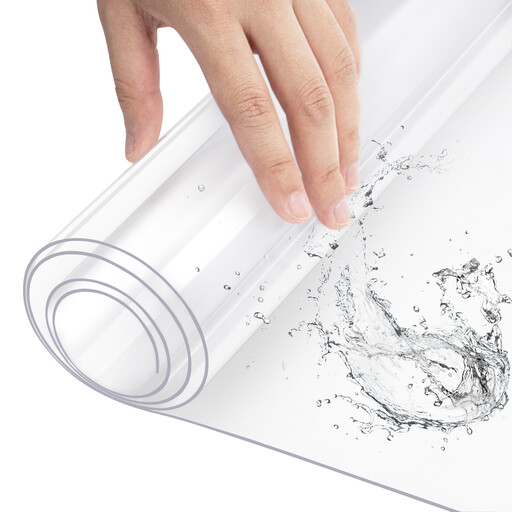
Why This Fits Their Persona: For workbenches, craft tables, or kitchen counters where functional protection is the priority. This 1mm protector offers solid, basic coverage at an attractive price and is ideal for matte surfaces.
This is a straightforward solution, as the manufacturer explicitly states it's not recommended for high-gloss surfaces, thus avoiding the air bubble trap from the outset. It's the right choice for its intended purpose.
Excellent value for money; flexible and easy to cut; provides effective protection against scratches and liquids on matte tables.
If you're looking for an alternative to a transparent protector, such as patterned or colored tablecloths, we have also curated a suitable selection for you.
On high-gloss surfaces, air bubbles are nearly impossible to avoid. The most reliable method is to place a very thin fabric tablecloth underneath the protector. Bubbles shouldn't form on matte surfaces. If they do, try slowly rolling the protector out from one side to the other, smoothing out the air with a soft cloth as you go.
Most PVC protectors are heat-resistant up to about 60-80°C (140-176°F). This means they can handle warm plates or cups. However, they are not designed for placing hot pots or pans directly from the stove. Always use separate trivets for this purpose to prevent permanent damage to both the protector and the table.
The lifespan heavily depends on the material thickness and the level of use. A high-quality 2mm table protector can last for several years with normal household use. It's a durable, washable table protector that fulfills its function for a long time. Thinner protectors generally wear out more quickly.