
Lieferung heute & morgen

Qualitätsgarantie

Willkommens-Angebote freischalten: KOSTENLOSE Lieferung | Bis zu 80 % RABATT | Kostenlose 30-Tage-JoyPlus-Testphase
App herunterladen
A premium tabletop, whether made of wood, marble, or another fine material, is an investment. You want to protect it without hiding its aesthetic beneath an opaque tablecloth. A transparent table protector seems like the ideal solution. However, the selection process has several pitfalls that can lead to disappointment and unnecessary expense.
As your Joybuy Product Recommendation Officer, I'll help you identify the key features and distinguish marketing hype from genuine product performance. This way, you can find a protective film that shields your table reliably and discreetly.
Many buyers focus solely on price or generic marketing claims. This often leads to three problems that severely limit the product's usefulness:
PVC tablecloth is placed on a high-gloss, polished, or glass surface. This completely ruins the clear aesthetic.To avoid these issues, you should focus on a few crucial technical specifications. These determine the durability and functionality of your protective table film.
The thickness of the film is a direct measure of its protective capability and robustness.
tablecloth scratch-proof. Additionally, its heavier weight allows it to lie flatter and more smoothly on the table.Not every transparent film is suitable for every table surface. The problem of air bubbles forming on smooth, non-porous surfaces (glass, high-gloss lacquer) is due to physics.
clear tablecloth without any issues.A good wipe-clean table protector is a basic requirement. Beyond that, pay close attention to the specified heat resistance.
heat-resistant table protector should withstand temperatures of up to 80°C. This is the standard value cited by many quality manufacturers. It protects against warm plates and mugs, but not against hot pots taken directly from the stove.custom-cut table film, allow for a small tolerance, as the material can still "settle" or shrink slightly after being unrolled.Here are some product recommendations tailored to different user profiles that meet the quality criteria mentioned above.
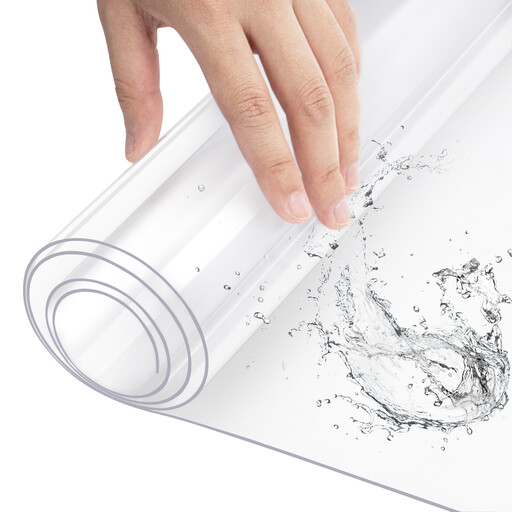
Why This Fits Their Persona: Ideal for protecting desks, coffee tables, or other less heavily used furniture. It provides solid basic protection from liquids and light scratches at an attractive price.
Although it is a 1 mm film, it is sufficiently robust for its intended purpose and is not marketed as high-performance protection for dining tables. The manufacturer also clearly states it is not suitable for high-gloss surfaces, thus avoiding the bubble formation pitfall.
Flexible and easy to cut: Adapts well to various table shapes. Great value for money: Offers basic protection without a large investment.
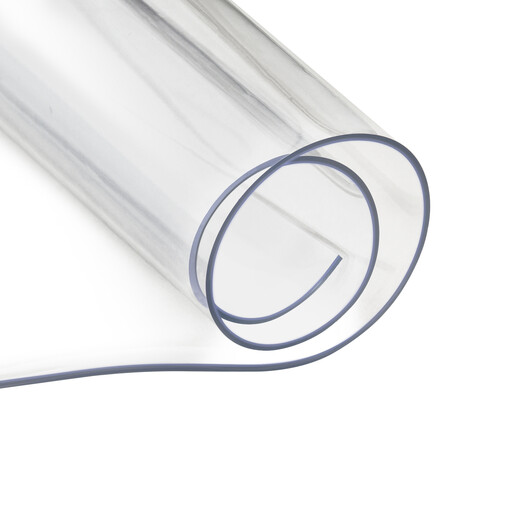
Why This Fits Their Persona: Perfect for daily use on the dining table. The 2 mm thickness withstands the challenges of family life, from spilled drinks to crayons and cutlery.
With its 2 mm thickness, it bypasses the pitfall of being too thin. The specified heat resistance of up to 80°C is a clear, reliable figure that protects against damage from warm plates.
High durability: The thick PVC is scratch-resistant and long-lasting. Easy to clean: The waterproof surface can be simply wiped down with a damp cloth.
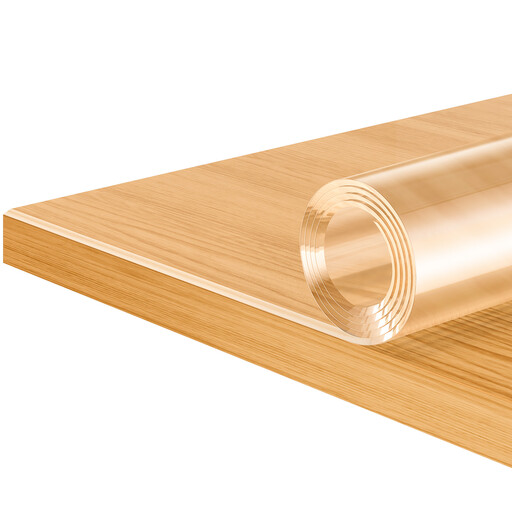
Why This Fits Their Persona: For users who value details and a high-end look. The beveled edge provides an elegant transition and prevents the uncomfortable feeling of a sharp edge on your forearms.
This product combines a robust 2 mm thickness with an aesthetic detail. It goes beyond mere protection to offer added comfort and a refined look, which is often missing from standard films.
45° V-cut edge: Offers superior comfort and safety, as there are no sharp edges. Noise-dampening: The thickness of the film reduces the clatter of dishes and cutlery.
We have compiled a complete, up-to-date list of products that fully meet these strict selection criteria and German safety regulations.
Since the films are rolled for transport, they need some time to flatten out completely. Lay the film on the table and weigh it down with heavy items like books for 24 to 48 hours. Alternatively, you can speed up the process by gently warming the film with a hairdryer on a low setting while smoothing it out.
With smooth, high-gloss surfaces like glass or lacquer, there is a risk of air bubbles forming with most standard PVC films. Manufacturers usually indicate this in the product description. To avoid this, you can place a very thin fabric tablecloth between the table and the film.
Use a sharp utility knife or sturdy scissors and a long ruler or metal straightedge. Measure the table surface accurately and mark the cutting line on the film with a non-permanent marker. Cut slowly and with steady pressure to get a clean edge. Some manufacturers supply the film slightly oversized to compensate for any potential material shrinkage.