
Lieferung heute & morgen

Qualitätsgarantie

Willkommens-Angebote freischalten: KOSTENLOSE Lieferung | Bis zu 80 % RABATT | Kostenlose 30-Tage-JoyPlus-Testphase
App herunterladen
A high-quality table is often the centerpiece of the home—a place for shared meals, homework, or social gatherings. But this heavy use inevitably leaves its mark: scratches, stains, and signs of wear can quickly diminish its value and appearance. A transparent table protector seems like the ideal solution to shield the surface without hiding its design.
However, the purchase often leads to disappointment. Many products fail to deliver on their promises. Before you make a decision, you should be aware of the common pitfalls that can lead to a poor investment.
A well-considered choice based on objective criteria will protect you from these problems and safeguard your furniture investment.
To find the right protector for your dining table, don't be swayed by marketing promises. Instead, focus on verifiable technical specifications. Three parameters are of central importance here.
The thickness of the protector is the most critical factor for its protective function and durability. A 2mm table protector offers a clear advantage here.
Therefore, specifically look for this specification to ensure you get a durable and functional solution.
An often-overlooked yet crucial detail in daily use is the edge finishing. A protector with a beveled edge (often referred to as a 45° V-cut) stands out in quality from standard products. Here, the edges are not cut at a 90-degree angle but are gently sloped. This prevents the uncomfortable sensation of sharp edges on your forearms and minimises the risk of injury, which is especially relevant in households with children.
Modern table protectors are typically made of polyvinyl chloride (PVC). This material is ideal as it combines glass-like transparency with high functionality. A high-quality washable PVC tablecloth should have the following properties:
Depending on the table size and intended use, different models are suitable. Here is a selection that aligns with the quality criteria mentioned.

Why This Fits Their Persona: Ideal for protecting desks, coffee tables, or smaller dining areas where a durable yet unobtrusive surface is needed to withstand daily wear and tear.
The 2 mm material thickness prevents rippling and provides solid protection. The beveled edge avoids the discomfort of sharp rims.
Robust 2 mm thickness for effective protection and noise dampening. 45° V-cut for superior comfort at the edges.
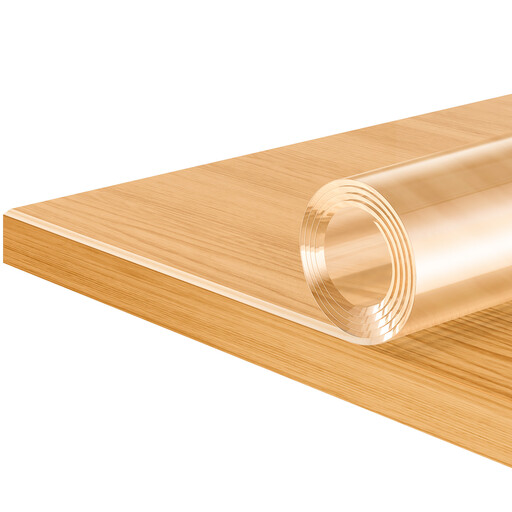
Why This Fits Their Persona: Perfect for the standard dining table in family households. Sized for 4-6 people, its robust properties withstand the daily hustle and bustle of kids, meals, and homework.
The thick, heavy PVC protector lies flat and securely. The beveled edges are safe and comfortable for all family members.
Waterproof and washable for effortless cleanup after meals. Food-grade PVC material according to the manufacturer.
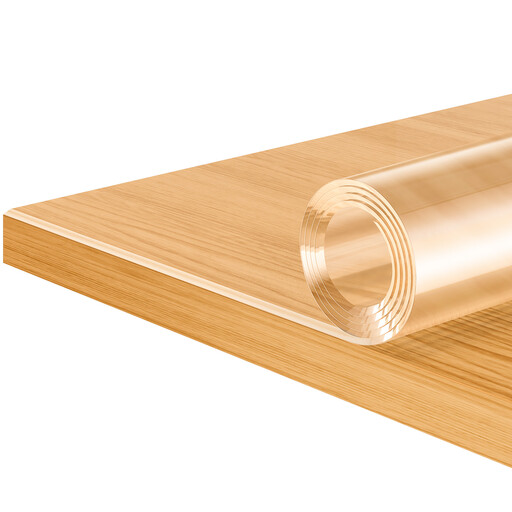
Why This Fits Their Persona: Designed for large dining tables that accommodate many guests or for conference tables in an office setting. It provides a continuous, low-maintenance protective layer for large-format and valuable furniture.
Its substantial weight (approx. 4.9 kg) ensures it lies perfectly flat and stable, even on very large surfaces. The quality features (2 mm, beveled edge) are consistently implemented here as well.
Generous dimensions for maximum protection without seams. Non-slip texture on the underside for a secure grip.
We have compiled a complete, up-to-date list of products that fully meet these strict selection criteria and German regulations.
For shipping purposes, PVC protectors are delivered rolled up. To flatten it, unroll it on the table and weigh it down evenly with heavy objects like books for 24-48 hours. Alternatively, as per manufacturer instructions, you can warm the protector in the sun or carefully with a hairdryer to speed up the process. Proceed with caution to avoid damaging the material.
This phenomenon occurs almost exclusively on completely smooth, non-porous surfaces like glass, high-gloss lacquer, or polished marble. Trapped air cannot escape and forms bubbles. As recommended by the manufacturer, this can be avoided by placing a very thin, barely visible fabric tablecloth between the table and the protector. This issue typically does not occur on wood or matte surfaces.
Yes, slight shrinkage is a natural property of PVC material. Reputable manufacturers account for this by cutting the protectors with a small tolerance (e.g., 1-5 mm longer than specified). This minimal change is not noticeable in use and ensures that the protector still covers the desired area after it has acclimatised.