
Lieferung heute & morgen

Qualitätsgarantie

Willkommens-Angebote freischalten: KOSTENLOSE Lieferung | Bis zu 80 % RABATT | Kostenlose 30-Tage-JoyPlus-Testphase
App herunterladen
A high-quality table is often the centrepiece of the home – whether it's the solid wood dining table where the family gathers or the desk where you work. Protecting it from scratches, stains, and daily wear and tear makes perfect sense. A transparent table protector seems like the ideal solution, as it preserves the look of the tabletop. However, hidden pitfalls in the selection process can lead to disappointment and unnecessary expense.
As your Joybuy Product Recommendation Officer, I'm here to help you identify the key features and distinguish marketing hype from genuine product performance.
Many buyers focus solely on price or appearance, overlooking crucial details. This often results in a protector that fails to provide the desired protection or even damages the table's surface.
To avoid these mistakes, you should check three key properties before buying. These will determine the durability, functionality, and appearance of your dining table protector.
The thickness of the protector is a direct measure of its protective capability and quality.
Transparency is key, but the type of finish determines whether the protector is suitable for your table.
A good clear, wipeable tablecloth must be practical for everyday use.
Based on these criteria, we have identified several products that offer a well-thought-out solution for specific user profiles.
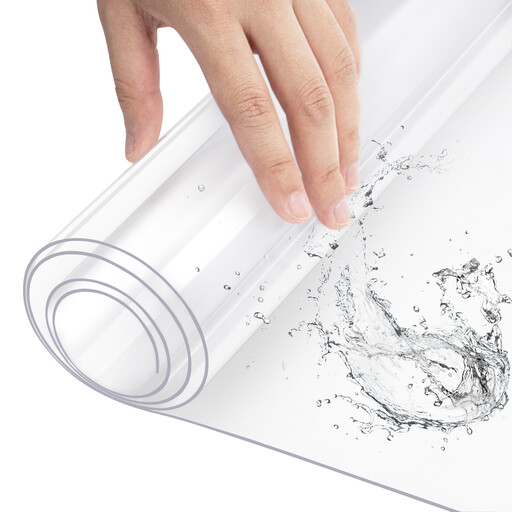
Why This Fits Their Persona: Ideal for users seeking reliable basic protection for less-used tables without a large investment. Perfect for home office desks or side tables.
With 1 mm thickness, this protector offers solid protection against scratches and spills, avoiding the trap of paper-thin, uselessly cheap films. The product description also clearly states that it is not recommended for high-gloss surfaces.
Excellent value for money. According to the manufacturer, the material is odourless, water- and scratch-resistant, and provides effective baseline protection.
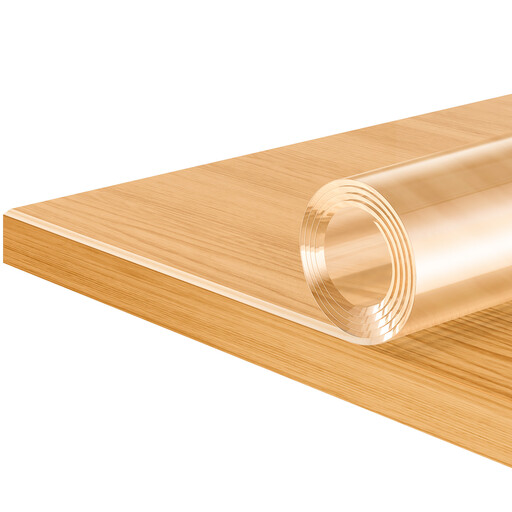
Why This Fits Their Persona: For the heavily used family table where meals, games, and crafts happen. The heavy-duty design and safe edges are crucial here.
The 2 mm material thickness provides maximum protection against impacts and scratches. The bevelled 45° V-edge is not only comfortable for your arms but also reduces the risk of injury for children compared to sharp edges.
Very robust and durable. The combination of thickness and a bevelled edge offers a high degree of protection and comfort. According to the manufacturer, the PVC is food-safe.
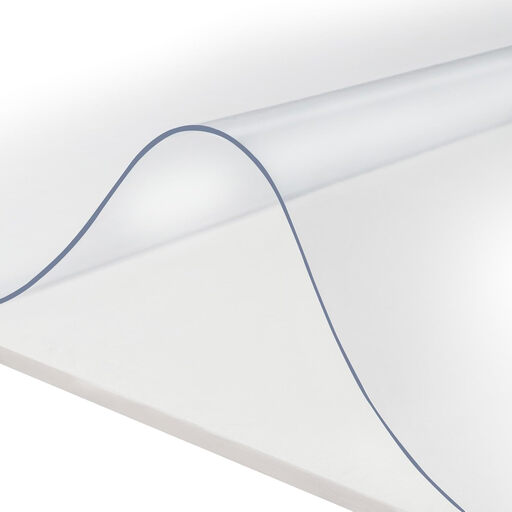
Why This Fits Their Persona: For anyone who owns a designer table with a delicate high-gloss or glass surface and is looking for a functional protective solution without compromising on aesthetics.
The product description directly addresses the pitfall of air bubble formation, stating that the protector is ideal for matte or textured surfaces. This demonstrates an understanding of the problem and guides the user towards correct application.
With a 2 mm thickness and heat resistance up to 80°C (according to the manufacturer), it offers a high degree of protection. The clear communication regarding surface suitability is a major advantage.
We have compiled a complete, up-to-date list of products that fully meet these strict selection criteria.
1. How do I get a table protector to lie flat after unrolling? Since the protectors are delivered rolled up, they need some time to flatten out completely. Lay the protector on the table and weigh it down with heavy items like books for 24-48 hours. Alternatively, gently warming it with a hairdryer on a low setting can speed up the process.
2. Can I cut a table protector to size? Yes, a PVC tablecloth can usually be easily cut to size with a sharp pair of scissors or a utility knife. Some manufacturers supply the protector with a slight surplus in size, as the material can shrink minimally (approx. 1-5 mm) over time. It is wise to account for this when cutting.
3. Do air bubbles form under every crystal-clear table protector? No, this phenomenon occurs almost exclusively on very smooth, non-porous surfaces like glass, high-gloss lacquer, or polished marble. On matte or oiled wood surfaces, the protectors generally adhere without trapping air.