
Lieferung heute & morgen

Qualitätsgarantie

Willkommens-Angebote freischalten: KOSTENLOSE Lieferung | Bis zu 80 % RABATT | Kostenlose 30-Tage-JoyPlus-Testphase
App herunterladen
A high-quality table is often the centrepiece of the home—whether it's the dining table for shared meals, the kitchen table for daily life, or the desk in your home office. Protecting it from scratches, stains, and wear without compromising its appearance is a common goal. A Transparent Table Protector seems like the ideal solution. However, the market is flooded with products whose differences in quality are hardly noticeable at first glance.
As a Joybuy Product Recommendation Officer, I analyse product features and customer feedback daily. In doing so, I consistently encounter the same issues that lead to disappointment and unnecessary expenses. Before you make a decision, you should be aware of the three most common pitfalls.
To avoid these problems, it's crucial to focus on objective product parameters rather than marketing promises.
Choosing the right protective film depends on a few, but critical, technical features. Anyone who understands these can make an informed decision and preserve the value of their furniture.
The thickness of the protector is the most important indicator of its protective function and durability. The market primarily offers thicknesses between 1 mm and 2 mm.
To avoid the aforementioned air bubble trap, the protector must be compatible with the table surface.
A washable PVC table protector is standard, but heat resistance varies. Most quality protectors are heat-resistant up to 80°C. This means they can easily withstand the heat from normal plates and cups. However, pots or pans taken directly from the stove should not be placed on them, as this can cause permanent deformation. The easy cleaning with a damp cloth makes these protectors particularly practical for everyday use.
Based on these objective criteria, we have identified several products that offer a suitable solution for specific user profiles.
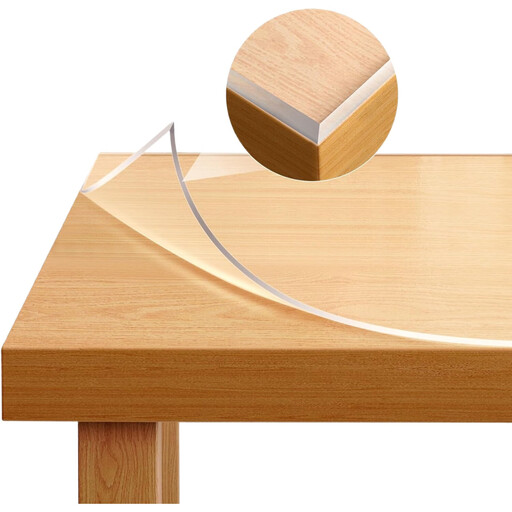
Why it fits the profile: For a household with children where the dining table is used daily for meals, homework, and crafts, maximum durability and safety are crucial. This protector combines both.
The 2 mm thickness provides effective protection against impacts and scratches, avoiding the trap of a too-thin, inadequate protector. The bevelled edges (a 45° V-cut, according to the manufacturer) also reduce discomfort and the risk of bumping into sharp edges.
The combination of high material density and bevelled edges offers a high degree of protection and user comfort, which is especially valuable in daily family life.
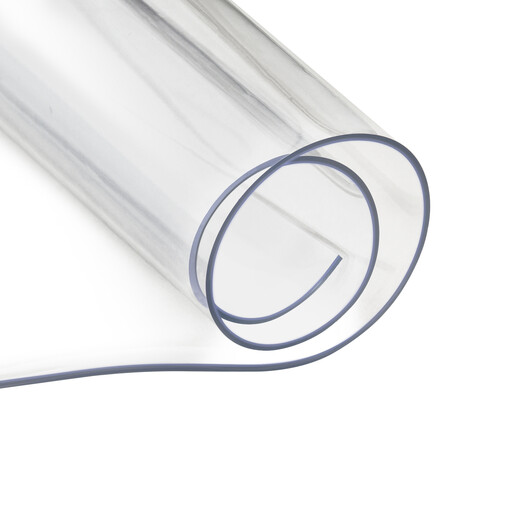
Why it fits the profile: Anyone with a high-quality wooden or matte-finish desk wants to preserve its appearance while also using it as a functional transparent desk mat. This product focuses on clear, robust protection.
By using it on a matte or textured desk, the air bubble trap is avoided from the outset. The 2 mm thickness ensures a flat surface that also serves as a writing pad without being too thin or wavy.
The high transparency and the robust, flat surface effectively protect the desk without disturbing the aesthetics of the workspace. The protector is scratch-resistant and easy to clean.

Why it fits the profile: For the kitchen table or a side table that needs reliable but not extreme protection, this protector offers a balanced ratio of function and price. It is a practical all-round solution.
With a 1 mm thickness, this protector is more robust than ultra-thin versions (according to the manufacturer) and offers good protection against everyday mishaps like spilled drinks or scratches, without heavily impacting the budget.
Offers effective and waterproof basic protection at an attractive price. The protector is flexible, can be trimmed as a custom-cut table protector if needed, and is easy to clean.
We have compiled a complete, up-to-date list of products that fully meet these strict selection criteria and German safety regulations.
For logistical reasons, table protectors are shipped rolled. After unpacking, they need some time to flatten out completely. Lay the protector flat on the table and weigh down the corners and any waves with heavy books. This process can take 24 to 48 hours. Gently warming it with a hairdryer on a low setting can also help the material to relax.
No, this problem occurs almost exclusively on very smooth, non-porous surfaces like glass, high-gloss lacquer, or polished marble. On matte, oiled, or natural wood tables, air bubbles generally do not form because the surface texture prevents complete adhesion.
Yes, most PVC protectors can be easily cut to size yourself. Use a sharp utility knife or sturdy scissors and a long ruler or straight edge as a guide. Measure the table surface exactly and mark the cutting line beforehand. Some manufacturers deliver the protector slightly oversized by a few millimetres to compensate for any potential material shrinkage. It may be wise to wait one or two days before cutting, once the protector has fully adapted to the room temperature.