
Lieferung heute & morgen

Qualitätsgarantie

Willkommens-Angebote freischalten: KOSTENLOSE Lieferung | Bis zu 80 % RABATT | Kostenlose 30-Tage-JoyPlus-Testphase
App herunterladen
A high-end table surface, whether it's solid wood, modern lacquer, or elegant stone, is an investment. You want to preserve its appearance while protecting it from the signs of daily life—scratches, stains, and spills. A transparent table protector seems like the ideal solution. However, the market is flooded with products whose quality differences are nearly impossible to spot at first glance.
Many buyers only realise after a short time that their choice wasn't the solution they had hoped for. To help you avoid such a purchase pitfall, we will highlight the three most common problems and show you which objective criteria to focus on when making your selection.
To make an informed decision, don't be swayed by marketing promises. Instead, focus on verifiable product characteristics. Three parameters are particularly important here.
The thickness of the protector is a direct measure of its robustness and durability. While thinner protectors may be cheaper, a 2mm table protector offers significant advantages:
A 1 mm protector might suffice for rarely used side tables, but for a daily-use dining table or desk, a 2 mm version is the more solid choice.
The problem of air bubbles on smooth surfaces is a matter of physics. When two perfectly smooth, non-porous surfaces (like the protector and a glass or high-gloss top) meet, tiny pockets of air cannot escape. The result is visually distracting bubbles.
A heat-resistant table protector does not mean you can place hot pots directly from the stove onto it. Most PVC protectors are designed for temperatures up to about 80°C (176°F).
Based on the criteria mentioned, we have identified a few products that are well-suited for specific user profiles.
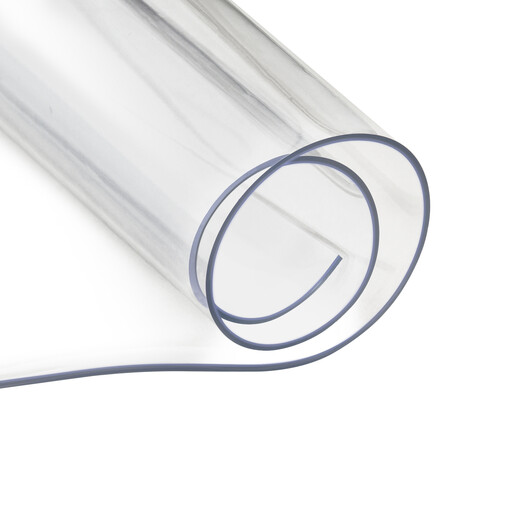
Why This Fits Their Persona: Ideal for families with children where the dining table is used daily for meals, homework, and crafts. The protector must be robust, durable, and very easy to clean.
The 2 mm thickness effectively prevents curling and slipping (Pitfall #1) and provides solid protection against impacts and scratches, which thinner protectors lack.
High durability and longevity. The smooth surface is waterproof and wipes clean effortlessly, which greatly simplifies daily cleanup.
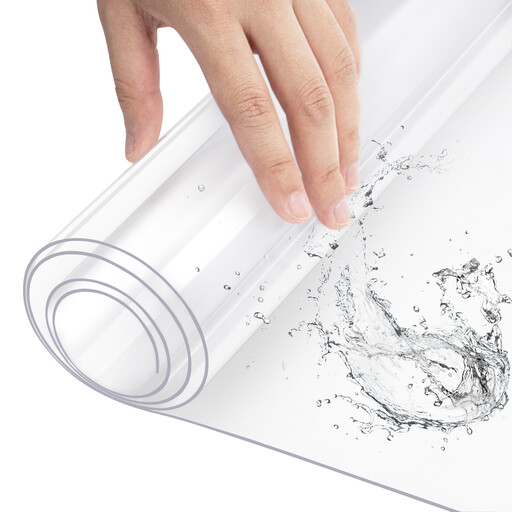
Why This Fits Their Persona: Suitable for users who need basic protection for less-used tables (e.g., side tables or craft tables) or require a cost-effective initial setup.
According to the manufacturer, new, low-odour PVC is used, which counteracts the problem of strong chemical smells (Pitfall #2). The 1 mm thickness is also more robust than bargain-bin protectors.
Good value for money. It offers reliable protection against spills and light scratches and can be flexibly cut to size.
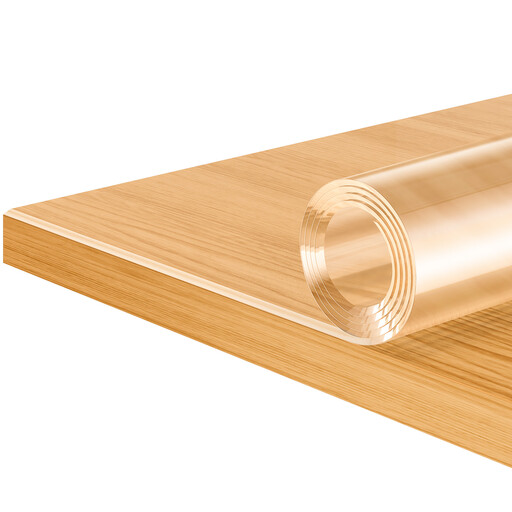
Why This Fits Their Persona: For users who want not only protection but also a high-quality feel and look. Especially relevant for desks or dining tables where you sit for long periods and rest your arms on the edge.
The beveled edges (often called a 45° V-cut) counteract the sharp-edged, cheap feel of basic protectors and solve the bubbling issue (Pitfall #3) on suitable surfaces.
Increased comfort thanks to the smoothly tapered edges. The protector looks more visually integrated with the tabletop and feels more pleasant to the touch.
We have compiled a complete, up-to-date list of products that fully meet these strict selection criteria and German safety regulations.
Since the protectors are rolled for shipping, they may initially have waves. The most common method is to unroll the protector on the table and weigh it down with heavy books for 24-48 hours. Alternatively, you can roll it in the opposite direction. Gentle heat, for example from a hairdryer on a low setting and at a safe distance, can speed up the process.
Yes, a custom-cut table protector is usually easy to make yourself. Use a sharp utility knife and a long ruler or metal straightedge as a guide. It is advisable to let the protector acclimate at room temperature for a few days first, as the material can still contract slightly. When in doubt, cut with 1-2 mm of excess.
As described above, smooth, transparent protectors are physically problematic on high-gloss and glass surfaces. The most reliable method to avoid air bubbles (Pitfall #3) is to place a very thin fabric tablecloth between the tabletop and the protector. This breaks the direct contact and prevents air from getting trapped, without significantly affecting the look.