
Lieferung heute & morgen

Qualitätsgarantie

Willkommens-Angebote freischalten: KOSTENLOSE Lieferung | Bis zu 80 % RABATT | Kostenlose 30-Tage-JoyPlus-Testphase
App herunterladen
A high-quality table is often the centerpiece of the home—whether it's the dining table for shared meals, the desk in your home office, or the kitchen countertop. The goal is to protect it from scratches, stains, and daily wear and tear without hiding its appearance. A transparent table protector seems like the ideal solution. However, the market is flooded with products whose quality differences are hard to spot at first glance. The wrong choice often leads to disappointment and unnecessary expense.
As a Joybuy Product Recommendation Officer, I'll break down the crucial features for you and show you how to avoid common purchasing pitfalls. This guide focuses on the three most common problems buyers face and provides clear criteria for selecting a durable and suitable protector.
Many protectors promise more than they deliver. Watch out for these three weaknesses to avoid a bad purchase:
To avoid the problems mentioned above, you should check three core parameters before buying. These define the quality and functionality of a transparent table cover.
Thickness is the most important indicator of protection and durability. A 2mm table protector offers the optimal balance of sturdiness and flexibility.
Choosing the right surface finish is crucial to solving the air bubble problem.
Also, pay attention to the edge treatment. Models with a 45° beveled edge (V-cut) offer more comfort, as your arms can rest comfortably without a sharp edge digging in. This is an important safety feature, especially for desks and dining tables in households with children.
Based on the quality criteria mentioned, we have identified some products that are suitable for specific user profiles.
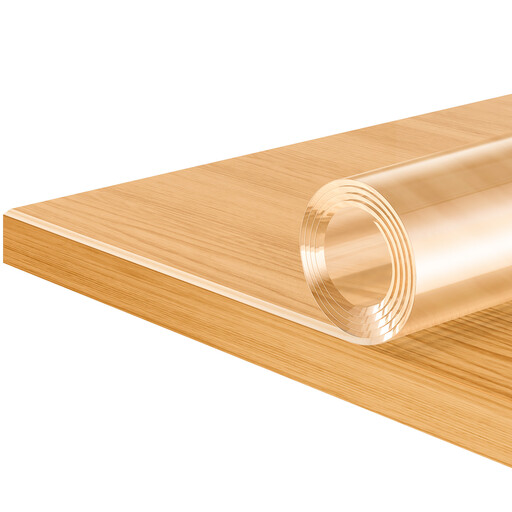
Why This Fits Their Persona: Hectic family life demands a durable, safe, and easy-to-clean solution. This protector reliably shields the dining table from crayons, spilled drinks, and scratches.
At 2 mm thick, it is significantly more resilient than thinner alternatives. The 45° beveled edge minimizes the risk of injury and prevents uncomfortable pressure marks on the arms.
The protector is rated as waterproof and grease-resistant, which makes cleaning extremely simple. Its non-slip texture ensures it stays securely on the table.
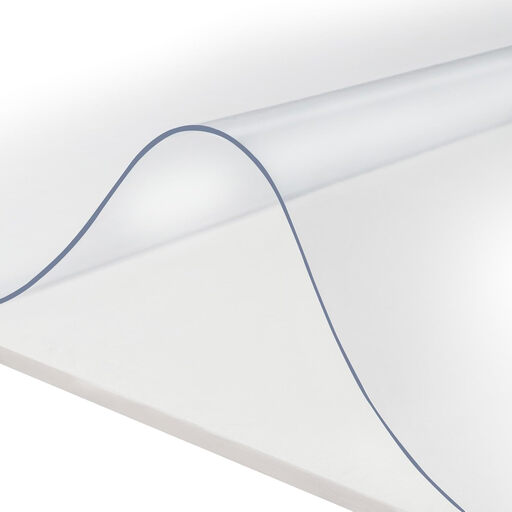
Why This Fits Their Persona: Anyone who owns an expensive glass or high-gloss table values a flawless look. The protection must not compromise the aesthetic under any circumstances.
According to the manufacturer's description, this model is specifically designed for matte or textured surfaces to prevent air bubbles. This is a crucial indicator that it is a high-gloss protector, which works perfectly on non-glossy tables.
The 2 mm material thickness provides robust protection, while the high transparency showcases the original table surface. Its heat resistance up to 80°C protects against damage from hot plates.
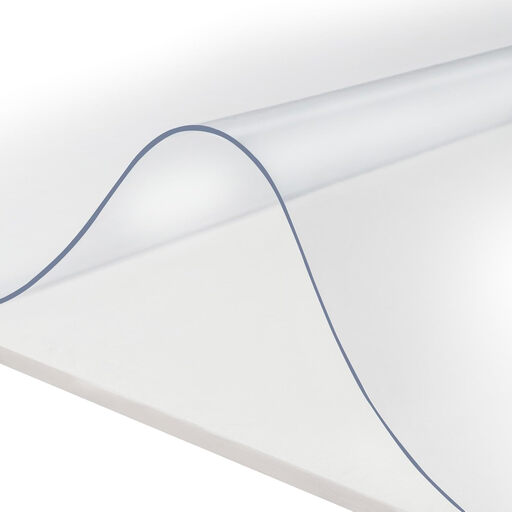
Why This Fits Their Persona: On work surfaces in the kitchen or a hobby room, the material is subjected to maximum stress. Here, functionality, heat resistance, and easy cleaning are the priority.
The solid 2 mm thickness withstands even heavy mechanical stress. Its generous dimensions are well-suited for larger countertops, providing a seamless protective layer.
Its rated heat resistance and its quality as a waterproof PVC table protector make it ideal for kitchen use, where contact with hot pots or liquids is common.
We have compiled a complete, up-to-date list of products that fully meet these strict selection criteria and high safety standards.
1. How do I get the waves out of my table protector? Since the protectors are delivered rolled up, they may have waves at first. Spread the protector out on the table and place heavy books on the wavy areas for a few hours. Alternatively, you can roll it in the opposite direction and secure it for a short time. Another method is to gently warm the protector with a hairdryer on a low setting while smoothing it flat.
2. Why do air bubbles form under the transparent table protector, and how can I avoid them? Air bubbles are caused by adhesion between two perfectly smooth, non-porous surfaces (e.g., a high-gloss protector on a glass table). The trapped air cannot escape. The surest way to prevent this is to choose the right type of protector: use a high-gloss protector only on matte or textured surfaces. For high-gloss tables, a one-sided matte protector is required.
3. Does a PVC table protector shrink? Yes, a certain amount of shrinkage is normal for PVC protectors. Quality manufacturers account for this and often cut the protector with a tolerance of a few millimeters to a centimeter larger. The shrinkage mostly occurs within the first few weeks. With very cheap products, this effect can be more pronounced, which is why it's worth paying attention to the manufacturer's specifications and the material quality.