
Lieferung heute & morgen

Qualitätsgarantie

Willkommens-Angebote freischalten: KOSTENLOSE Lieferung | Bis zu 80 % RABATT | Kostenlose 30-Tage-JoyPlus-Testphase
App herunterladen
A high-quality table is often the centrepiece of a home—whether it's the solid wood dining table where the family gathers or the desk where creative work happens. Protecting it from scratches, stains, and daily wear and tear makes perfect sense. A transparent table protector seems like the ideal solution to preserve the furniture's appearance while creating a protective barrier.
However, the selection process is fraught with pitfalls that can lead to an unsatisfactory result. Before you make a decision, you should be aware of the most common problems to avoid a bad investment.
A well-thought-out choice based on the right parameters will help you bypass these issues and find a durable, functional solution.
To find the right protective film for your dining table or work surface, objective material properties are far more crucial than marketing promises. Pay close attention to the following three core parameters.
The thickness of the film is a direct indicator of its robustness and longevity. While thinner films (under 1.5 mm) are more susceptible to tears and scratches and tend to shift, a 2 mm table protector offers a solid balance. It is heavy enough to lie flat and stable on the tabletop without slipping. At the same time, this thickness provides an effective scratch-resistant table film that withstands the daily rigours of dishes, keys, or craft projects. It reliably protects the tabletop without looking bulky.
The problem of air bubble formation is a physical phenomenon that occurs when two perfectly smooth, non-porous surfaces meet. The transparent film and a high-gloss or glass top trap tiny amounts of air, which become visible as bubbles.
For such surfaces, these films are therefore often not the first choice. They truly shine, however, on matte, satin, or textured surfaces, such as oiled or matte-lacquered wood. Here, air can escape, and the film lies invisibly and bubble-free, allowing the wood grain to be fully appreciated.
A good PVC table protector should do more than just guard against scratches. An important feature is heat resistance. Many quality films are designed as a heat-resistant table cover and can withstand temperatures of up to 80°C (176°F). This means a hot plate or a cup of coffee will generally leave no marks. However, a trivet is still required for pots or pans straight from the stove.
Furthermore, a high-quality table film is washable and waterproof. Spilled liquids, sauces, or paints do not penetrate the surface and can be simply wiped away with a damp cloth. This makes it ideal to protect the tabletop and minimise cleaning effort.
Based on these objective criteria, we have compiled a selection of products for different use cases.
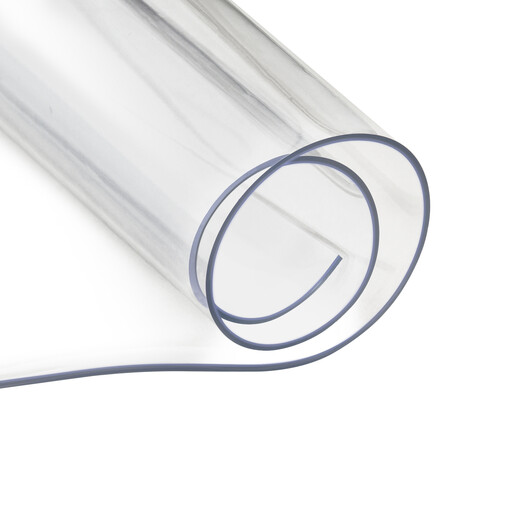
Why it's a great fit: The generous size is suitable for standard dining tables used daily for eating, playing, and working. The robust 2 mm thickness provides reliable protection against the challenges of family life.
The 2 mm material thickness provides substantial weight, ensuring the film lies flat and doesn't warp or curl at the edges.
Effective protection against liquids and scratches with easy maintenance. The film is waterproof and wipeable.
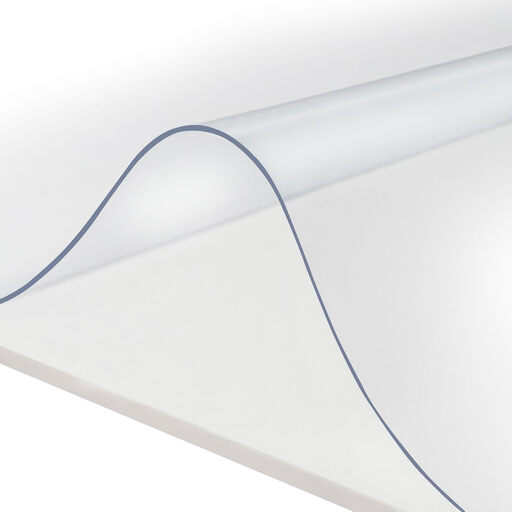
Why it's a great fit: For owners of tables with matte or textured wood surfaces who are looking for a nearly invisible protective layer. The high transparency allows the natural beauty of the wood to shine through undisturbed.
The product description explicitly states that the film is optimised for matte surfaces, thereby preventing the formation of air bubbles.
According to the manufacturer, the film offers heat resistance up to 80°C (176°F) and high stability due to its 2 mm thickness.
Why it's a great fit: A versatile size suitable for desks, side tables, or craft areas. The film can be easily cut to a custom size if needed.
The high-quality PVC material allows for a clean cut without fraying edges, a common problem with inferior films, according to the manufacturer.
The non-slip property ensures that the film stays securely in place, even on smaller or heavily used surfaces like desks.
We have compiled a complete, up-to-date list of products that fully meet these strict selection criteria and applicable regulations.
For shipping purposes, PVC films are delivered rolled. To flatten it, unroll the film and lay it on a flat surface. After 24 to 48 hours, it should have flattened on its own. To speed up the process, you can place heavy books on the corners or warm the film with a hairdryer on a low setting and from a distance.
This phenomenon occurs when the film is placed on a perfectly smooth, non-porous surface like glass or high-gloss lacquer. The trapped air cannot escape and forms visible bubbles. These films are less suitable for such surfaces. This problem generally does not occur on matte or slightly textured wood or plastic surfaces.
Most high-quality PVC films with a thickness of 2 mm offer heat resistance up to 80°C (176°F). This is sufficient for hot plates, cups, or laptops. However, it is not recommended to place hot pots or pans directly from the stove onto the film, as temperatures above this limit can cause permanent deformation or damage. In such cases, always use an additional trivet.